

Outdoor Graphic T Shirts: A Complete Buyer's & Styling Guide
You know the feeling, the truck's got red clay on the tires, the kids are running around the yard, and there's a cookout or a bonfire waiting by evening. That's when a good tee stops being background clothing and starts doing real work. Outdoor graphic T shirts have to look right in family photos, hold up in heat, and carry a design that means something.
The category is bigger than a niche corner of apparel. The global outdoor apparel market reached USD 165.22 billion in 2025, and top wear like t-shirts made up 42.14% of the category (Mordor Intelligence). That matters because it confirms what many Southern buyers already know, a tee can be the backbone of a working wardrobe, not just a seasonal add-on.
Table of Contents
- Your Guide to Great Outdoor Graphic Tees
- What Makes a T-Shirt an Outdoor Tee
- Choosing Your Fabric for Comfort and Performance
- Finding the Right Fit for Outdoor Activities
- The Art of the Graphic in Southern Style
- How to Style Your Tee for Any Occasion
- Building a Collection That Lasts
Your Guide to Great Outdoor Graphic Tees
A real Southern wardrobe usually has one tee that gets worn too often, the one that works for a Saturday at the ball field, a boat ramp run, and supper after church without needing a change. That's the standard worth aiming for with outdoor graphic tees, a shirt that feels natural at a family gathering but still makes sense in the field, on the porch, or around a tailgate.
The strongest tees in this category do three things at once. They carry a graphic that says something about faith, heritage, hunting, freedom, or small-town pride. They feel sturdy enough for repeat wear. And they don't fall apart when the day gets hot, busy, or a little rough around the edges.
Practical rule: if a tee only looks good in a mirror, it's fashion. If it still looks right after a long day outdoors, it's a keeper.
That choice reflects how Southern buyers shop. One shirt has to serve family time, hard use, and plenty of in-between moments, so the print, fabric, and build all have to pull their weight. That is why a shirt can look right on a hanger and still miss the mark once it gets worn.
The best way to shop is to think like an outfitter, not a collector of graphics. Start with fabric, then fit, then print quality, then whether the design still feels right after the trend wave passes. That order saves a lot of regret. If you want a closer look at how American-made options fit into that mindset, our guide to American-made outdoor clothing is a useful place to start.
What Makes a T-Shirt an Outdoor Tee
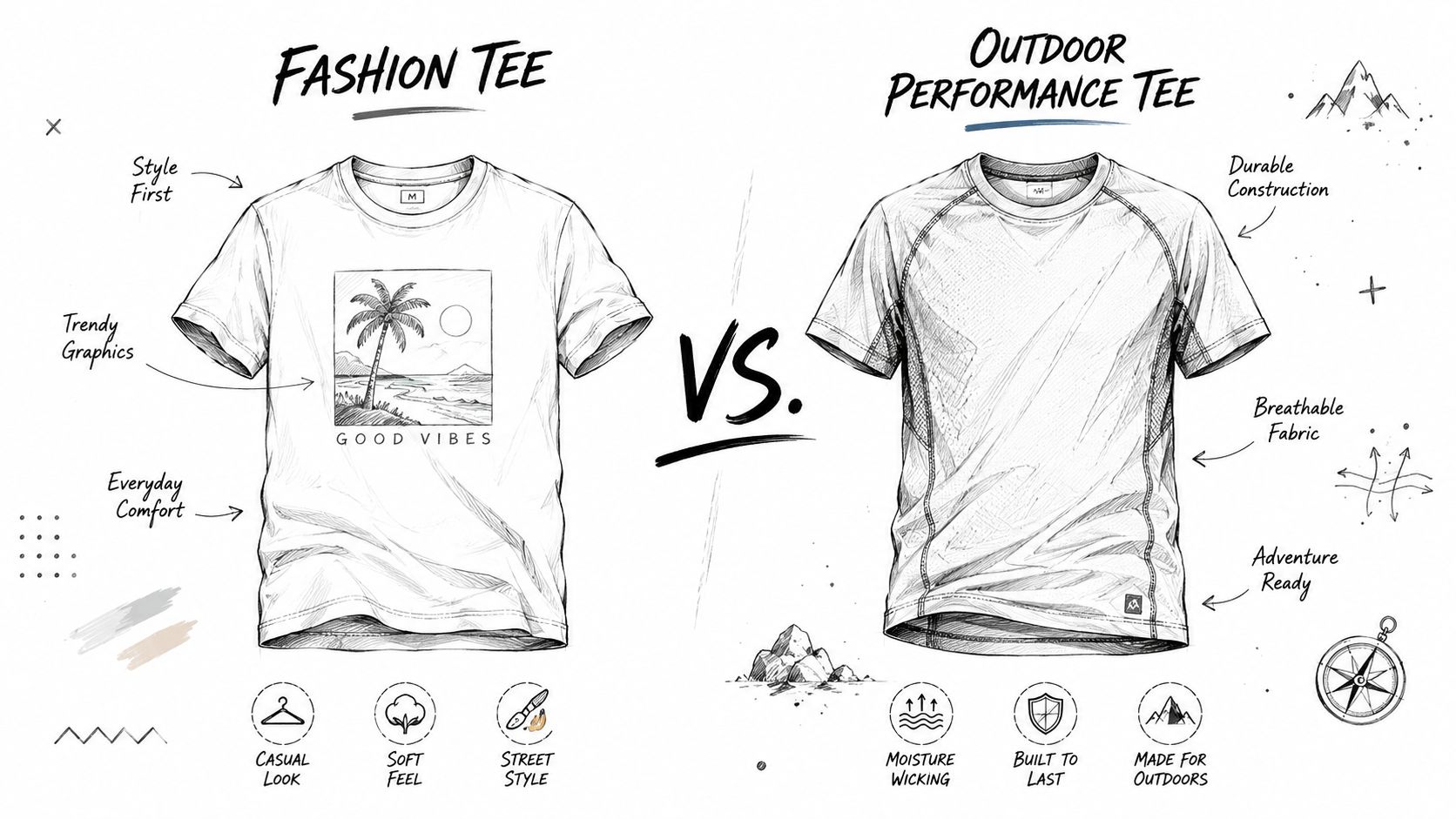
A fashion tee can get by on color and a good-looking front print. An outdoor tee has to survive sweat, sun, movement, and repeated washing while still keeping its shape. Similar to choosing tires for a truck, the tread matters because the terrain matters.
Build first, graphic second
A shirt that twists after one wash or clings badly in humidity usually wasn't built for outdoor use. In that setting, the garment's construction matters just as much as the artwork on it. Seam stability, collar recovery, and the way the fabric hangs all change how the tee performs once the day gets active.
That's also why a solid outdoor tee feels different on the hanger. It tends to drape with more structure and less limpness. It doesn't need to be heavy to be useful, but it does need enough substance to avoid looking tired before the shirt does.
A tee can have a strong graphic and still be a bad outdoor shirt if the fabric feels flimsy or the collar gives up early.
For buyers comparing options online, one useful filter is whether the shirt is described like everyday apparel or like gear. That language often hints at the intended use, especially for shirts meant to be worn hunting, fishing, traveling, or doing yard work.
You can also sanity-check the brand story. If a label talks openly about American-made construction and similar sourcing standards, that usually tells you the company is paying attention to the garment as a product, not just a print surface. One example of that kind of conversation is outlined in this American-made outdoor clothing discussion, which is useful reading if you care about how a shirt is put together.
What a true outdoor tee should handle
- Heat and sweat: It should stay comfortable when the day runs long.
- Movement: It should let you lift, cast, reach, and bend without pinching.
- Washing: It should keep its shape after repeated laundering.
- Visual wear: The graphic should still look intentional, not cracked or washed out too early.
The simplest test is this. If the shirt looks great only before the first hard wear, it's not a real outdoor tee. If it still earns a spot in the drawer after being washed, worn, and pulled on in a hurry, that's the right direction.
Choosing Your Fabric for Comfort and Performance
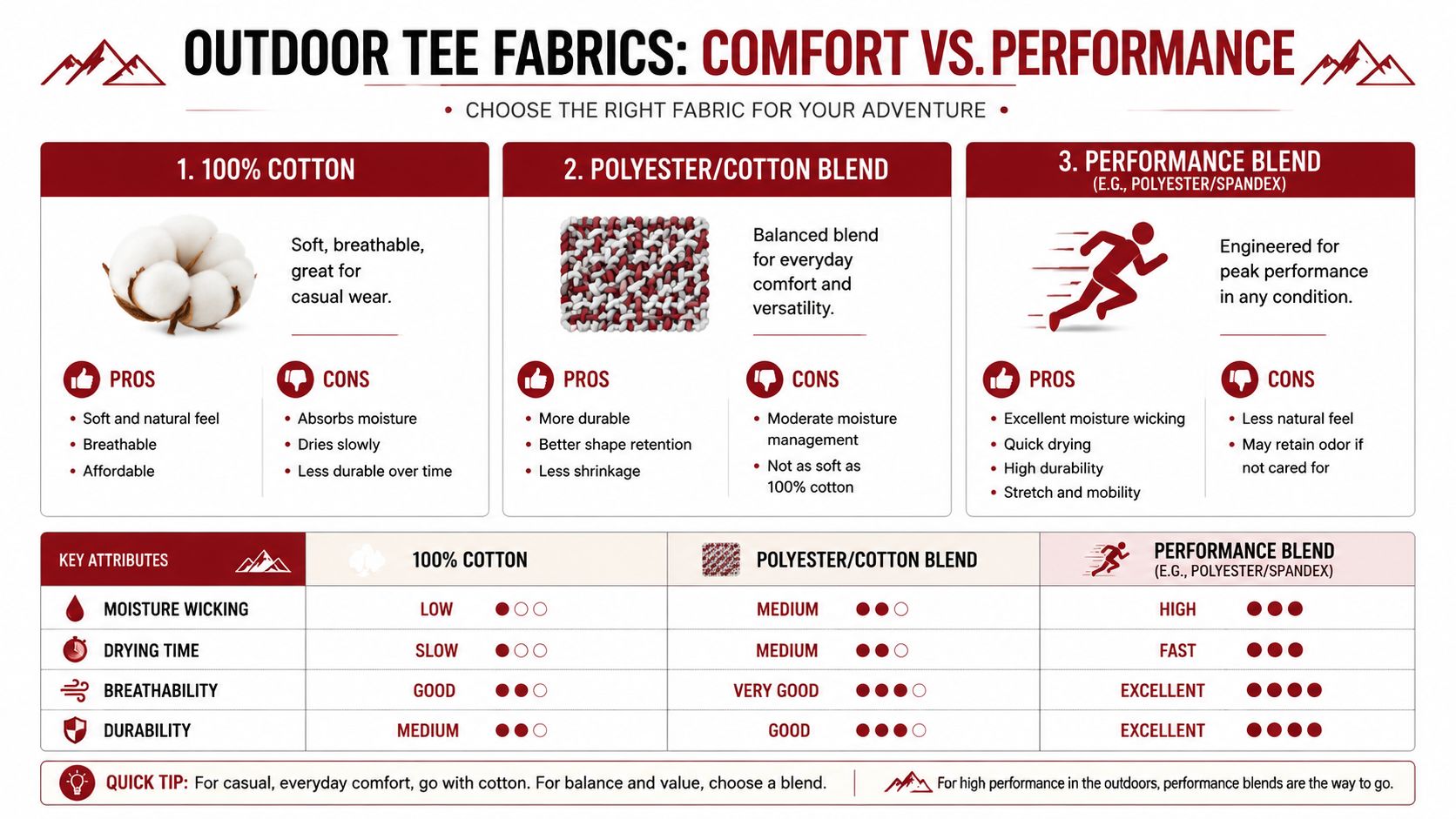
A good outdoor tee starts with the fabric, long before the graphic gets a say. For real wear in Southern heat, yard work, tailgates, family trips, and weekends at the river, the main choices usually land on 100% cotton, polyester or cotton-poly blends, and more technical performance blends. Each one earns its place for a different reason.
| Fabric Type | Best For | Pros | Cons |
|---|---|---|---|
| 100% Cotton | Casual wear, family gatherings, softer everyday comfort | Soft hand-feel, breathable, easy to live in | Slower to dry, less suited to heavy sweat, can lose shape sooner |
| Polyester/Cotton Blend | Mixed-use outdoor wear | Better durability, better moisture handling, balanced comfort | Not as soft as some cotton tees, feel varies by blend |
| Performance Blend | Active use, hot-weather movement, field days | Fast-drying, strong moisture management, durable | Can feel less traditional, comfort depends on finish and fit |
Cotton feels best when comfort comes first
100% cotton is still the easiest shirt to reach for on a slow morning. It feels soft, breathes well, and wears in a way that fits cookouts, errands, church picnics, and relaxed Saturdays with family. For buyers who care first about the hand-feel against the skin, cotton keeps its place for good reason.
The trade-off shows up once the day gets harder. Cotton handles comfort well, but it does not recover as quickly after sweat, and it can give up shape sooner with repeated washing. For a shirt that needs to keep working through a long stretch outside, that matters.
Blends hold up better under real use
Polyester and cotton-poly blends bring a practical middle ground for active wear. Synthetic fibers usually give the shirt better durability and better moisture handling, while cotton keeps the feel more comfortable for everyday use, as outlined in Printify and T-Shirt Elephant. That mix works well for fishing trips, yard work, travel days, and long afternoons when the shirt has to keep pace.
Blends also help the graphic stay presentable after repeated wear. When a shirt is worn hard, the fabric needs enough structure to support the print instead of stretching out or sagging early. That is the kind of detail a family-owned Southern brand pays attention to, because the shirt should still look right when it comes back out of the drawer.
Weight changes the feel of the shirt
Fabric weight, measured in GSM, tells you a lot about structure and durability. Outdoor tees with a fuller feel often land in the midweight range because that gives the shirt a steadier drape and better shape retention. A shirt that feels too thin usually shows its weaknesses fast.
For Southern climates, the goal is a tee that feels sturdy without trapping too much heat. If your summers run long and the humidity hangs around, a midweight shirt usually gives the best balance between comfort and staying power. If you want a little more depth in the fabric and finish, the garment-dyed shirt guide is a useful companion read.
Finding the Right Fit for Outdoor Activities
Fit changes how the shirt behaves, not just how it looks. A tee that rides up when you reach, pulls across the chest, or hangs too loosely under a jacket won't stay in rotation for long. The right cut should move with you while you handle gear, carry kids, or spend a full day in the shirt.
Start with the activity, not the trend
A relaxed fit works well for laid-back wear and layered outfits. A more athletic cut makes sense when you want less extra fabric under a vest or overshirt. Standard fits usually sit in the middle, which is why they work for buyers who want one tee to cover several situations.
Outdoor use also changes how a shirt feels once your body heats up. If the tee is too tight at the start, it will feel worse later. If it is too oversized, it can bunch under a seatbelt, a backpack, or a work layer.
Measure the shirt you already trust
The best online sizing trick is simple. Lay your favorite tee flat and measure the chest, shoulder width, and length. Then compare those numbers to the brand's size chart instead of guessing by size label alone.
Use this quick check before you buy:
- Chest width: Make sure there is room to move without swimming in fabric.
- Length: Confirm the shirt will not ride up when you bend or raise your arms.
- Shoulders: Look for seam placement that sits cleanly rather than dropping too far.
- Sleeve opening: Check that it will not pinch if you wear it under another layer.
Practical rule: if you keep tugging on a shirt throughout the day, the fit was not right in the first place.
Fabric weight helps here too. A shirt with more body usually holds its shape better and drapes with more intent than flimsy material. In plain terms, it looks more finished and behaves better when you are active.
If you are between sizes, think about how you wear your tees most often. Some buyers want a closer fit for layering, while others want room for heat and movement. The right choice depends on whether the shirt is serving as a base layer, a standalone tee, or a grab-and-go top for busy days.
The Art of the Graphic in Southern Style
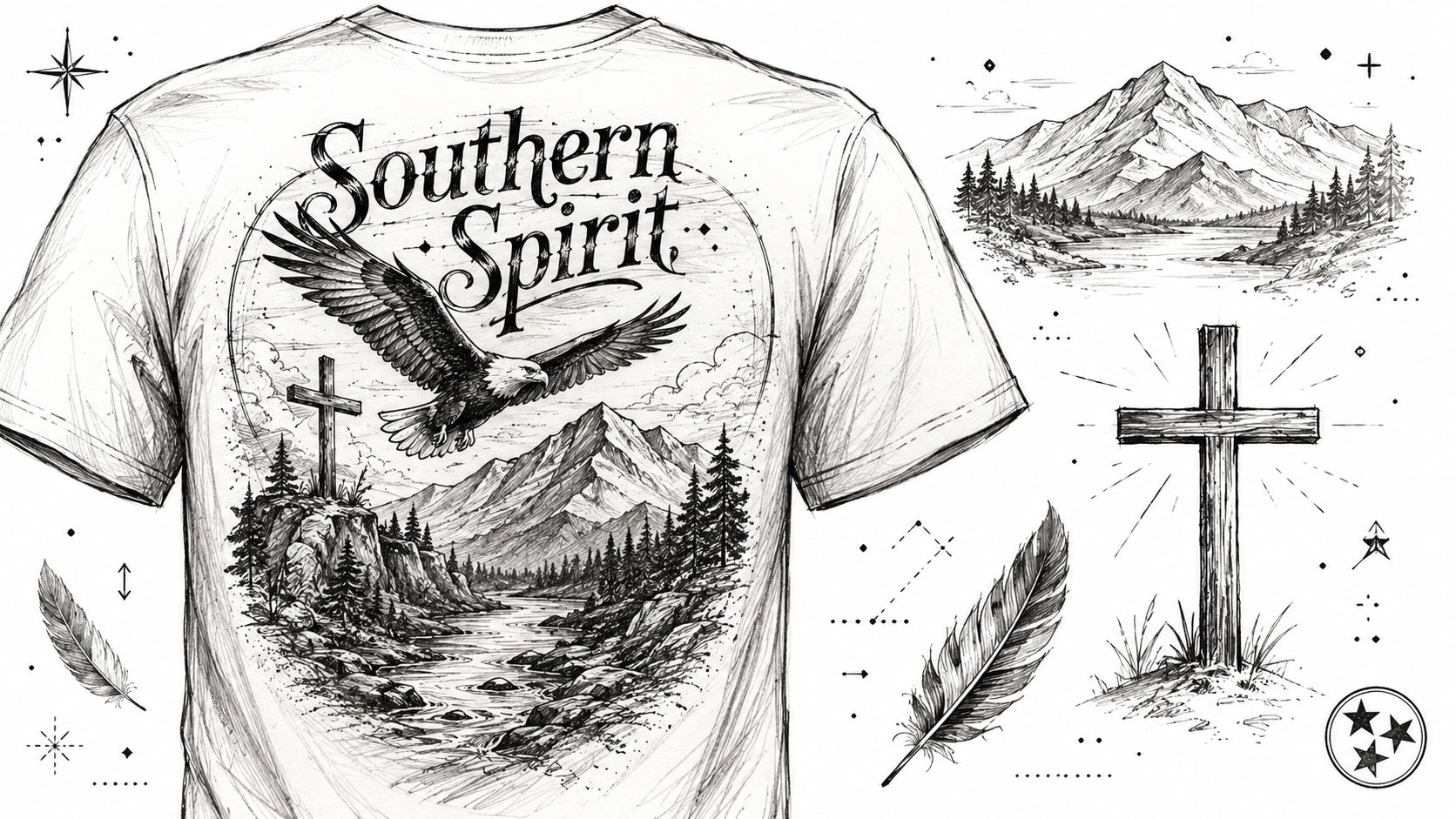
A strong graphic gives the shirt its voice. In Southern style, that voice often runs through faith, freedom, hunting, family, and the land itself. The best designs don't shout for attention, they carry identity in a way people recognize immediately.
Evergreen graphics hold the line
Market analysis points to a real choice between seasonal, viral graphics and long-life heritage designs. For buyers drawn to family, faith, or hunting themes, evergreen graphics keep demand far beyond one trend cycle (Virtue Market Research). That's the lane where most Southern outdoor shirts belong.
Short-lived graphics can be fun, but they age fast. Once the joke or trend falls off, the shirt usually does too. Heritage-driven artwork has a better chance of staying relevant because it connects to values instead of novelty.
Print quality changes the whole shirt
A good graphic print should feel like part of the garment, not a sticker pasted on top. Cheap prints often crack, fade unevenly, or make the shirt feel stiff in the wrong places. Better prints usually hold cleaner lines and keep the art readable after more wear.
That matters because a Southern graphic tee is often chosen for what it says as much as how it feels. If the message is faith-based, patriotic, or outdoors-driven, the print has to stay legible and respectful to the design itself. A muddy print cheapens the entire shirt.
Design should match the life you live
The most wearable graphics usually follow a simple rule, they look as natural at a family barbecue as they do on a trail or at a campsite. That doesn't mean the art has to be plain. It means the design should feel grounded and durable, not disposable.
A few good decisions make a big difference:
- Use symbols with staying power: Eagles, deer, mountains, crosses, flags, and traditional outdoor imagery tend to age better than fleeting references.
- Keep color use intentional: Too many loud combinations can make a shirt feel costume-like.
- Match tone to audience: A men's hunting tee, a women's heritage tee, and a kids' version should share the same family of meaning, not just the same logo.
The graphic is where identity lives, but only if the design is made to last. That's why evergreen Southern artwork and solid print execution belong together.
How to Style Your Tee for Any Occasion
A good outdoor graphic tee should move easily between settings. On one day it's under a hoodie at the gas station, on another it's paired with jeans for a family meal, and later it's part of a layered look for cooler weather. The shirt earns its keep when it doesn't force you to overthink the outfit.
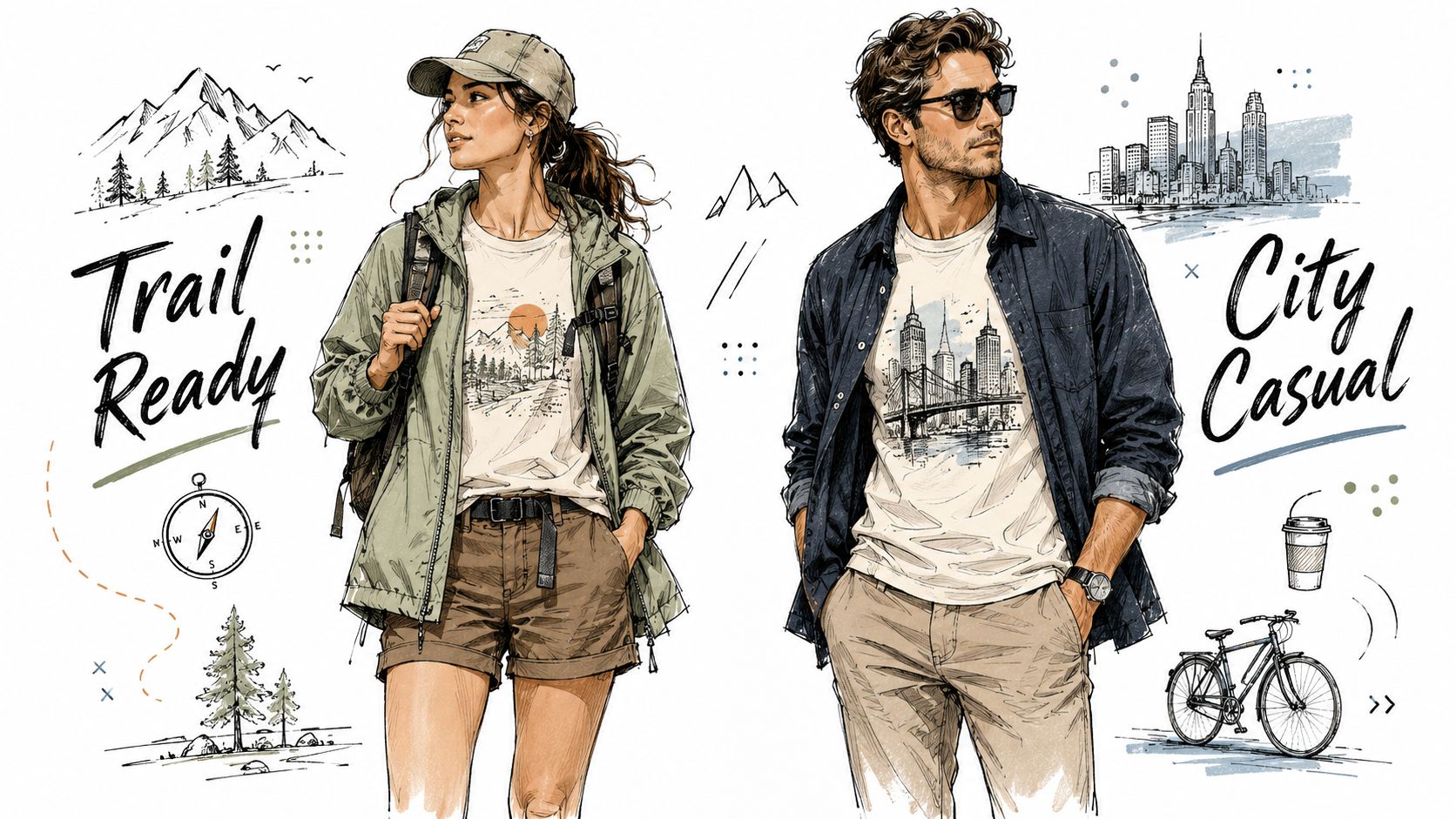
For men, a graphic tee with dark jeans and boots is an easy Southern uniform. For women, the same tee can work with denim, utility pants, or relaxed shorts, depending on whether the day leans more casual or more active. Kids usually need the simplest version of all, comfortable bottoms and a shirt that can survive the rest of the afternoon.
The market segmentation backs that family-first approach. The graphic t-shirt market is divided across men's, women's, unisex, and kids' categories, which shows clear demand for designs that can be carried across an entire family (Intel Market Research).
Keep the outfit honest
A Southern graphic tee doesn't need much help if the design is strong. Jeans, work pants, or clean shorts usually do the job. If the temperature drops, layer it under a flannel, overshirt, or light jacket instead of burying it under too many pieces.
Matching family outfits work best when they feel coordinated, not overdone. Use the same graphic family or theme, then vary the cuts and colors by age and preference. That keeps the look connected without making everybody look identical.
Let the shirt do one job at a time
- For errands and school pickup: Pair the tee with everyday denim and simple sneakers.
- For outdoor gatherings: Choose sturdier bottoms and let the graphic be the main statement.
- For cooler evenings: Add a layer that frames the print instead of hiding it.
- For photos: Keep the colors in the same general family so the group looks intentional.
The timing matters too. Put the shirt on when you want ease, not when you want a complicated outfit. That's why these tees work so well in real Southern life, they don't need to be dressed up to make sense.
Building a Collection That Lasts
The smartest wardrobe move is to buy fewer tees and make each one count. That means choosing a fabric that fits your climate, a cut that matches how you move, and a graphic that still feels right after the trend cycle passes. A good outdoor tee should work hard, wash well, and carry a message you're glad to wear again.
Care matters more than people like to admit. Shirts last longer when they're washed and dried with a little attention, especially graphic tees that you want to keep looking sharp. If you want a practical routine for preserving print and fabric quality, the graphic tee washing guide is worth keeping handy.
The best collections usually have range without waste. One soft casual tee, one sturdier midweight shirt, and one design that leans more heritage than trend can cover a lot of ground. That mix gives you options for family time, outdoor work, and the kind of everyday Southern living where clothes have to pull their weight.
Build around what you do, not what looks good for a single post or a single season. If your life runs from church parking lots to back roads to weekend cookouts, your shirts should reflect that rhythm. Start with quality, choose graphics that mean something, and wear them like they belong to your story.
A CTA for Southern Static Clothing Company.