

What Is a Garment Dyed Shirt? a Complete Guide for 2026
You know the shirt.
It's the one you reach for without thinking. The collar sits right. The fabric already feels relaxed. The color has some depth to it, not that flat, overly bright look that can make a new tee feel stiff before you've even worn it out of the house. It feels like it belongs to you on day one.
A lot of people assume that kind of comfort only comes from years of washing and wear. Sometimes it does. But sometimes that broken-in feel is built into the shirt from the start. That's where the garment dyed shirt comes in.
For brands that care about heritage, durability, and honest character, garment dyeing isn't just a factory detail. It's one of the clearest ways to shape how a shirt looks, feels, and ages. It gives a tee that lived-in softness and subtle variation that makes it feel less like merch and more like a favorite.
Table of Contents
- The Unmistakable Feel of a Favorite Shirt
- The Art and Science of Garment Dyeing
- Garment Dyed vs Other Dyeing Methods
- Why Garment Dyeing Defines Southern Static Style
- Caring for Your Garment Dyed Apparel
- Garment Dyed Shirt Frequently Asked Questions
The Unmistakable Feel of a Favorite Shirt
A good tee doesn't ask for patience. It doesn't need months of wear before it settles down. You pull it on, and it already feels easy.
That's the appeal behind a garment dyed shirt. Instead of looking factory-fresh and feeling a little too crisp, it arrives with a softer hand and a more natural appearance. The fabric feels like it has some history, even when it's brand new. For anyone who likes shirts with a worn-in soul, that difference matters.
Why people notice it right away
Individuals don't describe shirts in technical terms. They say things like, “This one just feels better,” or “This fits like an old favorite.” That reaction usually comes from a mix of touch, drape, and color character working together.
A garment dyed shirt tends to have:
- A softer first impression because the finished shirt goes through a wash-and-dye process after construction
- A more relaxed look because the color doesn't feel overly sharp or glossy
- A lived-in personality because natural variation gives the shirt some depth
Some shirts feel new. Others feel familiar. Garment dyeing is one of the few finishing methods that can create that familiarity before the first wear.
That's why this method fits so well with heritage-minded apparel. The goal isn't perfection in the polished, sterile sense. The goal is a shirt with comfort, staying power, and enough character to look at home anywhere from a back porch to a ball field to a long day outdoors.
The Art and Science of Garment Dyeing
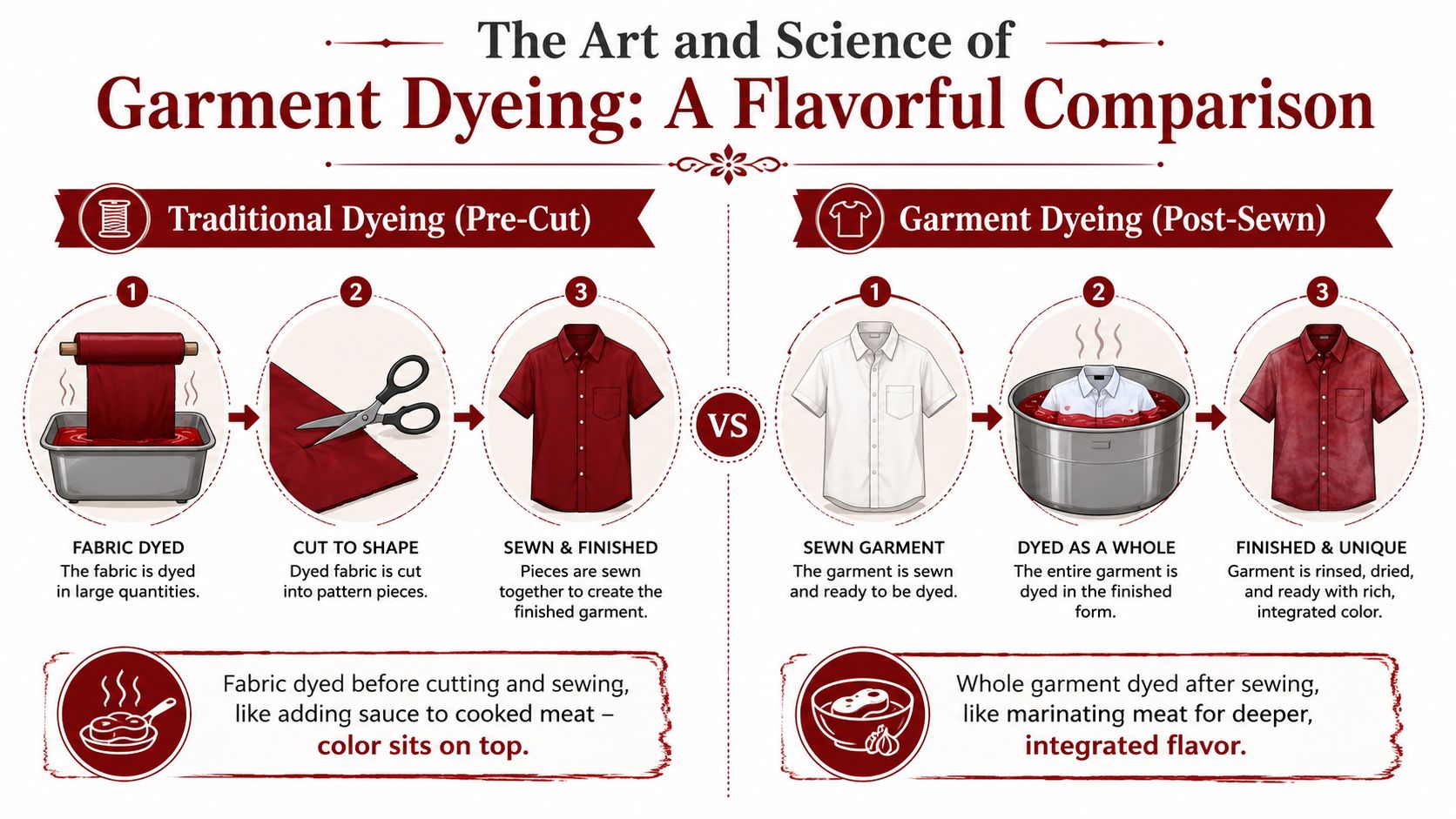
Garment dyeing is simple to describe once you picture the order of operations. The shirt is cut, sewn, and fully assembled first, then the completed garment goes into the dye bath.
That sequence changes everything. Instead of coloring a flat roll of fabric before construction, the maker dyes the whole shirt after it already exists as a shirt. Seams, panels, and stitching all go through the process together.
How the process actually works
The easiest analogy is cooking. Piece dyeing is like putting sauce on the outside after the main work is done. Garment dyeing is closer to marinating. The color works through the whole assembled piece rather than just treating fabric in an earlier stage.
The technical side matters here. According to Heavy Tshirt's explanation of why garment dyeing changes the result, garment-dyed shirts go through their complete shrinkage process during dyeing, which removes the usual 3 to 5% natural cotton shrinkage seen in piece-dyed garments after the first wash. The same source states that consumers typically see 99% shrinkage removal, which means the fit you buy is much closer to the fit you keep.
That's a practical benefit, not a marketing phrase. When sizing stays stable, a shirt becomes easier to trust.
For a real product example, you can see the type of construction this method suits in a unisex garment-dyed T-shirt made for that already-broken-in look.
Why the feel is different
Softness isn't accidental with this method. Because the whole finished garment is processed, the shirt comes out feeling more relaxed from the beginning. It doesn't have that stiff, untouched quality some new tees carry.
Later in the process, this visual walkthrough helps show the difference in action.
Practical rule: If you want a shirt to feel broken-in without waiting months for it, start with a dyeing method that treats the whole garment after sewing.
There's also a color advantage. When dye penetrates the assembled shirt thoroughly, the finished look tends to feel richer and more settled. Not loud. Not flat. Just more natural on the body.
Garment Dyed vs Other Dyeing Methods
The confusion usually starts when different dye terms get lumped together. They shouldn't be. A garment dyed shirt behaves differently from a piece-dyed shirt, and it's especially different from a pigment-dyed one.
The key distinction is depth. Garment dyeing colors the assembled shirt throughout. Pigment dye, by contrast, is often treated more like a coating on the surface. That difference affects touch, appearance, and how the shirt evolves with wear.
The difference customers notice first
If you line these shirts up side by side, the focus won't initially be on chemistry. It will be on feel.
A garment dyed shirt usually feels softer and looks more relaxed. Piece-dyed fabric often looks cleaner and more uniform. Pigment-dyed shirts can have a nice washed appearance, but the finish often reads more surface-level, especially when compared closely to true garment dyeing.
Here's the side-by-side view that matters most to buyers.
Dyeing Method Comparison
| Attribute | Garment Dye | Piece Dye | Pigment Dye |
|---|---|---|---|
| When color is applied | After the shirt is fully sewn | Before the fabric is cut and sewn | Applied as a surface treatment rather than deep absorption |
| Initial feel | Soft, broken-in, relaxed | Often cleaner and more standard in hand feel | Can look vintage, but often feels more like a finish than a full saturation |
| Color character | Tonal, lived-in, naturally varied | Even and consistent | Washed-looking on the surface, often flatter in depth |
| Seam and stitch effect | Color reaches the assembled garment, including seams | Seams are created after dyed fabric is cut | Surface treatment can make the look feel more top-coated |
| Shrinkage behavior | Pre-processed in a way that stabilizes fit | More likely to behave like standard cotton after purchase | Depends on base garment and finish |
| Overall personality | Heritage, worn-in, individual | Clean, uniform, straightforward | Style-driven, but often confused with true dye penetration |
Why the higher price can make sense
Garment dyeing asks for more handling and more quality control. It's a more deliberate finishing route, and that shows up in cost. According to ShirtSpace's breakdown of pigment dyed vs garment dyed shirts, garment-dyed shirts cost 30 to 40% more to produce due to the added labor and quality control. The same source says consumer inquiries asking “is this really dyed?” increased 22% from 2024 to 2025, which tells you people are actively trying to sort real garment dyeing from surface treatments.
That extra cost doesn't automatically make every shirt better. Poor fabric stays poor fabric. Weak construction doesn't become premium because a shirt went through a dye bath. But when a maker starts with solid cotton and uses garment dyeing well, the result often has more substance, more comfort, and more visual character than the cheaper alternative.
If you want to compare that look against a different washed finish, a mineral wash boxy cotton T-shirt is another useful reference point.
Why Garment Dyeing Defines Southern Static Style
Some clothing is supposed to look untouched. Heritage apparel usually isn't. It should look honest. It should feel like something you can wear hard and keep reaching for.
That's where garment dyeing earns its place. The process builds variation into the shirt itself, so the result doesn't come off sterile or over-finished. You get depth in the color, a little movement in the tone, and a look that feels settled from the start.
Character you can't fake
The strongest visual trait of garment dyeing is that it doesn't land perfectly flat. Different parts of the shirt can take color differently, and that creates life in the finished piece. According to VeeTrends' guide to garment-dyed vs pigment-dyed apparel, ribbed cuffs, sewing threads, and different fabric zones absorb dye at varying rates, which gives the garment unique tonal depth and ensures no two pieces are identical.
That's not a flaw to hide. It's often the whole point.
The best heritage garments don't look machine-perfect. They look settled, useful, and real.
Why that matters for heritage apparel
Southern-inspired clothing works best when the garment itself supports the message printed on it. A shirt with outdoor themes, small-town pride, faith, or field-worn grit shouldn't feel slick and lifeless. It should feel ready from the first wear.
Garment dyeing helps create that alignment:
- For vintage character, the shirt starts with a worn-in tone instead of waiting for years of fading
- For comfort, the fabric feels easier against the skin right away
- For authenticity, slight variation gives each piece a bit of individual identity
- For everyday use, the shirt looks natural dressed down, layered up, or worn repeatedly without feeling precious
A heritage brand's credibility lives in details. Fabric choice matters. Print quality matters. Fit matters. But the finishing method often decides whether the shirt feels like a real favorite or just another blank with a graphic on top.
Caring for Your Garment Dyed Apparel
A garment dyed shirt is easier to live with than many people expect. You're not babysitting a delicate museum piece. You're caring for a sturdy everyday garment with a little more personality than a standard tee.
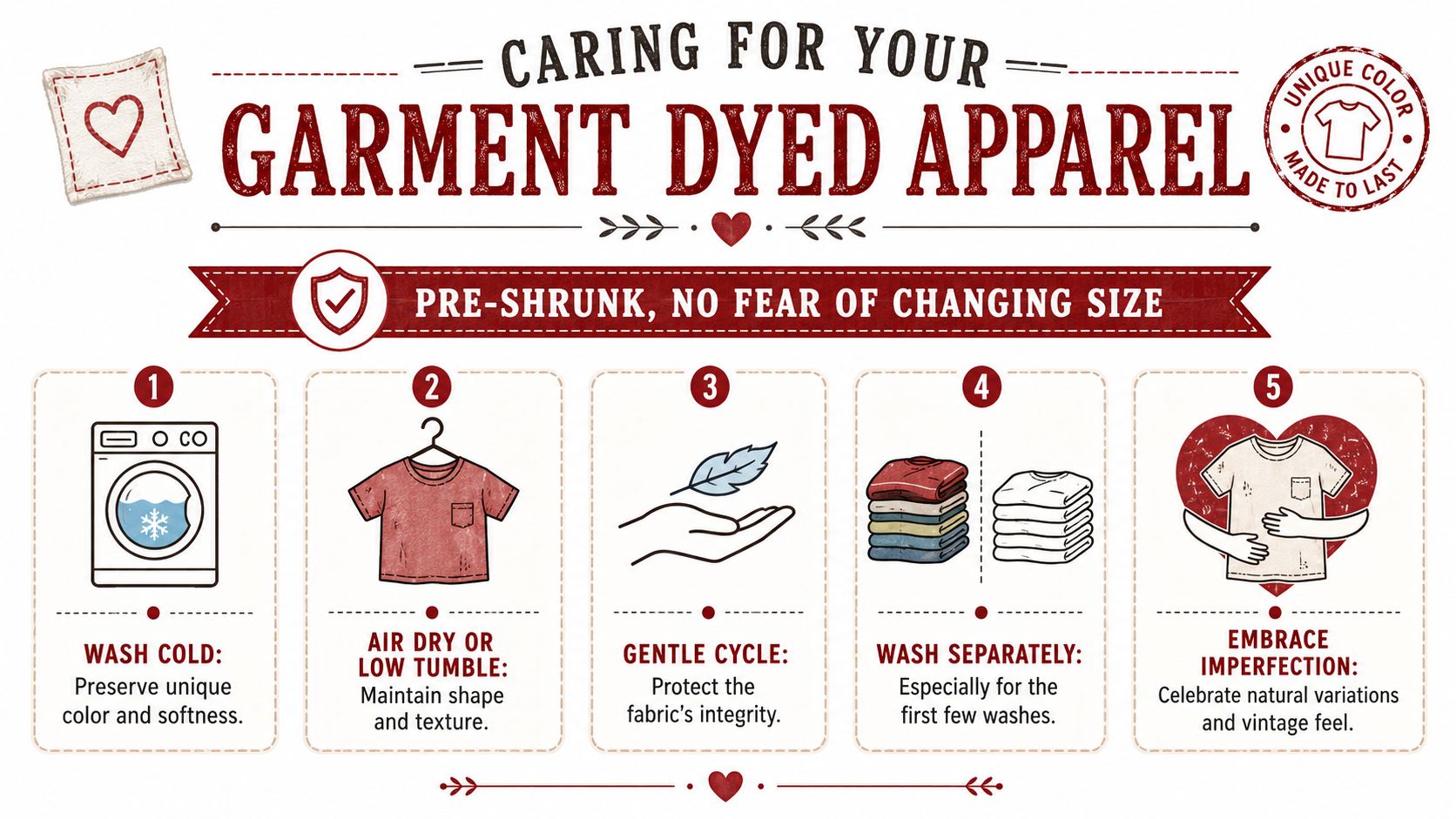
The big comfort point is fit confidence. Because the shirt has already been through serious processing before it reached you, there's less anxiety around that first wash.
A simple care routine
Most of the right care habits are straightforward:
- Wash cold to help preserve the depth of color and the soft hand
- Use a gentle cycle when you want to reduce unnecessary stress on the fabric
- Wash with like colors, especially during the first few washes
- Air dry or tumble dry low if you want to maintain shape and finish
- Don't overthink normal variation because a garment-dyed piece is supposed to have some natural character
If you want a deeper wash routine for printed tees, this guide on how to wash graphic tees is a useful companion.
What to expect over time
A good garment dyed shirt should age gracefully. The goal isn't to keep it frozen in brand-new condition forever. The goal is to preserve the softness, color richness, and shape while letting the shirt develop its own story.
Treat it like a favorite workhorse, not a fragile collectible. Clean it with care, wear it often, and let the character build naturally.
That approach usually delivers the best result.
Garment Dyed Shirt Frequently Asked Questions
People usually ask the same three things before buying a garment dyed shirt. They want to know why it costs more, why the color may vary, and whether it's built to last. Those are fair questions.
Why does a garment dyed shirt cost more
Because the process is more involved. The shirt is made first, then dyed as a finished garment, which adds labor and calls for tighter quality control. You're paying for a finishing method that shapes feel, fit stability, and visual character, not just for color alone.
In practice, that usually means a more considered product instead of the fastest possible production route.
Why can the color look a little different from the photo
Because uniformity isn't the goal. Garment dyeing happens after the shirt has been cut, sewn, and assembled, so the color works through the full piece, including seams. As noted in Stanley/Stella's explanation of garment-dyed character, the randomness of the process guarantees that each piece is unique.
That means your shirt may not look identical to every product photo or every other shirt in the run. In a heritage garment, that's usually a feature.
How long will a garment dyed shirt last
Longevity comes down to the fabric, the sewing, the print, and how the shirt is cared for. But as a category, garment-dyed tees are well suited to repeated wear because they begin life with a softer, more settled finish rather than a raw, stiff one.
What works best is simple. Buy one with solid construction. Wash it with some care. Wear it often. A good garment dyed shirt should keep looking like itself, only better lived in.
If you want apparel that carries that broken-in comfort and heritage feel from the start, take a look at Southern Static Clothing Company. Their Southern-inspired lineup reflects the kind of lived-in character, durability, and everyday wearability that makes garment-dyed style worth seeking out.