

How to Wash Graphic Tees to Keep Prints from Fading
You've probably done this before. You buy a graphic tee you love, wear it twice, then hesitate at the laundry room because you already know what can go wrong. The print can dull, the surface can start to feel rough, and after a few careless washes the design that sold you on the shirt can look tired.
The basic advice is well-known: Wash cold. Turn it inside out. Skip harsh cleaners. That's all good advice, but it still misses the part that ruins a lot of great shirts: mechanical friction inside the washer. In real life, cracked prints often come from the shirt rubbing against other clothes, the drum, and rougher fabrics over and over, especially in a crowded load with too little water.
If you want to know how to wash graphic tees so they keep their color, shape, and print for the long haul, the answer is part chemistry and part machine management. Heat matters. Detergent matters. But friction is the detail often underestimated.
Table of Contents
- Protecting Your Favorite Graphic Tee
- Pre-Wash Rituals to Save Your Prints
- The Definitive Machine Washing Guide
- Drying and Finishing Without Damaging the Design
- Special Care for Different Prints and Fabrics
- Your Graphic Tee Care Questions Answered
Protecting Your Favorite Graphic Tee
A great graphic tee isn't just another basic shirt. It's usually the one you reach for first, the one that fits right, and the one you notice immediately when the print starts to age badly. That's why careless laundry habits hurt more with graphic tees than with plain cotton basics.
The usual advice is incomplete because it treats the problem like it's only about temperature. It isn't. Washing a shirt is a combination of water temperature, detergent chemistry, agitation, fabric contact, and drying method. If one of those goes wrong, the design pays for it.
The hidden culprit is often motion. A print can survive a good detergent and still get worn down because the tee was jammed into a crowded mixed load with jeans, hoodies, or towels. The shirt gets cleaned, but the graphic gets scraped during the process.
Practical rule: Treat printed shirts like surface-sensitive garments, not like ordinary laundry.
That's especially important if you collect statement tees, outdoor graphics, or specialty printed shirts with a softer hand feel. A shirt from a collection like men's hunting and outdoor graphic tees deserves a little strategy before it ever goes into the machine.
The goal isn't babying a shirt. It's preventing the avoidable damage that makes a good print look old long before the fabric itself is worn out.
Pre-Wash Rituals to Save Your Prints
The best wash starts before the water does. A few small habits make a bigger difference than one might expect, especially if you want the surface of the print to stay smooth.
Sort by texture, not just by color
While separating lights and darks is standard, for graphic tees, it isn't enough. You also want to separate by fabric weight and surface roughness.
A printed cotton tee shouldn't be washed with towels, denim, garments with exposed zippers, or anything heavily structured. Even if the cycle is gentle, those items create rubbing points that can abrade the print.
A better sort looks like this:
- Graphic tees with other soft garments: lightweight tees, soft joggers, knit sleepwear, and smooth cotton basics.
- Keep rough items out: jeans, canvas workwear, towels, and sweatshirts with heavy trims.
- Watch closures and hardware: zippers, snaps, buckles, and hook fasteners can scrape the print surface.
If the shirt has a soft, washed finish, be even pickier. A garment-dyed or broken-in tee often feels better because the fabric is already relaxed. That same softness can make the shirt feel more vulnerable to rough wash companions. A product page like the Southern Static Vintage Town Graphic T Shirt Dye Wash Tee is a good reminder that finish matters, not just color.
Turn the shirt inside out the right way
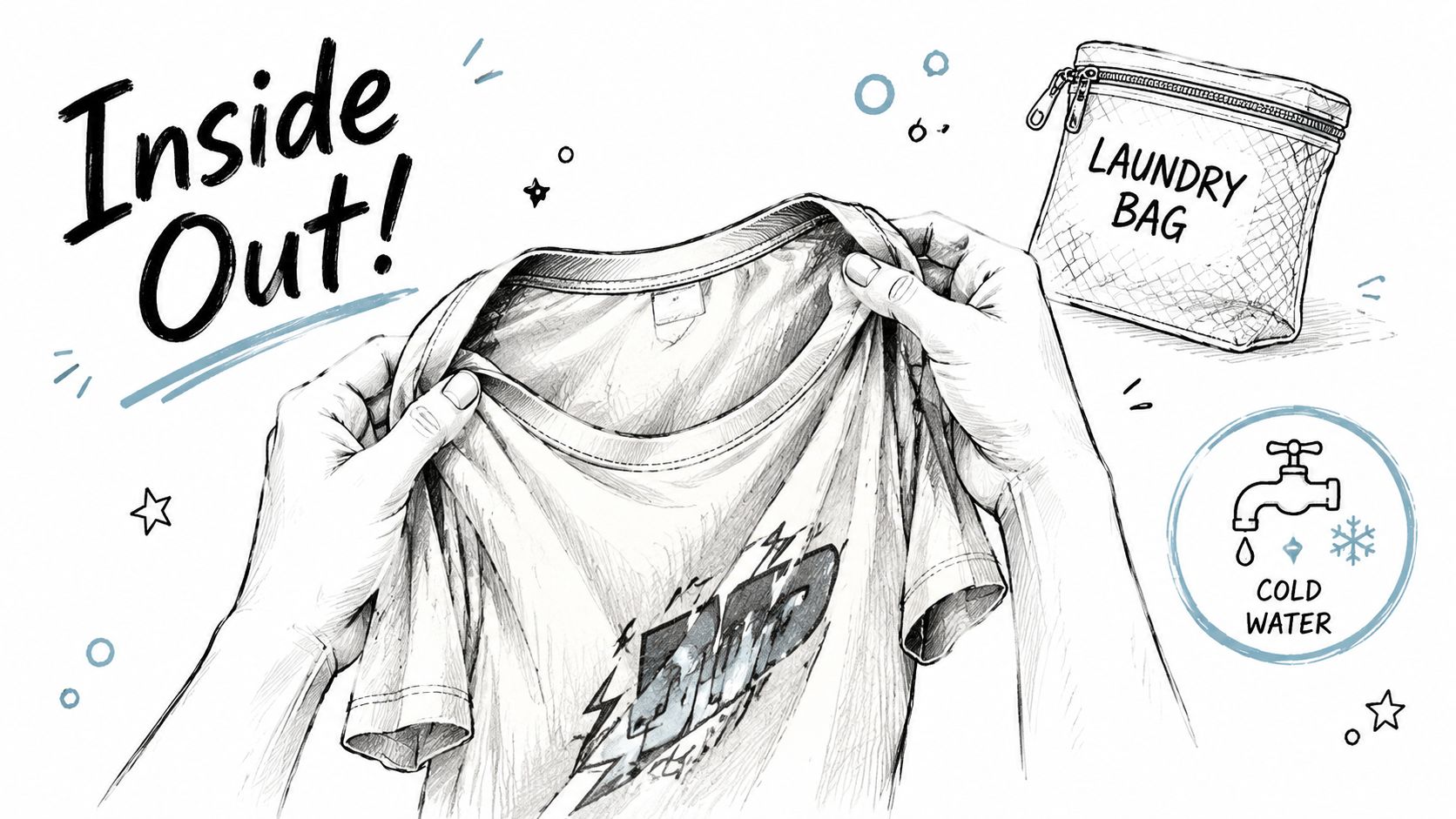
This step takes seconds and does real work. Turning a graphic tee inside out shields the printed face from direct abrasion in the wash. Verified care guidance notes that this step can reduce visible print wear by an estimated 30% over the garment's lifetime.
Don't just flip it halfway. Fully invert the shirt so the printed panel sits inward and the plain cotton side takes the rubbing.
A few extra checks help:
- Unfold the tee completely so water can move through it evenly.
- Empty pockets if there are any and remove anything stiff or sharp nearby in the load.
- Fasten nothing to the tee itself unless the care label specifically allows accessories like a wash bag.
The easiest protective step is often the one people skip because it feels too simple.
Treat stains without attacking the print
Stains need precision. If you scrub aggressively across the graphic or saturate it with harsh stain remover, you can fix the stain and shorten the life of the design.
Use a gentler approach:
- Target the fabric, not the artwork: apply a diluted vinegar solution or a gentle enzymatic stain remover directly to the stained fabric area, avoiding the printed surface when possible.
- Use cold water for the rinse: that keeps the treatment controlled before the main wash.
- Blot instead of scrubbing: friction during stain treatment can be as damaging as friction during the wash.
If a stain sits partly under the print, patience matters more than force. Work from the surrounding fabric inward and accept that a second gentle treatment is safer than one aggressive one.
The Definitive Machine Washing Guide
Machine washing can keep a graphic tee in great shape, but only if the load is set up to protect the print from rubbing itself old before the cycle even ends.
Set the water temperature first
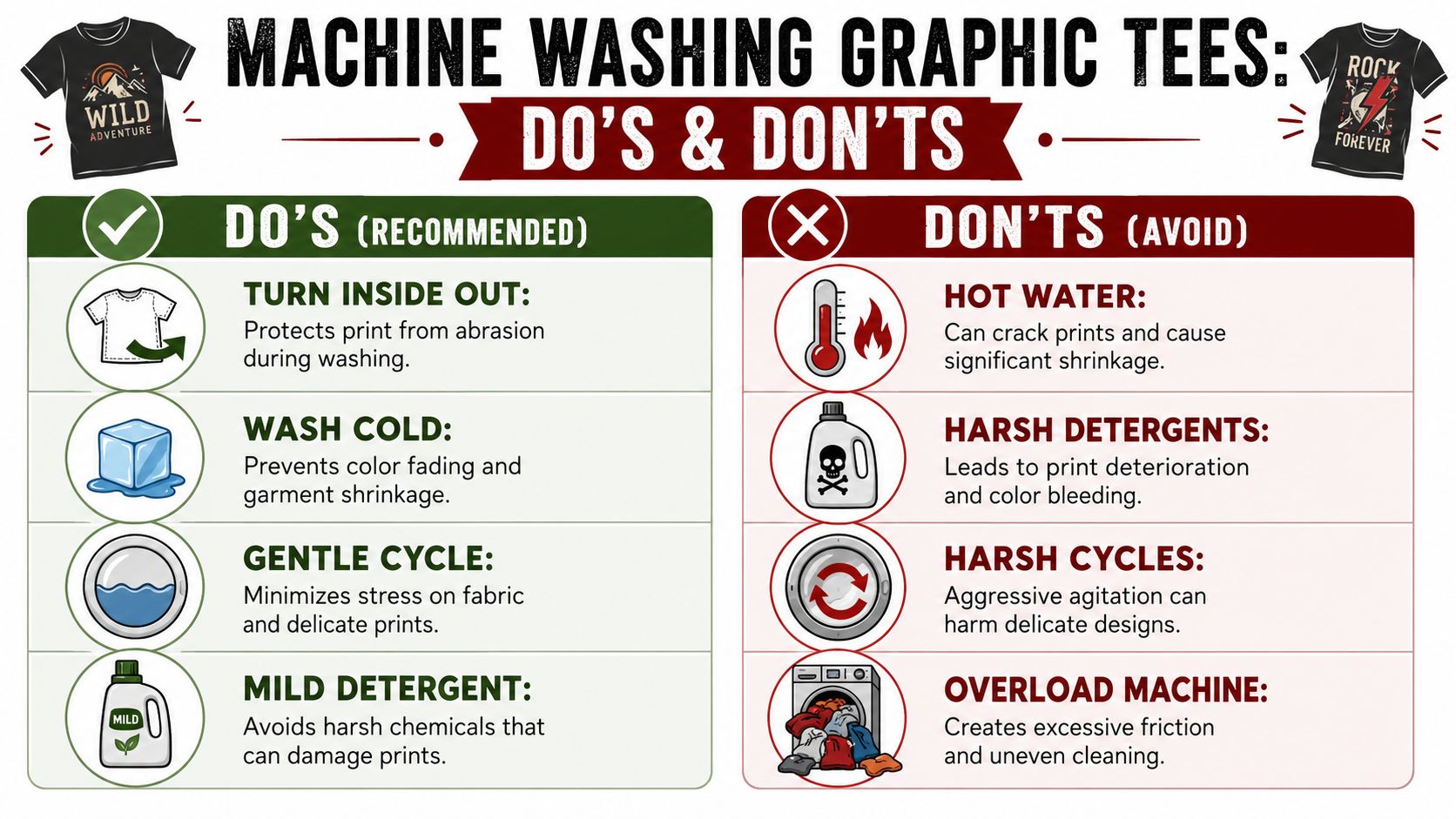
Cold water stays the baseline for printed shirts. Verified care guidance recommends washing at or below 30°C (86°F) because higher temperatures speed up dye loss and can soften screen-printed ink enough to shorten its life.
That matters at the print layer itself. A graphic is a bonded surface that needs to stay flexible while the shirt twists, wets out, and spins. Add heat, and that bond gets less stable.
Cold water also helps the cotton hold color and shape with less stress through repeated washes. For a collectible band tee, a limited drop, or just a shirt you wear every week, that is the safest place to start.
The friction problem many guides underplay
Temperature gets the attention. Mechanical friction does a lot of the damage.
I see this all the time with tees that were technically washed "correctly." Cold water, mild soap, no bleach, yet the print still turns dull, slightly rough, and then starts showing fine cracks. The usual culprit is load behavior inside the drum, not one dramatic mistake.
If the washer is packed tight, fabric cannot glide through water. It drags across cuffs, seams, zippers, waistbands, and thicker garments. That repeated contact scrapes at the printed surface over the full cycle. Cracking often starts as abrasion long before it looks like heat damage.
A high water-to-fabric ratio helps because the shirt can move through water instead of grinding against the rest of the load. This guidance from The Laundress washing guide supports the same principle: garments last longer when washing conditions reduce unnecessary friction and stress.
Use this rule of thumb:
| Load choice | What happens to the print |
|---|---|
| Small load with generous water | Less rubbing, less surface abrasion |
| Crowded mixed load | More scraping, faster print wear |
| Tee washed with other soft knits | Lower chance of damage |
| Tee washed with denim, towels, or structured items | Higher chance of cracking and dulling |
If your machine lets you choose water level, resist the urge to run the stingiest setting for a single tee or two. Eco settings save water, but on printed shirts they can increase fabric-on-fabric contact because there is less room for the garments to float. That trade-off matters.
A cold wash can still be hard on a print if the drum is crowded and the water level is low.
These habits make a visible difference:
- Wash small loads: one to five lightweight pieces is usually safer than stuffing the drum.
- Group by texture: pair graphic tees with jerseys, other T-shirts, or soft sleepwear.
- Keep out rough items: denim, towels, workwear, and anything with exposed hardware speed up abrasion.
- Use more water when possible: extra water often means less grinding.
A short demonstration can help if you want to compare methods in practice.
Choose the cycle and detergent carefully
After load size and water level, cycle choice is the next control point. Use a gentle or delicate cycle with lower agitation. The shirt still gets clean, but the print takes fewer hard twists and slaps against the drum.
Detergent should stay mild. A pH-neutral formula or a detergent made for delicates is usually enough for normal sweat, dust, and daily wear. Heavy-duty detergents can be useful for filthy work clothes, but a graphic tee rarely benefits from that extra strength.
Keep the settings simple:
- Cycle: gentle, delicate, or low-agitation
- Detergent: mild, pH-neutral, no bleach
- Avoid: overloaded normal cycles, rough mixed loads, and low-water washes that leave clothes rubbing against each other
If you keep one advanced rule from this guide, keep this one. Print damage often starts with friction inside the wash, not just with hot water.
Drying and Finishing Without Damaging the Design
A lot of shirts survive the wash and then get ruined in the dryer. Heat is brutal on printed surfaces, especially when it's repeated.

Why air drying wins
Verified care guidance is clear here. Air-drying graphic tees flat or on a hanger, never in a dryer, protects prints from heat damage, while tumble drying even at low heat of 40 to 50°C can crack inks after 10 cycles, and air drying maintains print quality indefinitely under normal care.
That's why I treat the dryer as the fastest way to shorten the life of a good tee. The combination of heat and tumbling stresses both the ink and the fabric at the same time. Even when the damage doesn't show up immediately, the print usually starts feeling stiffer and looking more tired earlier.
Air drying asks for more patience, but it saves the part of the shirt you actually bought it for.
Best ways to air dry a graphic tee
There are two dependable methods, and the right one depends on the fabric weight.
Lay it flat if the tee is soft, slightly stretchy, or heavier from garment dye or specialty washes. Put it on a clean towel or drying rack and smooth it into shape with your hands. This helps the shirt dry evenly without stretching the shoulders.
Hang it if it's a standard cotton tee with enough structure to hold shape. Use a plastic or smooth hanger and keep the shirt out of direct sunlight. Strong sun can be hard on dark dyes and printed surfaces over time.
A good routine looks like this:
- Remove the shirt promptly after the cycle ends.
- Reshape seams and hem by hand while it's damp.
- Choose flat drying or hanger drying based on fabric weight.
- Keep it away from direct, harsh sun during drying.
How to iron one safely
Sometimes a tee needs a little cleanup after air drying. You can iron a graphic tee, but the iron should never press directly onto the print.
Use these safeguards:
- Turn the tee inside out first: the print should face away from the iron.
- Choose a low setting: high heat defeats the purpose.
- Press lightly: don't drag the iron hard across the area where the graphic sits.
- If needed, place a thin cloth between iron and fabric: extra insurance is worth it on delicate prints.
If the shirt still has minor wrinkles, hanging it in a steamy bathroom is often safer than aggressive ironing. Printed tees respond well to low-stress finishing.
Special Care for Different Prints and Fabrics
Not all graphic tees fail in the same way. Some prints crack. Some fade. Some start peeling at the edges. The fabric under the print also changes how careful you need to be.

How print type changes the risk
Screen prints tend to have a bonded ink layer that can look great for a long time when it's treated gently. They usually hate heat and chemical aggression more than day-to-day wear from normal use. If you notice a print has a slightly raised or inked feel, treat it like a surface that needs protection from both hot water and harsh additives.
Softer-feel prints often look more “in” the fabric than “on” the fabric. They may not peel the same way, but they can still fade or abrade if washed roughly. Vintage-style graphics often look best with age, but there's a big difference between natural softening and unnecessary wash damage.
The one rule that applies across print types is chemical restraint. Verified guidance says to avoid fabric softeners, bleach, or optical brighteners. Bleach can break down the polymer bonds in screen-printed inks and cause them to disintegrate within 3 to 5 washes, while fabric softeners leave a waxy residue that blocks ink flexibility and can reduce print durability by up to 30% compared to washing without it. A pH-neutral, mild detergent is the recommended choice.
Fabric choices affect wash strategy
The base fabric changes how the shirt behaves in the washer and while drying.
A sturdy everyday cotton tee can usually tolerate a standard gentle cycle well if you control the load and water conditions. A softer garment-dyed tee benefits from an even lighter touch because the hand feel that makes it great also means you'll notice surface wear sooner. If you're caring for a softer everyday shirt like a garment-dyed minimal white everyday tee, think in terms of low stress from start to finish.
Kids' and baby tees deserve a similar approach, not because they're automatically fragile, but because comfort fabrics often feel best when they aren't hit with aggressive products or rough drying. All-over prints also deserve more caution because the visible design covers more surface area, so fading or abrasion is easier to spot.
Rough laundering doesn't just age the graphic. It changes the feel of the shirt that made you want to wear it in the first place.
A quick care matrix
| Shirt type | Main risk | Best care approach |
|---|---|---|
| Screen-printed tee | Cracking, peeling, heat stress | Mild detergent, low agitation, no dryer |
| Soft vintage-style print | Surface wear, fading | Inside out, soft load, air dry |
| Garment-dyed tee | Color wear, shape loss | Gentle wash, careful drying, avoid harsh chemistry |
| Kids or baby graphic tee | Fabric feel changing, print wear | Mild detergent, low-friction load, air dry |
| All-over printed item | Broad visible fading or abrasion | Separate carefully, cold wash, no heat finishing |
The details vary, but the strategy stays consistent. Protect the print from heat, chemicals, and rubbing. That combination preserves most graphic apparel better than any single “miracle” product.
Your Graphic Tee Care Questions Answered
A favorite graphic tee usually doesn't die from one disaster. It wears down from repeat friction. The washer is where that starts, especially when the load is too full or the water level is too low for the shirts to move freely.
Can I use fabric softener just once
I wouldn't. Fabric softener coats fibers and can leave a film on the print itself. That film may make the shirt feel slick at first, but over time it can reduce how cleanly the print flexes.
If softness is the goal, use a gentler wash setup instead. A small load, enough water for the shirts to circulate without grinding against each other, and air drying will do more for the feel of the tee than softener ever will.
Is hand washing better than machine washing
Hand washing is gentler if you do it carefully, especially for older prints or collector shirts you rarely wear. Still, a machine can be safe enough for regular rotation if you control the part that gets ignored most often. Friction.
The trade-off is convenience versus control. Hand washing gives you maximum control, but a properly set machine wash is easier to repeat. Consistency matters more than perfection. A careful machine routine every time will protect a shirt better than occasional hand washing followed by a rough mixed load or a hot dryer.
What if the print is already cracking
Cracking usually cannot be reversed. It can be slowed down.
Stop exposing the shirt to heat. Keep it out of loads with rough fabrics, heavy items, or anything with zippers and stiff seams. Then reduce mechanical stress as much as possible, because an already cracked print fails fastest when it keeps rubbing and folding under pressure in the wash.
Minor cracking can stay stable for a long time with better care. Advanced cracking calls for preservation. Wash less, wear it more gently, and retire it from heavy rotation if it has sentimental value.
How often should I wash a graphic tee
Wash it based on soil, sweat, and odor, not habit. Every wash cycle is another round of rubbing, twisting, and print flexing.
A tee worn for a few hours over clean skin often does not need a full wash. Spot clean small marks, air it out, and save full laundering for when the shirt is dirty.
Can I wash graphic tees with jeans or towels
No. Jeans, towels, hoodies, and heavy sweats create the exact wash environment that beats up prints. They add weight, drag, and rough surface contact.
I keep graphic tees with other lightweight, soft pieces only. That single sorting decision prevents a lot of premature cracking because the print is no longer scraping against harsher fabrics for an entire cycle.
What's the one mistake that ruins the most shirts
Overcrowding the washer.
Heat gets blamed first, and for good reason. But I see more print wear start with packed loads and low-water, high-contact washing. When shirts cannot float and separate, they slap, twist, and grind against each other from the first minute of the cycle. The ink layer takes that abuse before the fabric shows obvious damage.
If you change one habit, stop washing graphic tees in crowded mixed loads.
What's the simplest safe routine
Use this checklist:
- Turn the shirt inside out
- Wash in cold water
- Keep the load small, soft, and loose enough to move freely
- Use mild detergent
- Skip bleach, fabric softener, and brighteners
- Choose enough water to reduce rubbing, if your machine allows it
- Air dry
- Iron only inside out, on low, if needed
That routine works because it cuts the three things that age prints fastest. Heat, chemical stress, and repeated abrasion. If the shirt matters to you, controlling friction inside the washer is the habit that keeps it looking newer for longer.
Southern-inspired graphics deserve better than a rough wash cycle and a hot dryer. If you're adding new favorites to your rotation, browse Southern Static Clothing Company for graphic tees and lifestyle pieces made for people who care what their shirts say and how long they last.