

Outdoor Baseball Caps: A Southern Lifestyle Guide
A lot of folks know this feeling. You grab the same cap you wear to town, head out before daylight, and by midmorning it's soaked through, heavy on the forehead, and doing a poor job of keeping glare out of your eyes. The bill looks fine in the truck. In the field, it quits earning its keep.
That gap matters more than people think. A baseball cap can be part of your everyday style, but outdoor baseball caps have a different job. They need to manage sweat, hold their shape, cut sun exposure, and stay comfortable through heat, brush, wind, and long hours outside.
That's one reason the category keeps growing. The global baseball cap market was valued at USD 19.0 billion in 2024 and is projected to reach USD 35.0 billion by 2034, with sportswear accounting for 45.6% of the market according to Market.us baseball cap market data. Caps aren't just fashion pieces anymore. People use them as working gear and daily uniform.
A good outdoor cap should do both jobs well. It ought to perform when the day gets hot and still look right with the rest of a Southern wardrobe. That's where the difference shows up. Not in the logo alone, but in the build, the fit, and how it feels six hours in.
Table of Contents
- Introduction Why Your Everyday Cap Fails in the Field
- The Anatomy of a True Outdoor-Ready Cap
- Choosing the Right Cap for Your Adventure
- Styling Outdoor Caps for the Whole Family
- Keeping Your Cap Field-Ready for Years
- Shopping for Caps with Character and Craftsmanship
- Conclusion More Than a Hat Your Go-To Outdoor Essential
Introduction Why Your Everyday Cap Fails in the Field
A standard cotton cap usually fails in predictable ways. It absorbs sweat instead of moving it. It gets hotter as the day wears on. If the crown softens too much, it starts rubbing in the wrong spots and never quite settles back down.
That's fine for a short errand. It's a poor setup for a long sit in a deer stand, a humid walk to the water, or a day behind a mower, grill, or tractor.
The problem isn't the cap category
The problem is buying a fashion cap and expecting field performance from it. A cap built mainly for looks often puts graphic, color, and shape first. Outdoor baseball caps still need to look good, but the materials and construction have to carry real weight.
Most people don't need more hats. They need one cap that still feels right after sweat, sun, and a full day outside.
If you spend enough time outdoors, you learn to notice the details fast. Some caps trap heat. Some hold sweat right at the brow. Some lose structure after a few washes. Others settle in, stay comfortable, and become the one you reach for without thinking.
What field-ready actually means
A true outdoor cap should answer a few simple questions:
- Can it handle sweat: The forehead area shouldn't turn clammy and abrasive.
- Can it block sun: The brim and fabric should do real protective work.
- Can it breathe: Airflow matters, especially in Southern heat.
- Can it keep its shape: A cap that collapses or warps too easily won't wear well for long.
Those are practical standards, not marketing language. If a cap misses on two or three of them, you'll feel it before lunch.
The Anatomy of a True Outdoor-Ready Cap
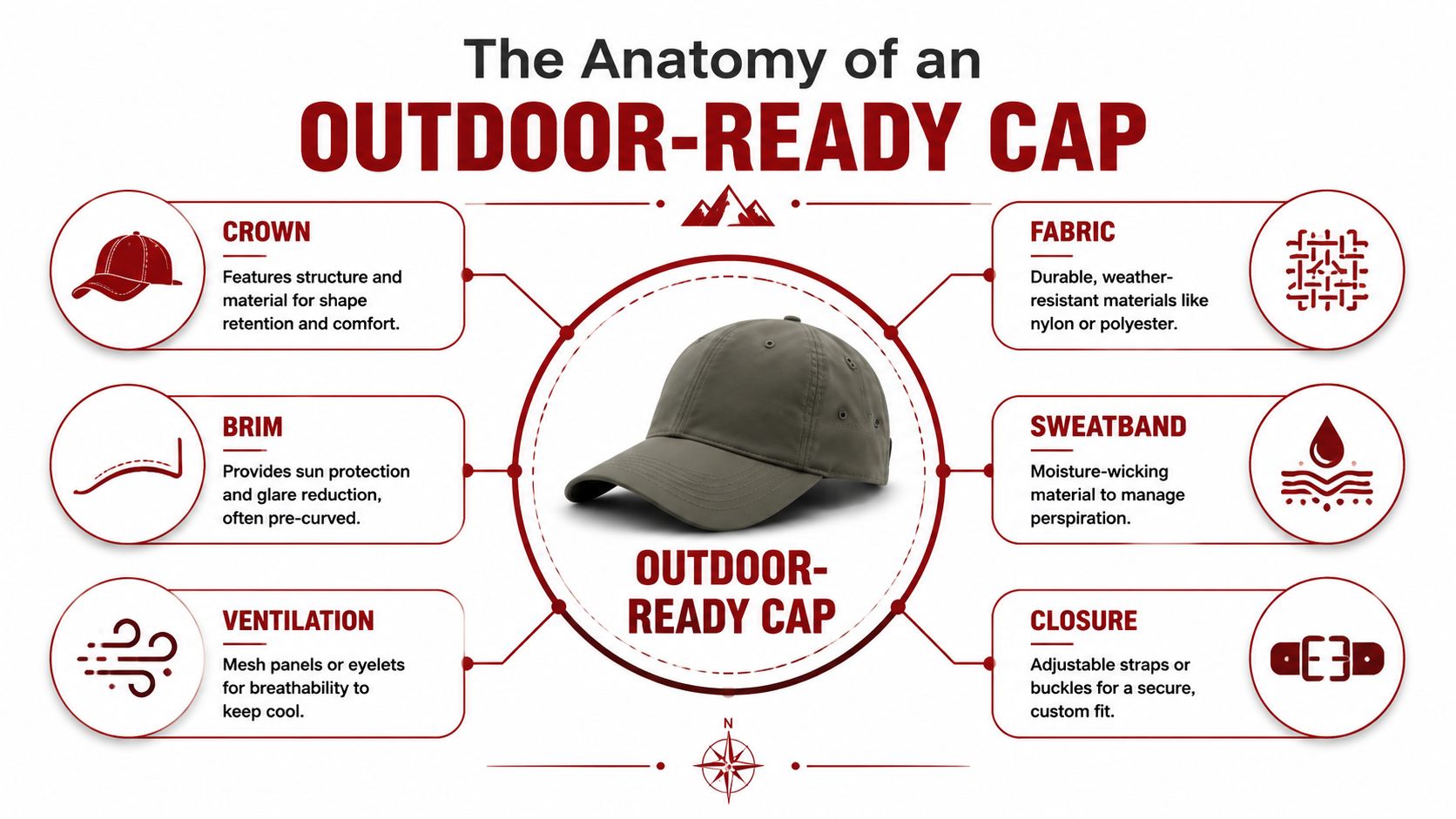
You can learn a lot about a cap in thirty seconds if you know where to look. Start with the fabric, check the brim, inspect the sweatband, then look at ventilation and closure. Those pieces tell you whether you're holding a field cap or a casual throw-on.
Fabric decides the ceiling
Fabric sets the cap's baseline. If the material is wrong, everything else is a compromise. Tightly woven polyester or nylon generally gives you better weather resistance, shape retention, and sun performance than cotton in hard outdoor use.
Cotton still has a place. It can feel familiar, softer out of the box, and more relaxed for town wear. But in heat and humidity, cotton often holds moisture longer than people expect. That's when the crown starts feeling heavy and the sweat line gets uncomfortable.
For a style-first wardrobe, cotton works. For real outdoor baseball caps, synthetic performance fabric usually gives you more margin.
A quick visual check helps:
| Part | What works | What usually disappoints |
|---|---|---|
| Crown fabric | Tightly woven nylon or polyester | Soft cotton that stays damp |
| Front panels | Structured enough to hold shape | Panels that wrinkle fast |
| Brim | Firm, consistent curve | Thin brim that loses form |
| Sweat zone | Built for wicking | Basic band that traps moisture |
Sun protection starts with proof
Sun protection isn't just about having a bill on the front. For outdoor use, the better standard is verified UPF 50+, which blocks at least 98% of UV radiation, paired with a front brim of at least 3 inches according to Alibaba's cap buying guide on UPF and brim coverage.
That matters because not every cap fabric protects equally. Tightly woven polyester or nylon tends to outperform cotton on UV resistance. If a cap has mesh, the openings should be even and consistent so ventilation doesn't come at the cost of weak coverage.
Practical rule: If you'll wear a cap in open sun for hours, don't guess about protection. Look for a verified UPF claim, not just a casual mention of “sun coverage.”
Style still counts, of course. Plenty of folks want a cap that carries a clean Southern look, and there's nothing wrong with that. If you want ideas on how heritage styling shows up in cap design, Southern style hats and classic regional looks offer a useful reference point.
Ventilation and fit make or break comfort
The next thing to inspect is airflow. Embroidered eyelets can be enough for lighter use, but in hot weather, many outdoor caps benefit from better ventilation through well-placed mesh panels or more breathable fabric construction. The key is balance. Too much open mesh can feel flimsy or expose more than you want in strong sun.
Then there's the closure. Adjustable designs are popular for a reason. They let you tune fit through the day if your hair, sweat, or temperature changes make the crown feel tighter. A bad fit doesn't just feel annoying. It creates pressure points and makes a good cap feel cheap.
Use this checklist when you pick one up:
- Check the sweat zone first: That's where comfort wins or loses.
- Flex the brim lightly: It should feel stable, not brittle.
- Look inside the crown: Clean seams usually mean better finishing.
- Try the closure twice: A good adjustment system shouldn't slip or bite.
The best outdoor baseball caps don't rely on one feature. They stack solid materials, useful protection, and dependable comfort into one piece you'll continue to wear.
Choosing the Right Cap for Your Adventure
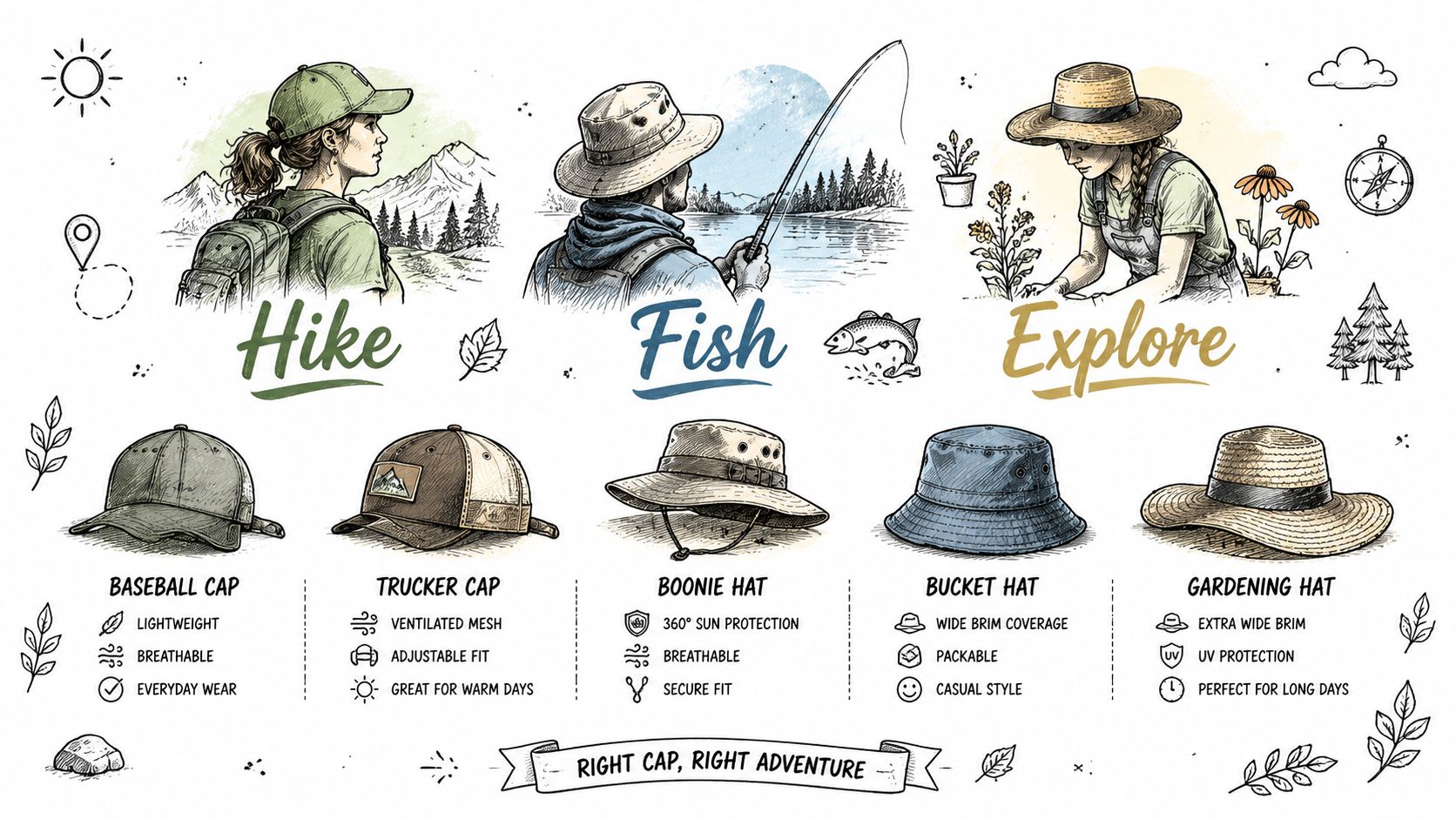
The right cap for a pond bank isn't always the right cap for a trail, a dove field, or a family cookout. Context matters. Heat, glare, movement, and how long you'll be out all change what you should prioritize.
Match the cap to the day
If the day will be active and sweaty, the sweatband becomes a deciding feature. For higher-output outdoor use, the better build is a bonded, not stitched, polyester-elastane wicking sweatband that spreads moisture effectively and helps reduce irritation and thermal discomfort during long wear, based on Crownsforge guidance on performance athletic cap sweatbands.
That sounds technical, but the result is simple. A better sweatband moves moisture across the material instead of letting it sit and pool at the forehead.
A few practical pairings
- For humid walks or work days: Prioritize a wicking sweatband, breathable crown, and secure adjustable fit.
- For bright water or open pasture: Favor stronger sun coverage and a brim that cuts glare cleanly.
- For cooler mornings and all-day casual wear: A structured cap with moderate ventilation usually feels more balanced than a super-light mesh design.
- For brushy or rough use: Choose sturdier fabric that won't snag or lose shape quickly.
Some readers like a quick visual breakdown before shopping. This video gives a useful general look at outdoor hat choices and how different styles fit different use cases.
Fit matters more than most buyers think
A cap can have all the right technical features and still be wrong for you if the fit is off. The crown height changes the whole feel. Lower crowns tend to sit closer and cleaner. Taller crowns can feel roomier but may move more in wind if the fit isn't dialed in.
Pay attention to these pressure points:
- Forehead pressure: Usually means the band or front panels are too rigid for your head shape.
- Side squeeze above the ears: Common with caps that run narrow.
- Lift at the back: Often shows the cap is too shallow.
- Constant need to readjust: Usually a closure or crown-depth issue.
A cap should disappear once you've got it on. If you keep noticing it, something about the fit is wrong.
Face shape matters some, but comfort matters more. A cap that balances your features but gives you a headache by noon isn't a good cap. Choose the one you'll wear through the whole day.
Styling Outdoor Caps for the Whole Family
Outdoor gear doesn't have to look separate from the rest of your life. Around here, the best pieces usually pull double duty. They work in the field, then still look right at the feed store, the ball field, or a Saturday fish fry.
That's part of why family buying patterns matter in this category. Men accounted for nearly 52% of global baseball cap sales in 2023, while women and kids represented 28% and 20%, which points to real demand for coordinated headwear across households, as noted in Global Growth Insights baseball cap market coverage.
A cap can tie the whole look together
For men, an outdoor cap usually looks best when it doesn't try too hard. A broken-in cap with clean stitching works well with a graphic tee, field jacket, denim, or camo layers. The cap should ground the outfit, not dominate it.
For women, the sweet spot is often the same mix of utility and ease. A structured cap with a clean profile pairs well with oversized tees, utility shirts, pullovers, and everyday outdoor basics. Neutral shades, washed earth tones, faded greens, and classic dark colors tend to age better than loud novelty prints.
Kids are different. Their caps need to survive hard use, fast changes in routine, and the fact that they'll toss them in the truck, grass, or back seat without a second thought. That means simple closure systems, forgiving fit, and colors that still look good after repeated wear.
Family coordination works best when the color story matches and the exact cap doesn't have to.
Coordinating without looking too matched
The sharpest family sets usually share a theme, not a uniform. Think common colors, similar patch style, or a related outdoor motif across sizes. That feels natural. Exact clones on everybody can look forced unless the occasion calls for it.
A few combinations work well:
- Dad in a darker field cap: Pair it with a kid's version in the same tone family, then let shirts vary.
- Mom in a cleaner structured cap: Match the graphic style, not necessarily the exact color.
- Younger kids in simpler versions: Keep the look connected through color and shape more than detailed design.
- Seasonal events: Fall bonfires, opening weekends, county fairs, and family photos all benefit from one visual thread without going costume-like.
If you're pulling together coordinated outdoor looks for children, kids outdoor clothing with Southern and field-inspired styling can help you think in terms of pieces that work together rather than one-off outfits.
The point isn't to make every family member look identical. It's to build a look that says everybody belongs to the same crew, with enough personality left for each person to wear it their own way.
Keeping Your Cap Field-Ready for Years
A good cap usually gets ruined by neglect before it gets worn out. Sweat salts, sunscreen, dust, and everyday grime build up slowly. Then one day the band feels stiff, the crown smells off, and the brim starts looking tired.
That doesn't mean the cap is done. It usually means it needs better care.
Clean it before buildup sets in
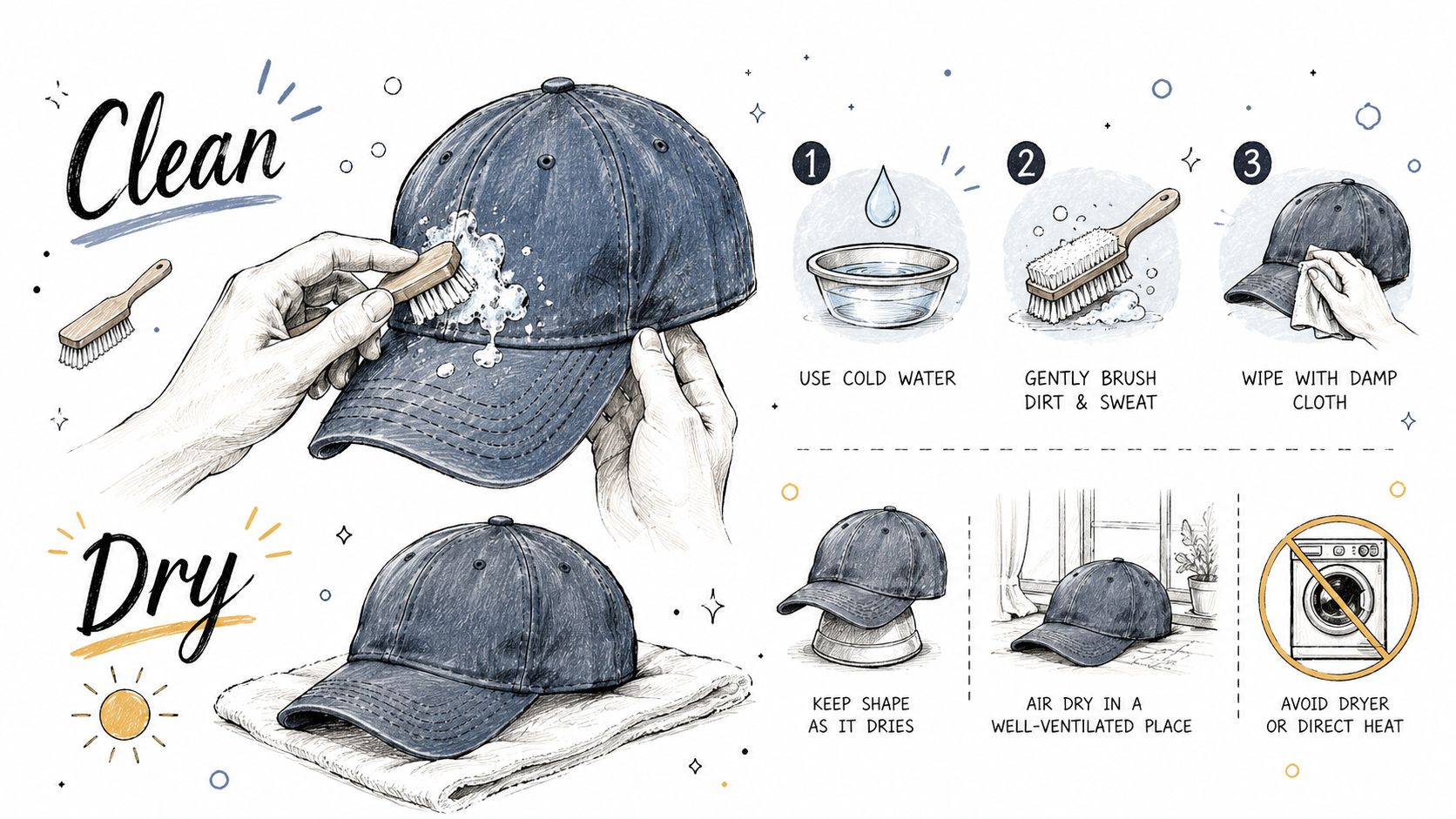
The safest habit is simple. Clean the cap lightly and regularly instead of waiting until it's filthy. Heavy scrubbing is what damages shape, stitching, and graphics.
A straightforward routine works well:
- Brush off dry dirt first: Use a soft brush or dry cloth so you don't grind grit deeper into the fabric.
- Spot clean the sweat areas: A damp cloth with mild soap usually handles the forehead band and inner edge.
- Hand wash when needed: Use cool or lukewarm water, light pressure, and patience.
- Rinse thoroughly: Soap left in the sweatband can make the next wear feel stiff or irritating.
If the cap has printed artwork or a detailed patch, scrub around it, not through it.
Drying and storage protect the shape
Heat does more damage than gentle washing. Don't rush the drying process with a dryer, a hot dashboard, or direct high heat. Let the cap air dry in a shape that supports the crown and keeps the brim natural.
A few habits make a difference over time:
- Use a towel to press out moisture: Don't twist or wring it.
- Reshape the crown by hand: Small adjustments while damp matter.
- Dry in open air: A shelf, counter, or rack works better than a cramped corner.
- Store it where the brim won't flatten: Stacking gear on top of caps is how good ones get bent out of shape.
If a cap carries sweat stains after repeated wear, clean it sooner next time. Once buildup hardens into the fabric, it gets harder to remove without rough treatment. The best-looking old caps aren't always the newest. They're the ones somebody cared for consistently.
Shopping for Caps with Character and Craftsmanship
Some caps look good on a product page and disappoint the minute you handle them. Others don't shout for attention, but the quality shows up in the seams, the feel of the brim, and the way the crown sits straight. That's what you want to train your eye for.
There's also a real gap in how people talk about handcrafted gear. Existing content rarely explains how artisan or handcrafted claims affect functional consistency in outdoor caps, or how limited runs affect long-term availability for families needing coordinated sizes, as discussed in Maximize Market Research headwear market analysis. That's worth paying attention to if you buy with both performance and family use in mind.
What to inspect before you buy
A cap with character still needs discipline in the build. Heritage style isn't an excuse for sloppy finishing.
Check these details closely:
- Seam consistency: Uneven stitching can hint at broader quality issues.
- Brim shape: It should look intentional from both sides, not warped or lopsided.
- Sweatband attachment: The inside finish tells you a lot about comfort and longevity.
- Closure hardware or strap feel: Cheap adjustment parts often fail before the fabric does.
- Graphic application: Patches, embroidery, and prints should look secure and clean-edged.
If you're browsing styles built around hunting and outdoor use, hunting and outdoor hats with Southern-inspired styling can give you a sense of the visual cues many buyers look for in this category.
Small-batch appeal has a real trade-off
Small-batch and handcrafted production can be a strength. You often get more personality, more intentional design, and a stronger sense that someone cared about the final product. That's a real draw in Southern outdoor gear, where people value things that feel made, not just manufactured.
But small-batch also asks more from the buyer. Fit may vary a little more from run to run. Family coordination can get harder if sizes or matching colors sell through and don't come back soon. If you're buying for a whole household, that matters.
A smart buyer balances both sides. Appreciate the story and the craftsmanship, but still inspect the cap like a piece of gear. If it can't hold up in use, the story won't save it.
Conclusion More Than a Hat Your Go-To Outdoor Essential
The right cap earns its place the same way any good piece of outdoor gear does. It solves problems before they turn into distractions. It manages sweat, handles sun, wears comfortably for hours, and still looks like it belongs with the rest of your life.
That's why outdoor baseball caps deserve more attention than they usually get. The best ones blend technical function with everyday wearability and a sense of place. They don't feel like borrowed athletic gear, and they don't fall apart when the day gets long.
A solid cap should feel at home in the truck, on the water, in the woods, and around family. When you find one built with that balance in mind, it stops being an accessory. It becomes the cap you trust.
If you're looking for gear that reflects Southern heritage and an outdoor way of life, take a look at Southern Static Clothing Company. Their lineup brings together hats, apparel, and family-ready pieces built around small-town values, field-inspired style, and everyday wear that feels right on Southern ground.