

Southern Style Hats: Your Ultimate 2026 Guide
My granddad kept two hats by the back door. One was sweat-stained and shaped by years in the sun. The other came out clean for town, church, and fall gatherings, and you knew exactly what kind of day it was by which one he reached for.
Table of Contents
- More Than an Accessory It Is a Piece of You
- The Roots of Southern Headwear
- A Guide to Modern Southern Hat Styles
- Built for the South Materials and Construction
- Finding Your Perfect Fit and Size
- How to Style Your Southern Hat for Any Occasion
- Keeping Your Hat in Top Shape
- Find the Hat That Tells Your Story
More Than an Accessory It Is a Piece of You
In the South, a hat tells on you in the best way. It says whether you came from a deer stand at daylight, whether you work outside, whether you dress sharp for a Saturday supper, or whether you just know the value of carrying a little shade with you.
That's why southern style hats don't fit neatly into one category. They aren't only costume, and they aren't only utility. A good one sits right in the middle. It keeps sun off your face, breaks a light drizzle, cuts glare, and still says something about your people, your habits, and your taste.
Some hats earn their character. A straw hat with a softened brim and a sweat line around the band has seen real weather. A trucker cap with a faded patch and a curved bill has likely ridden shotgun in a farm truck, gone to the ball field, and spent long afternoons at the river. You can't fake that kind of wear, and most Southerners can spot the difference.
What a Southern hat usually signals
- Work: Practical hats are built to survive heat, dust, brush, and long hours outside.
- Place: Certain styles look right in certain settings. A cowboy hat reads differently than a mesh-back cap.
- Occasion: The hat you wear to cut grass isn't the one you wear to a wedding reception.
- Identity: Southern pride often shows up in logos, patches, camo, faith-driven graphics, and old-school shapes.
A hat isn't the finishing touch in Southern dress. A lot of times, it's the first decision.
The best approach is simple. Match the hat to the weather, the job, and the room you're walking into. When you do that well, the hat never feels forced. It feels like part of you.
The Roots of Southern Headwear
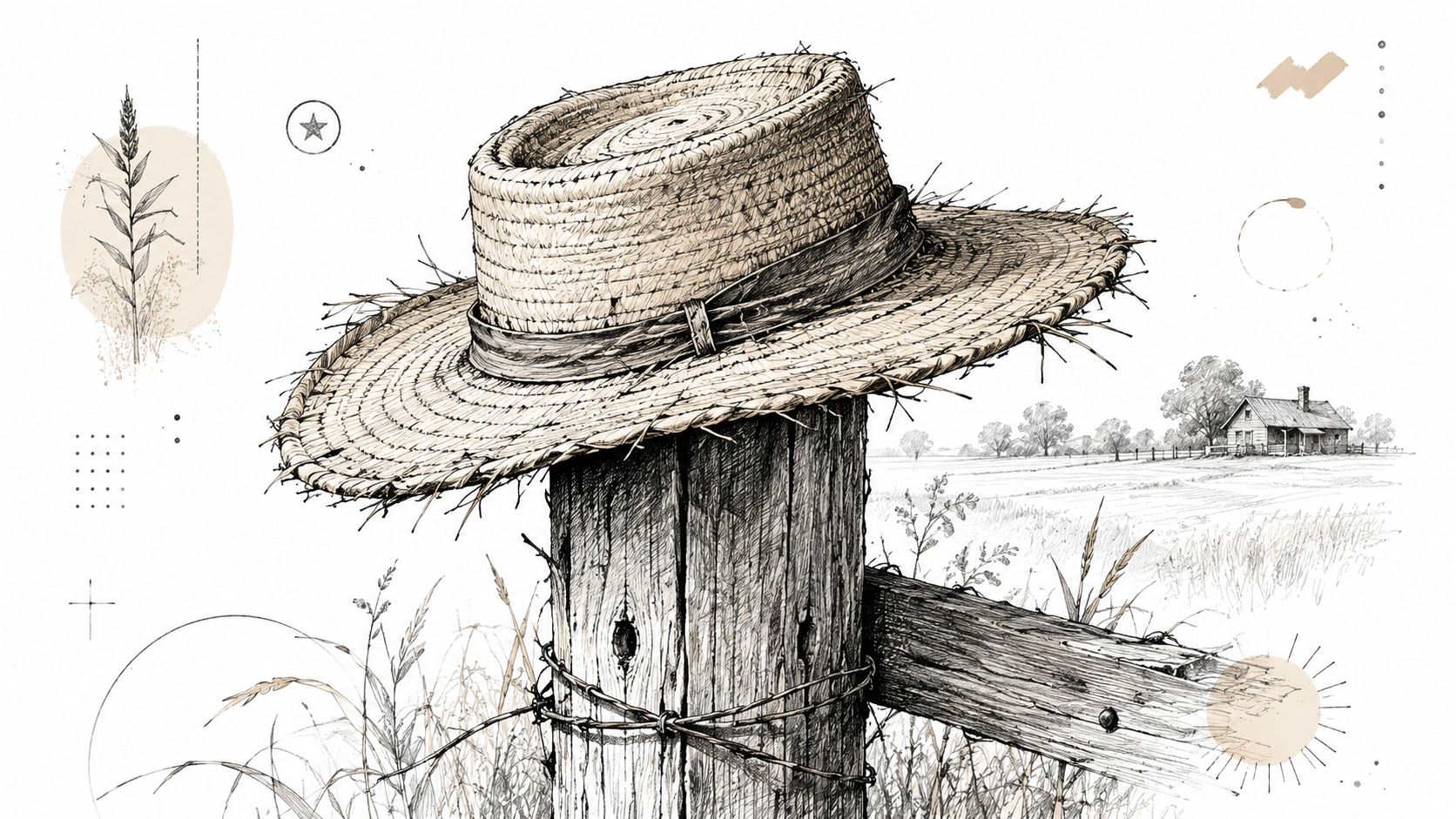
A lot of people treat the cowboy hat like it just appeared fully formed as a style symbol. It didn't. It came from need first, and that's part of why it still carries so much weight.
The modern cowboy hat traces back to 1865, when John B. Stetson created what's widely recognized as the first true cowboy hat, a high-crowned, wide-brimmed design made for North American cowboys working outdoors, according to the historical record on the cowboy hat. That date matters because it marks the point when rough work headwear became a recognizable form with its own identity.
Why the shape stuck
The shape wasn't invented for show. The wide brim gave coverage from sun and weather. The high crown improved comfort and practicality in open country. That combination turned out to be useful enough that it survived long after the original working conditions changed.
In Southern life, useful things tend to stick around if they also wear well. That's exactly what happened here. The cowboy hat moved from ranch work into rodeos, game days, fairs, concerts, hunting camps, and family photos. It became one of those rare pieces of gear that crossed over without losing its backbone.
From field gear to regional symbol
What makes Southern headwear different is that heritage never fully separated from function. Even when a hat is worn for style, the style itself comes from work. That's why the silhouette still feels honest.
You see that same idea in how Southerners talk about a hat. Nobody says a hat “completes a look” unless they're trying too hard. More often they'll say it “wears right,” “fits right,” or “looks like you.” Those phrases come from habit, not trend language.
Practical rule: If a hat's history starts in hard use, people will forgive a few scuffs. They won't forgive a shape that looks flimsy or fake.
That old standard still matters. Southern hats carry pride, but they also carry expectations. If the brim looks cheap, if the crown collapses, or if the material fights the weather, the hat loses its credibility fast. Heritage only works when the build respects the conditions that created it.
A Guide to Modern Southern Hat Styles
Southern style hats cover more ground now than they used to. You'll still see classic Western shapes, but today's Southern lineup also includes mesh-back caps, camo pieces, low-key ballcaps, and a few styles that work best around water, heat, or travel.
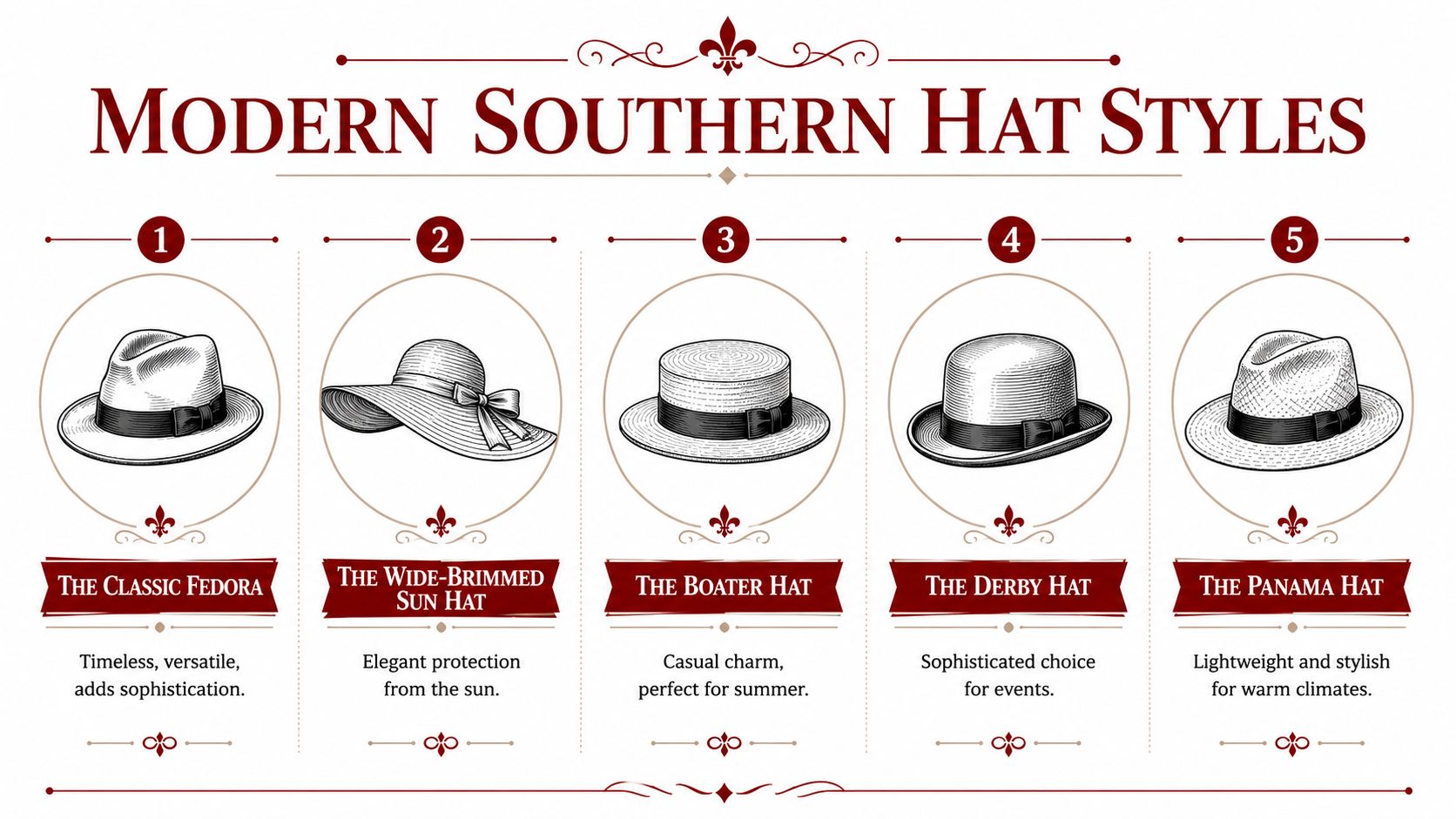
One of the clearest shifts in recent years is the rise of the classic Southern snapback. The structured foam-front hat with a plastic adjustable closure has become increasingly popular over the last few years, with demand tied to heritage-themed accessories and contemporary graphic styling, as described in this overview of Southern hats and current style trends.
Cowboy hats
This is still the backbone of Southern hat culture. A cowboy hat brings shape, presence, and weather coverage in one shot. It works best when the rest of the outfit is clean and confident. Boots and denim are the obvious pairing, but a simple button-down does the job just as well.
What doesn't work is forcing one into a setting where everything else is too modern or too athletic. A cowboy hat asks the rest of your outfit to hold its weight.
Straw hats
Straw hats earn their keep in hot weather. They make sense for field work, stock events, summer gatherings, and long stretches under open sky. They also tend to look more natural in daylight than they do under harsh indoor lighting.
A good straw hat feels easy. A bad one feels brittle, stiff in the wrong places, or too costume-like around the crown.
Trucker hats and foam-front snapbacks
Modern Southern identity finds its clearest expression in current hat styles. Patch hats, logo hats, faith-forward hats, and old-school outdoor graphics are key examples. These are often the easiest southern style hats to wear daily because they don't demand a full Western outfit.
They also travel well across settings. You can wear one at the gas station, the dove field, a tailgate, or a casual lunch and not look out of place. If you want to browse examples of that field-meets-lifestyle lane, hunting and outdoor hats show the kind of category that's become common in Southern apparel.
Camo caps and hunting hats
Camo only works when it fits the setting or the rest of the clothing supports it. In the woods, it's practical. Around town, it can still work if the hat is the only camo piece and everything else stays simple.
Use these when you want function first. They tend to pair best with durable outer layers, denim, work pants, and boots that show some use.
Ballcaps and bucket hats
Ballcaps are the quiet workhorses. They're the easiest grab-and-go option for everyday wear, yard work, travel, and weekends. They don't announce themselves, which is part of their value.
Bucket hats are less traditional in Southern culture, but they do have a place. They're useful around water, in direct sun, and in settings where full brim coverage matters more than sharp structure.
Quick style comparison
| Style | Best use | What it does well | What to watch |
|---|---|---|---|
| Cowboy hat | Events, outdoor work, heritage wear | Presence, coverage, tradition | Can overpower a casual outfit |
| Straw hat | Summer heat, field use, outdoor gatherings | Breathability, shade | Cheap straw can crack or look stiff |
| Trucker hat | Everyday wear, tailgates, casual outdoor use | Easy fit, graphic expression | Weak front panels lose shape |
| Camo cap | Hunting, rugged casual wear | Practical, low-fuss | Too much camo can look heavy-handed |
| Ballcap | Daily use, travel, chores | Versatile, familiar | Less protection than a wider brim |
| Bucket hat | Fishing, boating, sun-heavy days | All-around coverage | Not every face shape likes the silhouette |
Built for the South Materials and Construction
Southern weather punishes weak gear. Heat, humidity, sweat, sudden rain, and long daylight hours will expose poor materials in a hurry. If you want a hat that does more than look good on a shelf, start with what it's made of and how it holds its shape.
Material choice splits cleanly by season. Straw hats made from toquilla, palm leaf, or paper braid are the top choice for summer because they breathe well. Felt hats made from wool, rabbit, or beaver fur are the winter choice because they provide insulation and resist wet conditions, according to this material guide for Florida cowboy hats.
Summer materials that actually help
Breathability matters more in the South than many first-time buyers expect. A hat can have a good shape and still become miserable if it traps heat.
For summer wear, these are the usual wins:
- Toquilla straw: Often chosen when you want a cleaner, finer look with airflow.
- Palm leaf: Usually a tougher option for hard outdoor use.
- Paper braid: Often more accessible and lighter in feel, though not always as rugged.
The same source notes that straw variants should carry UPF 50+, which blocks 98% of UV radiation for prolonged outdoor use in strong sun. That's one of the few technical details worth checking when you know a hat will live outside rather than mostly ride in the truck.
Winter felt and wet-weather sense
Felt changes the whole equation. It's less about maximum airflow and more about shape retention, warmth, and resistance when the weather turns raw.
The same material guide also explains the X rating used in cowboy hats. Higher X counts indicate better fur felt quality, with stronger durability and better water resistance. You don't need to chase the fanciest rating for casual wear, but you do need to know that all felt isn't built the same.
If you wear a felt hat in bad weather, the cheap one tells on itself first.
Shape details that affect performance
Construction matters just as much as material. Southern-style cowboy hats generally work best with a 2.5 to 3.5 inch brim for sun coverage while keeping the characteristic side profile, and high crowns with a C or teardrop shape handle wind more effectively than flat crowns, according to this hat shape and fit guide.
That translates into real-world use pretty fast:
- Wider brims: Better for direct overhead sun and light rain.
- High crowns: Help preserve structure and improve airflow around the head.
- Shaped crowns: Usually hold up better in changing wind than flatter profiles.
- Stiffness level: Too soft can sag. Too stiff can feel unnatural and fight your head shape.
A Southern hat should match the season first, then the setting. Get that order wrong and you'll spend all day adjusting, overheating, or wishing you'd grabbed the other one.
Finding Your Perfect Fit and Size
The initial challenge isn't style. It's fit. A good-looking hat that pinches, rides high, or slides around in the wind won't stay in rotation long.
That's one reason online hat buying can feel risky. Existing headwear content often misses the need for precise visual sizing help for non-standard head shapes, and detailed sizing guidance reduces purchase anxiety and return rates, according to this headwear ecommerce sizing analysis.
How to measure without guessing
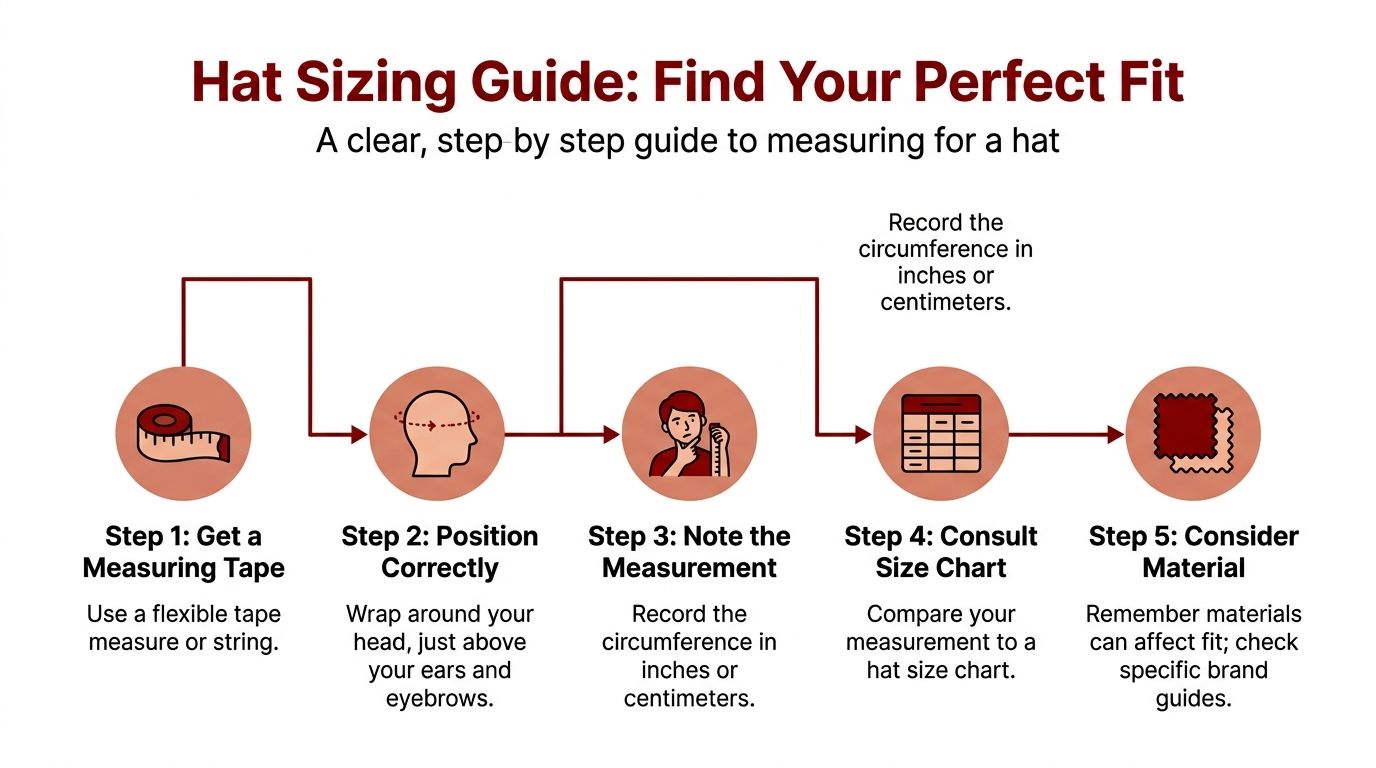
Use a flexible tape measure if you have one. If not, use a string and measure that against a ruler afterward.
- Wrap above the ears and eyebrows. That's the line where most hats naturally sit.
- Keep the tape level. If it dips in the back or rides up front, your number won't help much.
- Measure where you'll wear the hat. Some folks like a lower, snugger fit. Others wear caps a touch higher.
- Write the number down immediately. Don't trust memory once you start comparing sizes.
If you usually wear structured caps, a reference product like a mid-profile baseball cap can help you think about crown height and everyday fit preferences before you buy a different style.
Head shape matters more than most size charts admit
Two people can have the same circumference and still need different hats. One may have a rounder head, while the other is longer front to back. That changes pressure points and how the brim sits.
Use this quick guide:
- Round head shape: Avoid hats that taper too aggressively through the crown.
- Long or oval shape: Deeper crowns often feel more natural.
- Wider face or jawline: Medium to fuller brims usually balance better than tiny ones.
- Narrow face: Overly tall crowns can look top-heavy if the brim is too small.
Don't buy a hat based only on size letters. Measure first, then think about crown depth and your face shape.
What a good fit feels like
A proper fit should stay put when you move, but it shouldn't leave a pressure ring that makes you want to throw it in the seat after an hour. You want contact, not squeeze.
With snapbacks, the adjustment gives you room to fine-tune. With fixed-size hats, be more careful. If you're between sizes, your decision should depend on material, sweat conditions, and whether you'll wear it in hot weather when fit can feel tighter.
How to Style Your Southern Hat for Any Occasion
The best-looking Southern hat is usually the one that doesn't look overplanned. It fits the day, the weather, and the rest of the clothes. That matters even more when you're trying to balance heritage and function instead of leaning fully into costume or fully into athletic wear.
A useful visual reference helps when you're thinking about how Southern-inspired clothing and hats work together in everyday wear.
Current hat content often leaves one practical question unanswered. How well do heritage hats perform outdoors compared with fashion use? That gap shows up in buyer uncertainty around breathability, moisture handling, and durability in the field, as discussed in this market research article on hat business strategy. In practice, the answer depends less on the label and more on the material, construction, and whether you're honest about the setting.
Men
For outdoor work and hunting, keep the pairing straightforward. Camo caps, durable trucker hats, and weather-appropriate cowboy hats work best with pieces that already belong outside. Think denim, work pants, brushed cotton shirts, insulated layers when needed, and boots that aren't trying to stay spotless.
For casual use, a clean trucker or ballcap does the heavy lifting. Pair it with a plain tee, washed jeans, or shorts and let the hat carry the personality. If you want ideas that lean into that lane without getting too polished, Southern men's style is a useful look at the broader aesthetic.
Women
Women have the widest range to work with, and that's where Southern styling gets interesting. A straw hat can feel elegant with a sundress and sandals, but the same hat also works with jeans and a simple tank if the crown and brim stay clean.
Trucker hats and ballcaps fit casual Southern wear well when the rest of the outfit doesn't fight them. Keep jewelry simple, keep the hair choice intentional, and don't overload the look with too many themed elements at once.
A heritage hat looks strongest when one piece leads and the rest of the outfit supports it.
Here's a quick field-versus-social comparison:
| Occasion | Better hat choices | Better styling move |
|---|---|---|
| Hunting camp | Camo cap, rugged trucker, practical straw | Prioritize comfort and weather match |
| Tailgate | Trucker, ballcap, clean straw | Let the logo or patch be the statement |
| Outdoor wedding | Refined straw, shaped felt in season | Keep colors coordinated and understated |
| Weekend errands | Ballcap, trucker | Pair with basics and don't overthink it |
A moving example can help if you want to see the broader lifestyle context around Southern outdoor gear and presentation.
Kids
Kids' hats need to survive rough handling first. Looks come second. That means adjustable closures, forgiving materials, and styles that don't require constant fixing.
For family photos or events, coordinated hats can work well if they don't become too matching. The strongest family styling usually repeats a color, theme, or mood rather than making every person wear an exact copy.
What doesn't work for anybody, young or grown, is treating a field hat like a dress hat or vice versa. A sweat-marked cap belongs at the cookout, the boat, and the back forty. It doesn't belong at every social occasion just because it's your favorite.
Keeping Your Hat in Top Shape
A hat lasts longer when you treat it like gear instead of tossing it in the floorboard and forgetting it. Most damage comes from bad storage, rough cleaning, and trying to force one hat through every season.
Cleaning by material
- Straw hats: Brush off dust gently and wipe spots with a lightly damp cloth. Don't soak them. Too much moisture can warp the shape or weaken the weave.
- Felt hats: Use a soft brush and spot-clean carefully. Let them dry naturally if they catch light rain.
- Ballcaps and trucker hats: Hand washing is safer than crushing them through a hard cycle. Focus on the sweatband, front panel, and bill edge.
Storage habits that matter
Heat is hard on hat shape. Don't leave a structured hat baking on the dash if you can avoid it. Hang it, shelf it crown-up, or store it where the brim won't flatten under other gear.
A few simple habits help:
- Rotate your hats: Give sweat and moisture time to dry out between wears.
- Handle by the brim or band carefully: Grabbing the crown the same way every time can distort it.
- Match the hat to the season: Summer hats and winter hats wear out faster when used outside their lane.
Store your best hat like you plan to wear it again next year, not like it's disposable.
Find the Hat That Tells Your Story
The right Southern hat does two jobs at once. It handles the weather and says something true about the person wearing it. That's why southern style hats have lasted. They come from real use, real places, and real habits that still matter.
If you choose well, you won't need a closet full of gimmicks. You'll need a few honest options. One for heat, one for rough use, one for town, and maybe one that gets better every season you keep it.
Wear the brim that suits your day. Wear the cap that fits your life. Keep the one that feels like home.
Southern hats mean more when they're built for the life you live. If you want pieces that lean into Southern pride, outdoor use, and family-wide style, take a look at Southern Static Clothing Company.