

Kids Outdoor Clothing: A Buyer's and Styling Guide 2026
You're probably standing in a doorway with the weather doing something unhelpful. The kids are excited. One wants to fish, one wants to climb on every stump in sight, and you're trying to decide whether a soft cotton tee, a hoodie, or a light jacket is the right call. By lunchtime, somebody will be sweaty, somebody will be muddy, and somebody will insist they're freezing while wearing shorts.
That's why picking kids outdoor clothing matters more than most parents expect. The right clothes don't just keep children comfortable. They help kids move better, stay safer, and last longer outside without melting down over wet socks, sticky shirts, or bulky jackets. If you grew up outdoors in the South, you know the pattern. A cool morning turns warm fast. A dry field turns muddy after one passing shower. Lake air, deer camp, backyard ball, and Saturday cookouts all ask for slightly different choices.
I've learned through trial and error that the best outdoor wardrobe for kids isn't the biggest one. It's the one that matches real family life. You want clothes that can handle sweat, red clay, sun, snacks in the truck, hand-me-down duty, and the family photo your grandmother will frame.
Table of Contents
- The Foundation Choosing the Right Fabrics
- The Smart Layering System for Every Season
- Getting the Right Fit and Why It Matters
- Built to Last Durability and Care for Outdoor Gear
- Safety First Visibility Sun Protection and Regulations
- Coordinating Heritage Looks for the Whole Family
- The Ultimate Gift Guide for Young Adventurers
The Foundation Choosing the Right Fabrics
The fabric is the whole game. Before color, before print, before whether it “looks outdoorsy,” the material decides if your child stays dry, gets chilled, overheats, or starts begging to go home.
Why fabric changes everything
Think of 100% cotton like a kitchen sponge. It soaks up sweat and holds it. Think of a polyester or poly/spandex performance fabric like a screen door. Moisture moves through it and dries faster. That one difference changes how a shirt feels after a hike, a cast off the dock, or an hour of running through humid air.
According to this fabric guide for kids apparel, cotton/polyester blends or poly/spandex performance fabrics are technically superior to 100% cotton for activewear because they provide moisture-wicking properties. The same guide explains that 100% cotton retains moisture, which can lead to skin irritation and thermal dysregulation, while synthetic blends keep their structure and elasticity under stress.
Practical rule: If the day includes sweat, water, climbing, running, or changing temperatures, don't start with 100% cotton as the main layer.
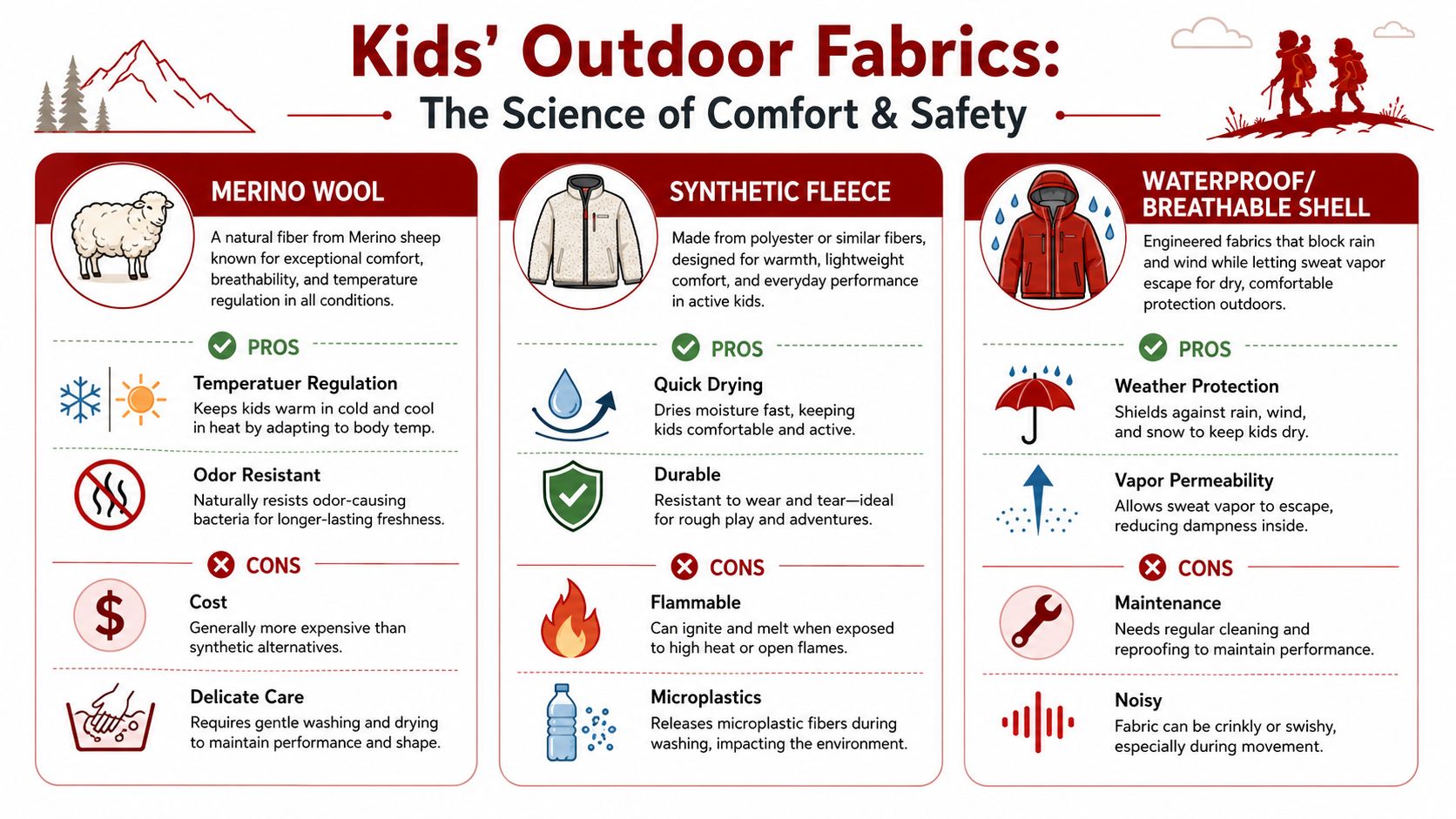
A lot of parents get confused by terms like moisture-wicking, breathable, and stretch. Here's the plain version:
- Moisture-wicking means the fabric helps pull sweat away from skin.
- Breathable means heat can escape instead of getting trapped.
- Stretch means the fabric moves with the child when they squat, climb, crawl, and twist.
If you want a broader look at garment construction and field-ready materials, this piece on American-made outdoor clothing gives a useful overview of what durable outdoor apparel is built to do.
When cotton works and when it doesn't
Cotton still has a place. A soft cotton tee is great for a porch dinner, a short errand, or a casual school day when the child won't be sweating hard outdoors. Cotton feels familiar, washes easily, and many kids like the softness.
It's a poor pick for long active outings. Wet cotton sticks, sags, and stays damp longer than a performance blend. That's when kids start saying they're “cold” even though the air isn't all that cold. What they're feeling is damp fabric against skin.
A simple store checklist helps:
| Situation | Best fabric direction |
|---|---|
| Backyard play in mild weather | Cotton or cotton blend can work |
| Hiking, creek play, fishing, camp days | Polyester blend or poly/spandex |
| Cool mornings with movement later | Light performance base plus easy layer |
| Rough play and frequent washing | Blended fabric with stretch |
One more note from experience. For younger kids, a little stretch matters almost as much as moisture control. Clothes that pull across the knees or shoulders won't last long, and children can feel that restriction faster than adults do.
The Smart Layering System for Every Season
Layering sounds technical, but it's really just building an outfit in the right order. It's comparable to dressing a child in pieces you can remove one at a time instead of betting the whole day on one heavy jacket.
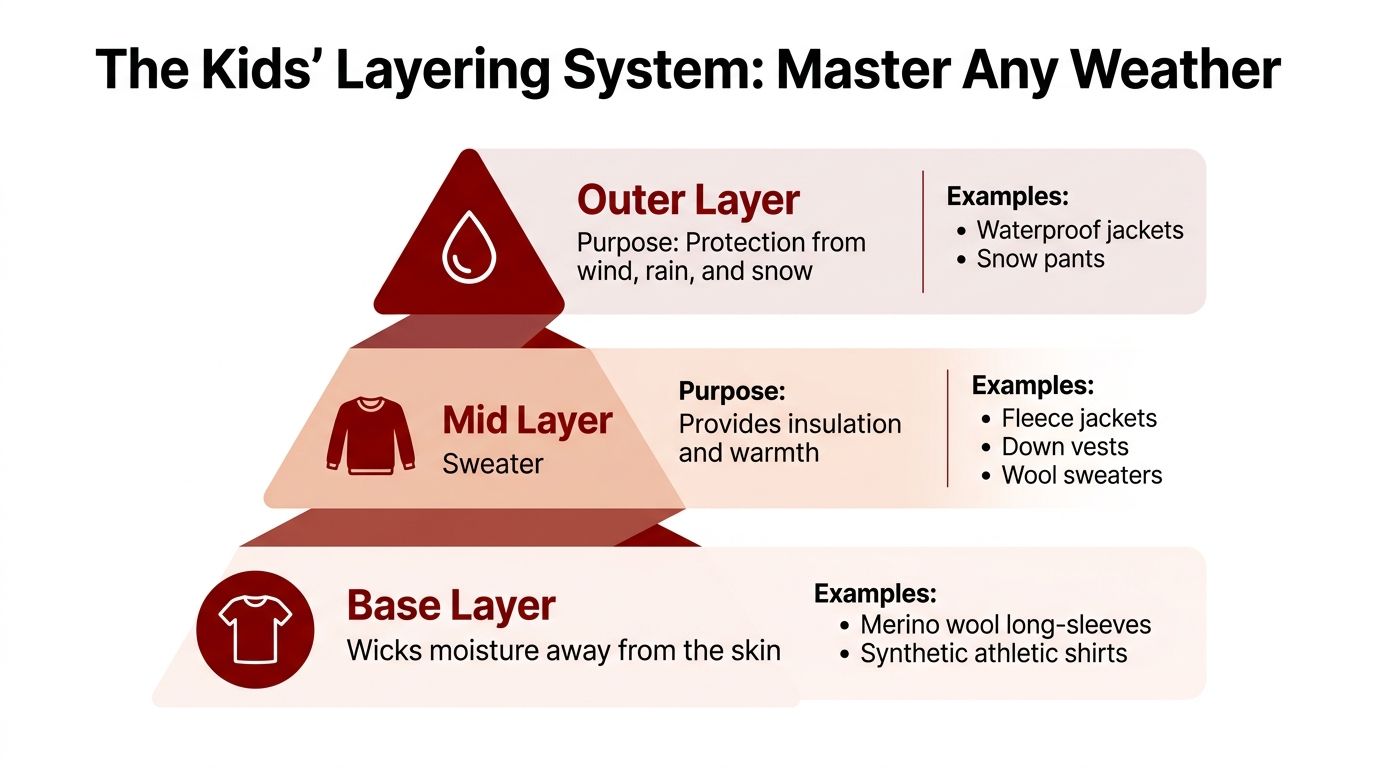
Near the top of the section, keep this visual handy:
Think in three simple layers
The outdoor apparel world keeps growing, which tells you families are buying more specialized pieces for comfort and weather changes. The global outdoor apparel market analysis says the overall outdoor apparel market was valued at $26.7 billion in 2025, with top wear such as jackets and field-ready garments generating $14.9 billion.
That growth makes sense when you use the classic three-layer system:
-
Base layer
This sits against the skin. Its job is to manage moisture. In warm weather, that may be a lightweight performance tee. In cooler weather, it could be a long-sleeve performance shirt. -
Mid layer
This traps warmth. Fleece, a light quarter-zip, or a wool sweater can do this job. It should be warm without making the child feel stiff. -
Outer layer
This blocks wind and rain. It doesn't need to be thick every time. Sometimes a light shell is enough.
Here's a short video that helps the system click when you see it in action:
Put the weather problem on the outside layer, not on the shirt touching your child's skin.
Easy outfit formulas for real weather
Southern weather can turn parents into overpackers. A better move is to keep a few reliable combinations in mind.
For a hot, humid day near water
- Base layer: Lightweight performance tee
- Bottoms: Flexible shorts that dry reasonably fast
- Extras: Hat and dry backup shirt in the truck
This setup helps when kids sweat hard, sit on a wet bench, then catch a breeze.
For a cool, damp morning
- Base layer: Light long-sleeve performance shirt
- Mid layer: Fleece or light pullover
- Outer layer: Wind-resistant or rain-ready shell
For a winter field morning that warms by noon
- Start with a wicking base.
- Add a warm layer that can come off easily.
- Avoid one giant insulated coat unless the child will stay mostly still.
A common mistake is making the mid layer too bulky. Kids don't need to look stuffed. They need to bend, reach, sit, and climb without fighting their clothes.
Getting the Right Fit and Why It Matters
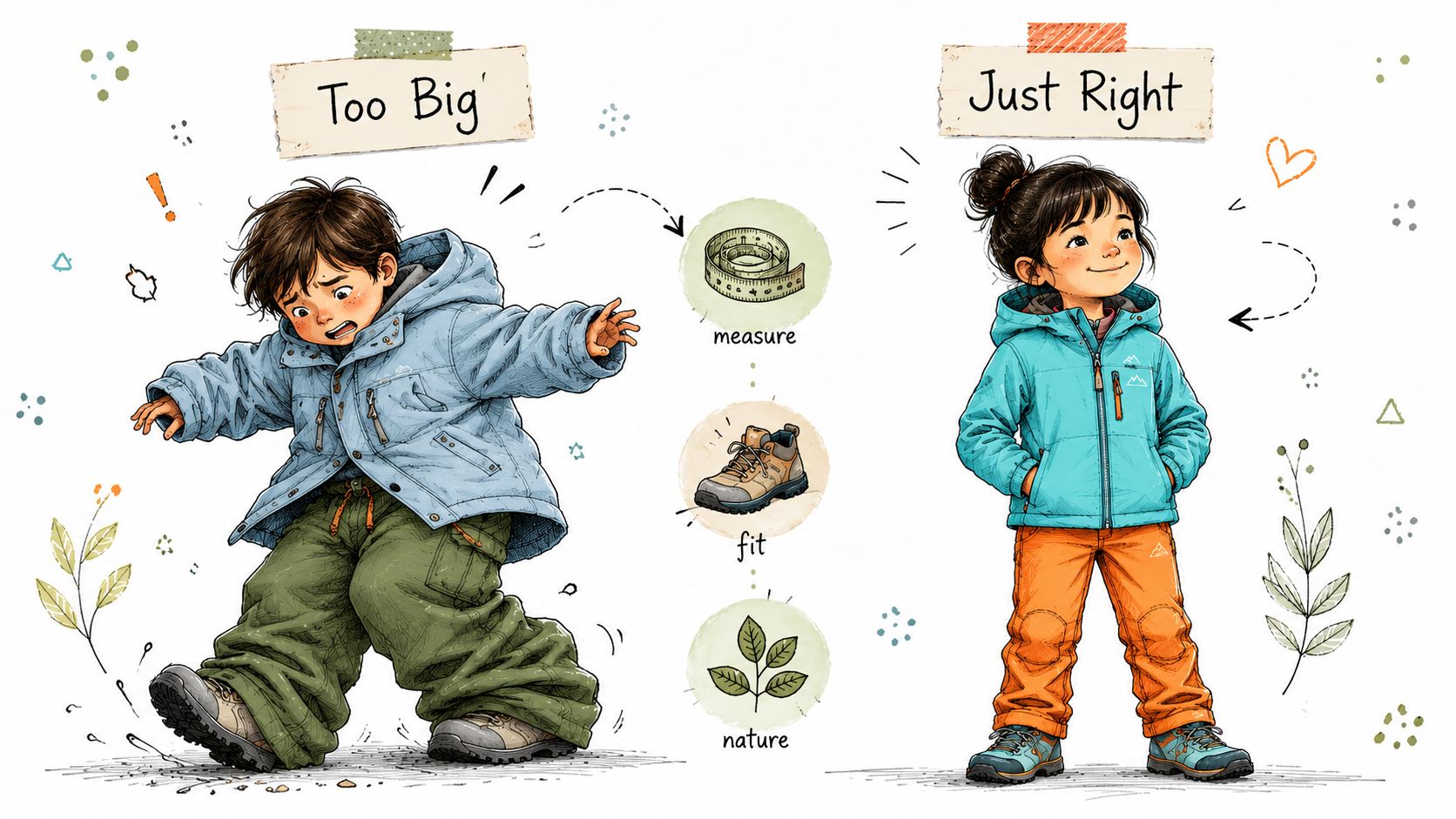
Parents size up for good reasons. Kids grow fast, outdoor clothes cost money, and nobody wants a jacket that fits for six weeks. But in the field, too big can be just as troublesome as too small.
Why sizing up can backfire
Oversized sleeves slide over hands. Baggy cuffs catch on brush. Long pant legs drag under boots and get wet, muddy, or stepped on. A jacket that's too roomy doesn't always keep a child warmer either. Extra empty space can make the clothing feel clumsy and harder to layer well.
I'd rather see a child in outdoor gear with room to move, not room to disappear.
A few fit points matter more than the size label:
- Shoulders should sit close enough that the shirt or jacket doesn't twist around during play.
- Sleeves should stay put when the child reaches overhead.
- Pant hems should cover the top of the boot without puddling under the heel.
- Waistbands should stay up without constant tugging.
- Hoods should turn with the head, not fall over the eyes.
A light pullover with a structured neck opening often solves some of these fit issues better than a floppy sweatshirt. If you want to compare that style, this guide to a quarter zip is helpful for seeing why that shape works so well for active wear.
A field test before you keep the tags off
Don't rely on the mirror. Have the child do five quick motions.
- Reach both arms straight up.
- Squat all the way down.
- Sit on the floor cross-legged.
- Walk fast, then jog a few steps.
- Put on a hat and raise the hood.
If the shirt rides up, the cuffs fall over the hands, or the knees pull tight, the fit is off.
Clothes should move with the child, not ask the child to move around the clothes.
If you are buying ahead for growth, choose pieces with adjustable waists, cuff options, or forgiving stretch. That's a smarter form of “sizing up” than buying something oversized and hoping for the best.
Built to Last Durability and Care for Outdoor Gear
Parents don't just buy kids outdoor clothing for one Saturday. You're buying for camp, school field days, creek walks, cousins, younger siblings, and whatever rough use children invent without warning.
What to look for before you buy
Durability starts long before the first wash. Check the stress points first, because that's where kids clothing usually gives out.
Look for these details:
- Reinforced knees and elbows for crawling, kneeling, and repeated falls
- Sturdy seams that don't look thin or loosely stitched
- Zippers that run smoothly without catching fabric
- Stretch in the right places so movement doesn't strain the garment
- Thicker collars and cuffs that won't curl and fray quickly
The value of durable gear isn't just personal convenience. It also lines up with how many families shop now. According to this analysis of kids clothing resale growth, 59% of U.S. parents rely on secondhand or adjustable products for affordability, and the kids resale market grew 23% year-over-year in 2024. That makes durable, growth-adjustable clothing both an economic and a sustainable choice.
That rings true in real family life. The best outdoor pieces often become hand-me-downs, loaners for cousins, or backups kept in a truck bag.
How to wash gear without ruining it
A lot of performance wear gets blamed for “wearing out” when the problem is harsh care. Heavy detergent, high heat, and washing everything with rough towels can break down stretch and surface finish.
A simple care rhythm works better:
- Wash muddy gear soon so stains don't set deep.
- Turn graphic or printed items inside out before washing.
- Skip fabric softener on performance fabrics when possible, because it can leave residue.
- Use low or moderate heat instead of scorching hot dryer cycles.
- Hang outerwear fully dry before stuffing it into a closet or gear bin.
For grass and red clay, rinse first. Don't grind the stain deeper by scrubbing hard while it's dry. For camp smoke, air the item out before washing so the smell doesn't settle into a whole load.
A well-made piece doesn't need to look brand-new forever. It needs to keep doing its job through repeated use. That's what makes it worth buying.
Safety First Visibility Sun Protection and Regulations
Parents often focus on warmth and forget that outdoor clothing also works as safety equipment. Sometimes the smartest clothing choice has less to do with style and more to do with who can see your child, how much sun reaches their skin, and what materials are safe around heat.
Visibility is a clothing feature not an afterthought
Kids disappear fast in neutral colors. They crouch in leaves, run behind brush, and blend into tree lines more easily than adults expect. In hunting environments, high-visibility color matters. Around roads, boat ramps, trailheads, and campsites, bright pieces also make a child easier to spot quickly.
That doesn't mean every outdoor outfit has to be loud. It does mean at least one visible element should stand out. A bright hat, a vivid shirt, or a noticeable outer layer helps.
Use this quick lens when choosing colors:
- Woods or brushy areas: favor highly visible tops or hats
- Near water: avoid colors that make a child harder to distinguish at a glance
- Large gatherings or campgrounds: pick one standout item the whole family can identify fast
Sun and fire safety deserve a closer look
Sun protection confuses a lot of families because shirts can feel cool but still expose skin if they're too thin or too short in coverage. For long days outside, clothing that covers shoulders, upper arms, and the back of the neck usually does more than trying to reapply sunscreen perfectly on an active child.
Fire safety brings in a less obvious issue. According to this overview of children's apparel safety rules under the Flammable Fabrics Act, children's outdoor clothing sold in the U.S. must undergo mandatory third-party flammability testing, and that requirement influences design choices around materials such as polyester for garments worn near ignition sources like campfires.
Reputable kids clothing isn't only about comfort. It also reflects safety rules parents rarely see on the rack.
That doesn't mean parents need to be fearful. It means you should treat campfire clothing, sleepwear, and lounging clothes with more attention than you would a basic afternoon play shirt. Read labels. Keep loose, highly flammable-feeling pieces away from direct flame. Choose gear from brands that treat safety standards seriously.
Coordinating Heritage Looks for the Whole Family
Some outdoor memories stick because of what you did. Some stick because of what you wore when you did it. Years later, you may not remember the exact cast, the exact trail, or who spilled the sweet tea in the truck. You'll remember the first dove field photo, the muddy boots on the tailgate, and the way the whole family looked like they belonged together.
Clothes can carry family stories
Kids outdoor clothing becomes more than gear. A heritage-themed shirt for a child can echo a parent's outdoor style without feeling stiff or overdone. Matching doesn't have to mean identical. It can mean the same mood, the same values, and the same family identity.
That matters because many Southern families want clothing that feels rooted, but they also want it to last long enough to pass along. The market hasn't always served that well. This report page discussing outdoor apparel demand and circular shopping behavior notes an unmet demand for durable, heritage-themed kids lines with resale value, while also pointing to 59% of U.S. parents prioritizing sustainability and affordability through secondhand shopping.
A hand-me-down can carry a story. “This was your brother's fishing shirt.” “Your cousin wore this at her first county fair.” Those small traditions matter.
How to coordinate without looking too matched
The easiest family styling uses one shared theme and different pieces.
Try combinations like these:
-
For a fall field day
One family color palette, mixed across tees, pullovers, and hats. Keep the kids in the brighter tones. -
For a holiday cookout
Patriotic or regional graphics across adults and kids, but vary the garment type so everyone still looks natural. -
For a first hunting weekend
Let one item carry the outdoor identity, such as a camo accent or field hat, and keep the rest simple.
A good family look should still let each child move, play, and get dirty. If the outfit only works for the photo, it's not outdoor clothing. It's a costume.
The Ultimate Gift Guide for Young Adventurers
Gift buying goes sideways when adults shop for what looks cute instead of what the child will wear. The best gift for a young outdoorsman or little adventurer isn't the fanciest item. It's the piece that fits the child's real habits and the family's way of spending time outside.
Start with the child not the item
Ask three questions before you buy anything.
What does this child do outdoors? A fishing kid needs different clothes than a backyard climber or a child who mostly goes to campfires and ball fields.
What season will matter most?
If the gift won't be used until cool weather, a light layering piece makes more sense than a summer tee.
What does the family care about?
Some families want coordinated heritage looks. Some care most about durability and hand-me-down use. Some want practical gear that won't sit in a drawer.
If you need inspiration for occasion-based presents, this roundup of outdoor enthusiast gifts can help you think in terms of activities instead of random products.
Simple gift bundles that actually get used
These bundles work because they solve a real need.
-
First Fishing Trip Kit
Performance shirt, cap, and comfortable socks. Good for warm mornings and long hours near water. -
Backyard Explorer Bundle
Durable tee, flexible shorts, and a layer that can be pulled on fast when the evening cools off. -
Camp Morning Set
Wicking base layer, light mid layer, and a practical outer shell if the child spends time outside early. -
Family Photo but Make It Useful Set
Coordinated graphic tops that still function for cookouts, field days, and everyday wear.
A good gift leaves room for movement, mess, and memory. It shouldn't require special handling from the child. It should fit into the family's real weekend life.
When in doubt, buy one level more practical than decorative. Children tend to wear the things that feel easy first. If you give them a shirt they can run in, a layer they can zip themselves, or an outfit that makes them feel like part of the family tradition, you've done well.
Southern memories tend to start outside, with a dock at sunrise, a muddy path behind the house, or a family gathering where the kids don't want to come in. If you want clothing that reflects that way of life, take a look at Southern Static Clothing Company. Their Southern-inspired collections for men, women, kids, and babies make it easier to build coordinated, heritage-minded looks that feel right at home in everyday outdoor family life.