

9 Charming Southern Interior Design Ideas for Your Home
You're probably looking around your home right now and seeing a mix of pieces you love, pieces you inherited, and a few corners that never quite came together. Maybe the living room feels too plain, or the dining area looks nice but not welcoming. That's usually where Southern style starts to make sense, because it isn't just about furniture. It's about how a room greets people.
Modern Southern style goes well beyond mason jars, porch signs, and anything that feels themed. At its best, it blends tradition with comfort, family history with fresh updates, and polished details with everyday ease. Design guidance highlighted by the Atlanta Journal-Constitution describes Southern interiors as spaces that mix family heirlooms with contemporary art, prioritize entertaining, and let sentimental objects help tell the story of the home through collected pieces and layered rooms that flow naturally into one another through local materials and color cues from the natural surroundings (Atlanta Journal-Constitution on expressing Southern hospitality through home design).
That's the sweet spot for strong southern interior design ideas. You want a home that feels rooted, not stuck. Personal, not cluttered. Warm, not fussy. The ideas below keep that balance in view, with practical ways to bring in farmhouse bones, heritage accents, faith-inspired pieces, and even outdoor touches like subtle camo without turning your house into a set.
Table of Contents
- 1. 1. Embrace Modern Farmhouse Roots
- 2. 2. Incorporate Subtle Patriotic & Heritage Accents
- 3. 3. Play with Southern Patterns From Gingham to Camo
- 4. 4. Add Character with Vintage-Inspired Signage
- 5. 5. Layer for a Family-Friendly, Lived-In Feel
- 6. 6. Display Meaningful, Faith-Inspired Art
- 8. 8. Celebrate Your Roots with Local Decor
- 9. 9. Invest in Handcrafted Quality & Functional Decor
- 9. 9. Invest in Handcrafted Quality & Functional Decor
- 9 Southern Interior Design Ideas Compared
- Creating Your Own Southern Story
1. 1. Embrace Modern Farmhouse Roots
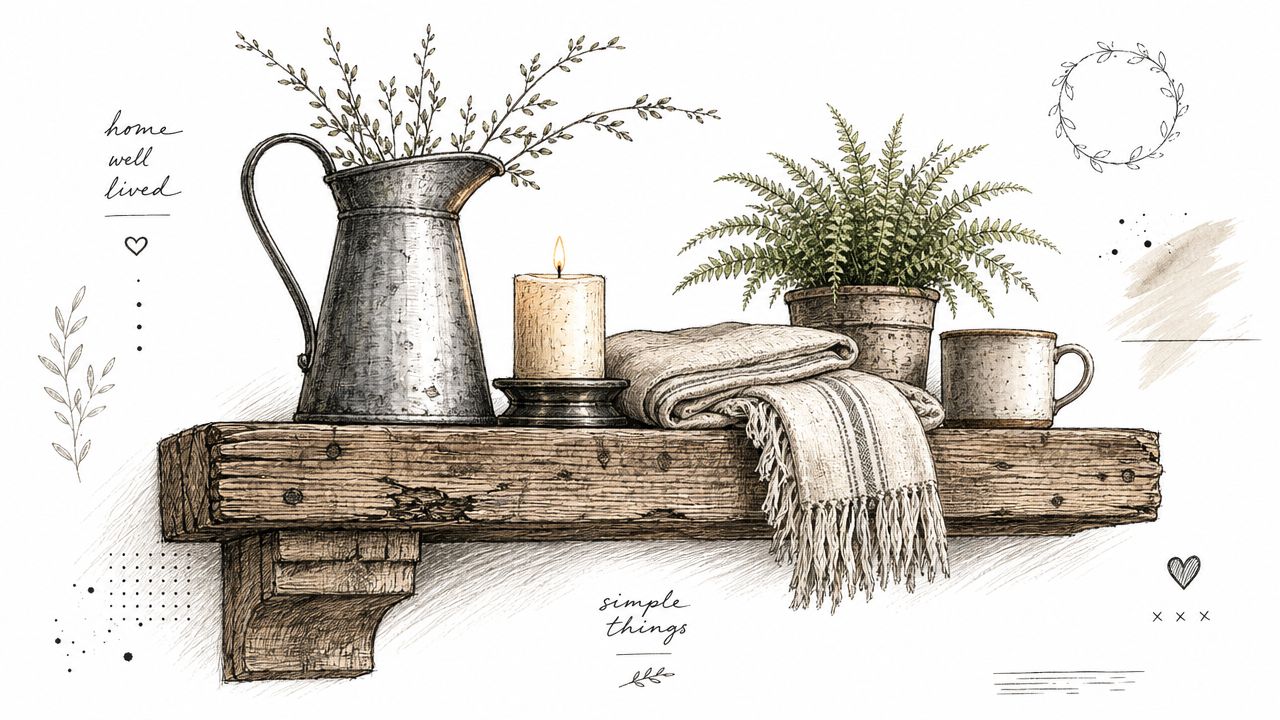
A lot of the best Southern rooms start with simple bones. Solid wood. Painted finishes that aren't too perfect. Comfortable upholstery. Nothing in the room needs to shout if the foundation already feels grounded.
That doesn't mean every room needs sliding barn doors or rough wood on every surface. The version that works now looks cleaner. A pine dining table, a painted sideboard, iron hardware, and a sofa you'd want to sit on for an evening visit is enough.
Choose One Honest Anchor Piece
Start with the piece that gives the room its backbone. In a family room, that may be a reclaimed wood coffee table with some weight to it. In a dining space, it's often a plain farmhouse table with turned legs or a scrubbed finish that hides daily wear.
Practical rule: If every rustic piece looks newly distressed, the room starts to feel staged. One or two worn finishes look authentic. Five start to look like a store display.
A good trade-off to remember is this: reclaimed and distressed surfaces add warmth, but they can make a room feel heavy if you pile them up. Pair rustic wood with smoother elements like a slipcovered sofa, linen curtains, or a simple ceramic lamp. That contrast keeps the room feeling fresh.
For homes that lean outdoorsy, cabin ideas can translate beautifully into Southern spaces when they're edited with restraint. Rustic shelving, dark-stained wood, and practical accessories work especially well in dens, mudrooms, and entryways. There's useful inspiration in these hunting cabin decor ideas if you want a more field-to-home take on farmhouse style.
2. 2. Incorporate Subtle Patriotic & Heritage Accents
Patriotic decor can go wrong fast when it turns into holiday decor that never got packed away. The better approach is quieter and more rooted. Use pieces that feel historical, regional, or personal.
A tea-stained flag in a dark frame, an old county map, military family memorabilia, or a vintage eagle motif can all read beautifully when they're treated like art. They carry meaning without taking over the room.
Keep Heritage Looking Collected
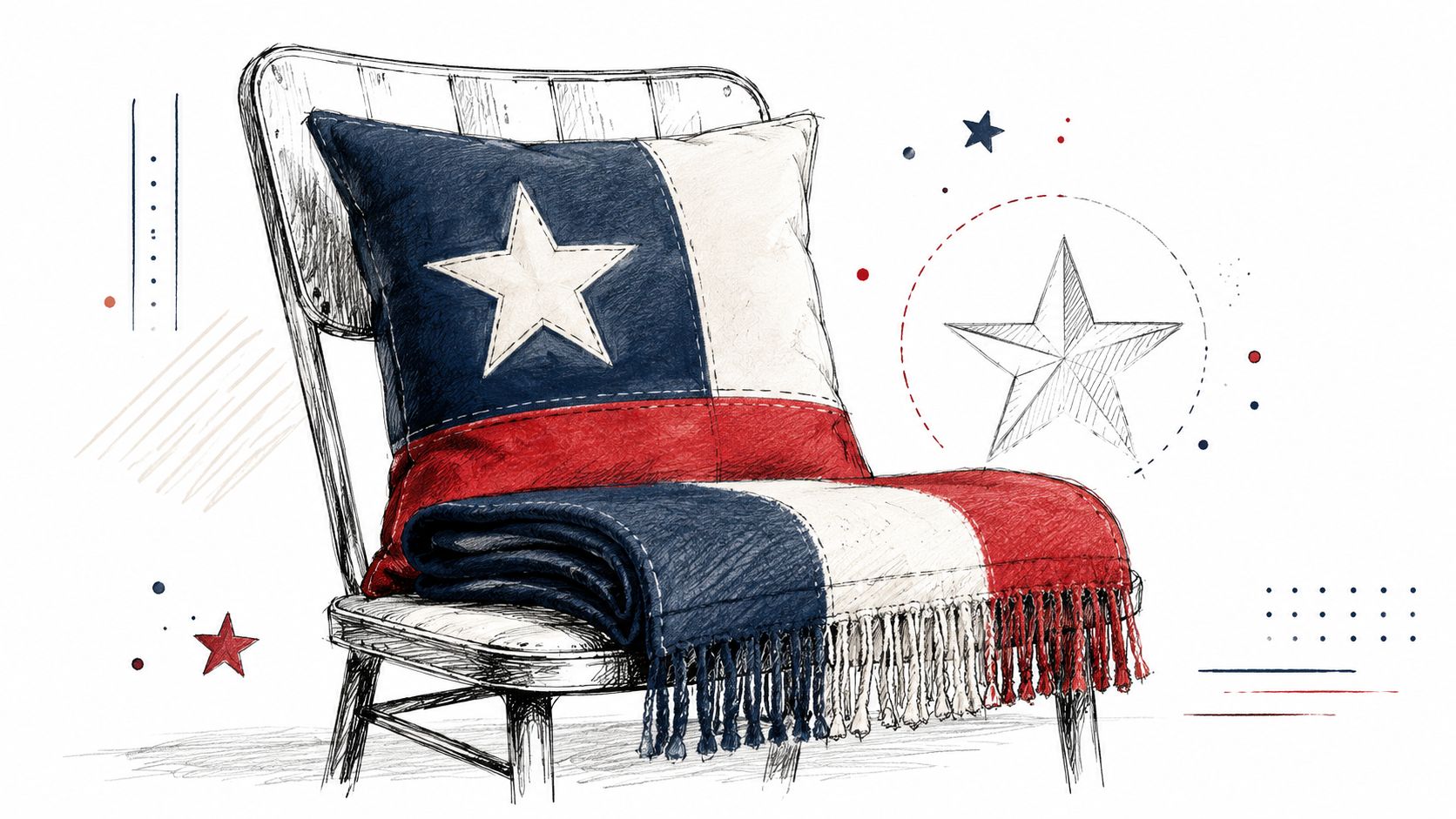
Muted color does most of the heavy lifting here. Deep navy, weathered red, tobacco brown, brass, and cream feel at home in Southern spaces. Bright primary red and shiny novelty finishes usually don't.
Try one of these instead:
- Frame one statement piece: A vintage-style American flag above a desk or sideboard gives the room a focal point without spreading the theme everywhere.
- Use books and paper goods: Old hymnals, local histories, or framed handwritten letters add depth on bookshelves and consoles.
- Pull color, not symbols: If you love a patriotic collection, use the palette in pillows, throws, or pottery rather than repeating stars and stripes all over the room.
Southern style also tends to hold onto family and regional identity with pride, so heritage pieces should look lived with, not performative. If you like the motifs and colors found in Southern-themed apparel and seasonal collections, they can be a good prompt for a room palette. Southern Static Clothing Company's Fourteenth of July line is one example of that kind of visual direction, especially for muted patriotic color combinations.
3. 3. Play with Southern Patterns From Gingham to Camo
Pattern is where many Southern homes come alive. Gingham, floral, ticking stripe, toile, and plaid all have a place. Used well, they create rooms that feel layered instead of flat.
Current Southern-style trend guidance points away from stark all-white and all-gray rooms and toward layered spaces with texture, pattern, warmer wood tones, and a softer silhouette. It also notes the return of floral, gingham, and toile patterns, mixed at varied scales so the room feels cohesive instead of chaotic (Nancy Lane Interiors on Southern Living trends of 2024 and the shift into 2026).
How to Mix Camo Without Making It Loud
Camo belongs in this conversation more than most design guides admit. Many Southern families hunt, fish, and spend real time outdoors, yet mainstream decor advice rarely shows how that life can fit into a polished home. One design roundup even points out that while traditional guides focus on antiques and florals, they skip camo textiles, rustic gear displays, and outdoor-inspired accessories despite the fact that over 15 million Americans in the South participate in hunting (Decorilla summary noting the gap in Southern design coverage).
That doesn't mean a camouflage recliner in the formal living room. It means using camo as one note in the mix.
A small camo accent works like leopard print in another style category. It adds personality when the rest of the room is calm.
Try a camo lumbar pillow on a striped chair, a folded throw in a den, or even framed fabric in a mudroom. Keep the scale small and the palette earthy. Olive, bark, tan, and faded black pair better with Southern interiors than bright, high-contrast prints.
If you want to test the look before buying home textiles, browsing girl camo shirts can help you spot softer camouflage palettes that translate well into pillows, throws, and accent fabrics.
4. 4. Add Character with Vintage-Inspired Signage
Some walls need more than framed prints. A vintage-inspired sign can add humor, place, and a little grit, especially in kitchens, mudrooms, hallways, and covered porches.
The secret is scale and authenticity. A sign should feel like something you might've found in an old general store, service station, feed shop, or downtown storefront. When lettering looks too slick or the distressing feels fake, the charm disappears.
What Works on Real Walls
Metal signs work well in utility spaces because they bring in texture without asking for delicate care. Wood signs fit better in breakfast rooms or above sideboards, where you want something softer.
A few dependable options:
- Local place names: Old town names, lake names, county references, or road signs feel more personal than generic “farmhouse” phrases.
- Product advertising: Feed, seed, cola, hardware, and tobacco-style signs suit Southern interiors because they connect to commerce, agriculture, and small-town history.
- Custom family references: A family name, farm name, wedding year, or homeplace nickname can work if the typography stays restrained.
Worth remembering: Signage should support the room, not explain it. If every wall announces a message, the house starts to feel busy.
One large sign usually works better than a gallery of small novelty plaques. In smaller rooms, prop a sign on a shelf or sideboard rather than hanging it. That relaxed placement often feels more Southern than a perfectly centered wall treatment.
5. 5. Layer for a Family-Friendly, Lived-In Feel
A Southern home isn't supposed to feel untouchable. It should feel ready for cousins stopping by, a neighbor dropping in, kids on the floor, and somebody carrying a plate into the den. That kind of comfort comes from layering durable things with soft ones.
The interior design market data backs up why this matters. Remodeling activity makes up 54% of the global interior design market, compared with 46% for new construction, and North America held a 34% market share in 2024. That tells you many homeowners are improving the houses they already live in rather than starting from scratch, which is exactly where layered, practical design choices matter most (Grand View Research on the interior design market).
Build the Room for Use, Not Display
A good family room usually has at least three kinds of texture in it. Upholstery, wood, and something woven is a strong start. Add a washable rug, a basket for blankets, and a side table that can take a cup without panic, and the room starts working harder.
Use these pairings:
- Slipcovered seating with weighty wood: The softness keeps the room inviting. The wood keeps it from floating away into beach-house territory.
- Baskets with lids or deep sides: They hide toys, magazines, dog gear, and remote controls without making the room feel over-organized.
- Throws in different textures: Chenille, cotton, quilted layers, and lightweight wool make the room feel generous.
The trade-off here is simple. The more pristine your finishes, the more careful everyone has to be. If you want actual hospitality, choose materials that can handle use. Scuffs on old pine and a softened linen armchair often look better over time than surfaces you're afraid to touch.
6. 6. Display Meaningful, Faith-Inspired Art
In many Southern homes, faith is part of everyday life. The challenge is bringing it into a room in a way that feels personal and thoughtful, not mass-produced.
The strongest faith-inspired decor usually doesn't arrive with a slogan in oversized script. It's often quieter than that. A small cross carved from wood, a framed passage in calligraphy, a painting with themes of peace, mercy, or creation, or a piece made by a local artisan tends to last longer stylistically and emotionally.
Quiet Pieces Usually Age Better
Think about placement first. Bedrooms, studies, entry halls, and breakfast rooms usually hold faith-based pieces better than a heavily decorated focal wall. These are spaces where a meaningful object can be seen and lived with, not just displayed.
A few approaches that work:
- Use natural materials: Wood, linen mats, handmade pottery, and aged brass keep spiritual decor grounded.
- Choose one meaningful symbol: One cross on a shelf often lands better than several repeated motifs in the same room.
- Let the art match the house: Traditional homes can carry framed scripture or scenic depictions well. Simpler homes may be better with abstract or minimal symbolic work.
Faith-inspired decor is strongest when it invites reflection instead of demanding attention.
If you want ideas rooted in Southern values and Christian themes, faith shirts for men can be a useful starting point for imagery, wording, and symbolism that may also translate into wall art, framed textiles, or shelf styling.
8. 8. Celebrate Your Roots with Local Decor
A Southern room feels more convincing when it reflects the place it comes from. Guests may not say, "That pottery looks local" or "that scenery could only be painted here," but they notice the difference. The room has more identity, and it avoids the catalog look that flattens one region into another.
Local decor works best when it points to real life. A framed map of your county, a marsh painting from a nearby artist, black-and-white family photos, a handmade quilt, or pottery bought at a regional market will carry more weight than generic "Southern" signs from a big-box store. In a Lowcountry home, oyster-shell pieces and weathered wood can make sense. In a Hill Country or Delta house, worn leather, pasture scenes, antique crocks, or subtle sporting references often feel more natural.
Restraint matters here.
One or two rooted pieces in each room usually do more than filling every surface with state outlines, monograms, or nostalgic slogans. I usually recommend starting with one item that has geographic meaning and one that has family meaning. That pairing gives the room a point of view without turning it into a theme space.
Modern Southern style also leaves room for personal symbols that are a little less obvious. A camo accent pillow in muted tones can work in a den or bunk room. So can framed duck stamps, vintage feed sacks, local school pennants, church cookbooks stacked on a shelf, or textiles picked up from a Southern maker. The key is scale. Keep those references quiet enough that they read as part of the house, not a novelty.
Good places to source local decor include estate sales, courthouse-square antique shops, regional art fairs, museum gift shops, and Southern-focused lifestyle brands that work with artists and makers from the region. Look for materials that age well, such as wood, clay, linen, iron, and leather. They hold up better in active homes, and they sit comfortably beside older pieces and newer furniture.
If you inherited something useful but awkward, work with it before you dismiss it. Reframe the old print. Recover the stool. Place your grandmother's brass candlesticks with cleaner-lined ceramics so they feel intentional instead of heavy. Southern rooms are often strongest when they mix memory with restraint.
9. 9. Invest in Handcrafted Quality & Functional Decor
The pieces that earn their keep tend to define a Southern home more clearly than the pieces bought just to fill a shelf. A tray that corrals mail on the kitchen counter, a stoneware mug you reach for every morning, a basket by the back door for dog leashes and garden gloves, a lamp with a solid weight to it. Those are the items that make a room feel settled.
That matters even more now that so many finishing pieces are bought online. The convenience is real, but so is the risk. It is easy to end up with lightweight accessories that photograph well and disappoint in person. Southern rooms usually benefit from the opposite approach. Fewer objects, better materials, and items that can handle daily use.
Buy Fewer, Better Everyday Pieces
Start with function, then judge the finish.
A hand-poured candle is useful if you burn it and the scent suits the room. An insulated tumbler belongs on the counter if the color and shape work with the kitchen instead of fighting it. A small wooden stool can hold a stack of books one week and serve extra seating the next. In houses where people are coming in from the porch, the yard, the garden, or a ball field, that kind of flexibility matters.
A practical filter helps:
- Choose pieces with a clear job: trays, bowls, baskets, hooks, mugs, and lamps should solve a real need.
- Prefer materials that improve with age: wood, stoneware, linen, iron, leather, and thick glass usually hold up better than flimsy resin or thin plastic.
- Check scale before you buy: many online accessories arrive smaller than expected, so measure the table, shelf, or counter first.
- Mix handmade with plain basics: one woven basket or turned wood bowl often does more than several trendy accents.
- Pay for touch points: spend more on the things your family handles every day, not on filler objects no one notices after a week.
Handcrafted does not have to mean precious. In fact, the best handmade pieces are often the ones that can take a little wear and still look good. A crock that holds cooking utensils, a bench with visible joinery, or a quilted throw that gets softer with washing will usually bring more long-term value than decorative clutter.
This is also a place to show a more current Southern point of view. A leather catchall stamped with a subtle camo pattern can work well in a den, mudroom, or bunk room. A carved wooden cross, framed hymn lyric, or handmade pottery with a simple scriptural reference can add meaning without turning the room into a display. The key is the same as everywhere else in the house. Keep the piece useful, keep the workmanship honest, and let the details speak with subtlety.
For sourcing, look at local craft fairs, guild markets, small-town home stores, and Southern-focused lifestyle brands that work with regional makers. If you shop online, study material descriptions, dimensions, and close-up photos before ordering. Weight, finish, and construction tell you more than a styled product shot ever will.
9. 9. Invest in Handcrafted Quality & Functional Decor
Not every decorative purchase needs to be decorative first. In Southern homes, some of the most satisfying pieces are the ones you use all the time. A good tray. A solid mug. A candle you burn. A blanket basket by the back door. A handsome tumbler left on the counter because it looks fine there.
This matters even more as shoppers buy more home accessories online. The U.S. online home decor market grew from $5.34 billion in 2023 to $5.97 billion in 2024, and the candles sector is projected to reach $13.15 billion by 2029 according to the same First Chair industry summary (First Chair summary of home decor and candles market figures). People are clearly comfortable sourcing these everyday finishing pieces digitally, which makes curation even more important.
Buy Fewer Better Everyday Pieces
The strongest rooms usually aren't filled with more things. They're filled with better things. A hand-poured candle in a scent that suits your home is more useful than a shelf full of random filler. A durable insulated tumbler in a finish that works with your kitchen or den can sit out naturally. That's especially true in homes where outdoor life and daily movement blur together.
A practical shopping filter helps:
- Choose pieces with a job: Trays, bowls, tumblers, candles, hooks, and baskets should earn their place.
- Prefer materials that age well: Wood, stoneware, glass, leather, cotton, and metal usually improve the room more than shiny plastic finishes.
- Match function to lifestyle: If your family hunts, fishes, tailgates, or spends time on the road, field-ready accessories can fit the home when their colors and materials are considered.
Southern lifestyle brands can be useful here because they often connect function with region-specific style. Southern Static Clothing Company, for example, offers candles, tumblers, and home-and-living goods alongside apparel, which makes it easier to pull everyday objects into the same visual language as the rest of a Southern home.
9 Southern Interior Design Ideas Compared
| Design Element | Implementation Complexity 🔄 | Resource Requirements ⚡ | Expected Outcomes 📊 | Ideal Use Cases ⭐ | Key Advantages 💡 |
|---|---|---|---|---|---|
| 1. Embrace Modern Farmhouse Roots | Low–Moderate 🔄, straightforward furniture + palette choices | Moderate ⚡, solid/reclaimed wood pieces, neutral textiles | Warm, timeless backdrop; comfortable aesthetics 📊 | Living & dining rooms; anchor with one key furniture piece ⭐⭐ | Versatile mix of rustic charm and modern comfort; durable |
| 2. Subtle Patriotic & Heritage Accents | Low 🔄, select a single focal piece | Low–Moderate ⚡, vintage prints, framed documents or curated buys | Layered sense of history and refined patriotism 📊 | Studies, entryways, shelves; focal wall accents ⭐ | Adds story and authenticity without overt kitsch |
| 3. Play with Southern Patterns (Gingham → Camo) | Low 🔄, introduce via textiles gradually | Low ⚡, pillows, throws, small upholstery updates | Dynamic, collected look with layered personality 📊 | Living rooms, bedrooms, accent chairs ⭐ | Inexpensive, flexible update that personalizes a room |
| 4. Vintage-Inspired Signage | Low–Moderate 🔄, sourcing and intentional placement | Low–Moderate ⚡, antique finds or commissioned signs | Strong sense of place; nostalgic focal points 📊 | Entryways, kitchens, feature walls ⭐⭐ | Conversation-starting pieces that anchor a room historically |
| 5. Layer for Family-Friendly, Lived-In Feel | Moderate 🔄, balance durability with layered styling | Moderate ⚡, slipcovers, durable rugs, storage solutions | Comfortable, forgiving, practical everyday living 📊 | Family rooms, play areas, high-traffic spaces ⭐⭐ | Durable, welcoming, ages well with family life |
| 6. Meaningful, Faith-Inspired Art | Low 🔄, curating personal, subtle pieces | Low–Moderate ⚡, local artists or crafted items | Personal, understated spiritual presence integrated with decor 📊 | Bookshelves, living rooms, quiet nooks ⭐ | Thoughtful expression of faith that feels intimate and tasteful |
| 7. Decorate with the Seasons, Southern Style | Low 🔄, periodic swaps of accents | Low ⚡, seasonal items, storage box | Fresh, timely ambiance that reflects local rhythm 📊 | Porches, mantels, entryways; holiday styling ⭐ | High visual impact from small, repeatable changes |
| 8. Celebrate Your Roots with Local Decor | Moderate 🔄, sourcing regional artists/objects | Moderate ⚡, time and budget for local pieces | Unique, place-specific character and authenticity 📊 | Hallways, galleries, dining rooms; focal collections ⭐⭐ | Personalizes home and supports local makers |
| 9. Invest in Handcrafted Quality & Functional Decor | Moderate–High 🔄, intentional sourcing and investment | High ⚡, premium cost for craftsmanship | Long-term value, elevated daily rituals, lasting aesthetic 📊 | Key functional items and heirloom pieces; kitchens, dining ⭐⭐⭐ | Superior durability, craftsmanship, and enduring style |
Creating Your Own Southern Story
The best southern interior design ideas don't come from copying one formula. They come from paying attention to what your home already holds and then choosing what deserves to be highlighted. That may be an old sideboard from your grandparents, a set of ironstone dishes, a camo throw that nods to opening weekend, or a piece of faith-inspired art that settles the room in a quiet way.
What makes Southern style enduring is its balance. It's rooted in tradition, but it doesn't have to feel old-fashioned. It values hospitality, but that doesn't mean every space has to be formal. It honors heritage, but it leaves room for change. That balance is why these homes tend to feel warm instead of trendy. They're built around people, memory, and use.
If you're making updates, start with the parts of the room that do the most work. Improve the anchor furniture first. Then add pattern, texture, and the meaningful details that make the house feel like yours. A dining room gets stronger when the table has presence. A den gets more inviting when the seating faces inward and encourages conversation. A hallway feels less forgotten when it holds local art, family photographs, or one excellent antique chest instead of filler.
It also helps to be honest about your lifestyle. If your house is busy, choose forgiving finishes. If your family spends weekends outdoors, let that show up in subtle ways through material choices, color, and practical objects. If faith is central to your life, make room for it in art and symbolism that feels integrated rather than pasted on. If heritage matters, let it appear through things that carry memory, not just things that match.
A good Southern room usually tells the truth about the people who live there. It doesn't hide the sentimental pieces in a cabinet. It doesn't strip everything down until the house loses its soul. It keeps the heirlooms that matter, edits the clutter that doesn't, and adds enough freshness to keep the whole place alive.
If you want one simple standard to use as you decorate, use this one. Every room should feel welcoming to a guest and familiar to the family that lives there. That's where Southern style is at its best.
If you're ready to bring more Southern character into your home, browse Southern Static Clothing Company for Southern-inspired lifestyle pieces, including candles, drinkware, décor, and apparel that reflect faith, freedom, small-town culture, and outdoor living.