

Hunting Cabin Decor Ideas: Rustic Style for Your Retreat
You're probably staring at a cabin that already has the bones right. Good timber, good land, maybe a porch that catches first light and a mudroom that sees more boot traffic than the front hall of any town house. But inside, it still feels unfinished. Not because it lacks stuff, but because it lacks the right kind of character.
That's where most hunting cabin decor ideas go off track. They lean too hard into novelty signs, fake antlers, and overdone “rustic” props, or they swing the other way and strip out the hunting story entirely. A true hunting cabin should feel lived-in, useful, and rooted in tradition. It should hold up to wet jackets, dogs by the fire, gun cases in the corner, and long weekends with friends who care more about a strong cup of coffee and a warm stove than showroom styling.
The best cabins use materials with history and texture. Wood, bronze, aged brass, leather, rough wool, handcrafted textiles, porcelain, crystal, and old gear all have a place when they're chosen with restraint and purpose, as noted by MD Maison's hunting lodge design guide. They also need practical planning. A reliable wood-burning stove, thick rugs, smart sleeping arrangements, porch space, and entry storage matter just as much as what hangs on the wall, according to Baird Brothers' hunting cabin ideas.
Table of Contents
- 1. Rustic Wood and Reclaimed Barn Wood Accents
- 2. Taxidermy and Wildlife Mounts Display
- 3. Vintage Hunting and Military Signage and Memorabilia
- 4. Leather and Hide Furnishings and Upholstery
- 5. Stone Fireplace and Hearth Design with Metal Accents
- 6. Heritage Firearms Display and Gun Rack Storage
- 7. Layered Textile Accents, Wool Blankets, Canvas, and Heritage Patterns
- 8. Handcrafted Art and Heritage Photography Display
- Hunting Cabin Decor: 8-Point Comparison
- Your Cabin, Your Legacy Bringing It All Together
1. Rustic Wood and Reclaimed Barn Wood Accents
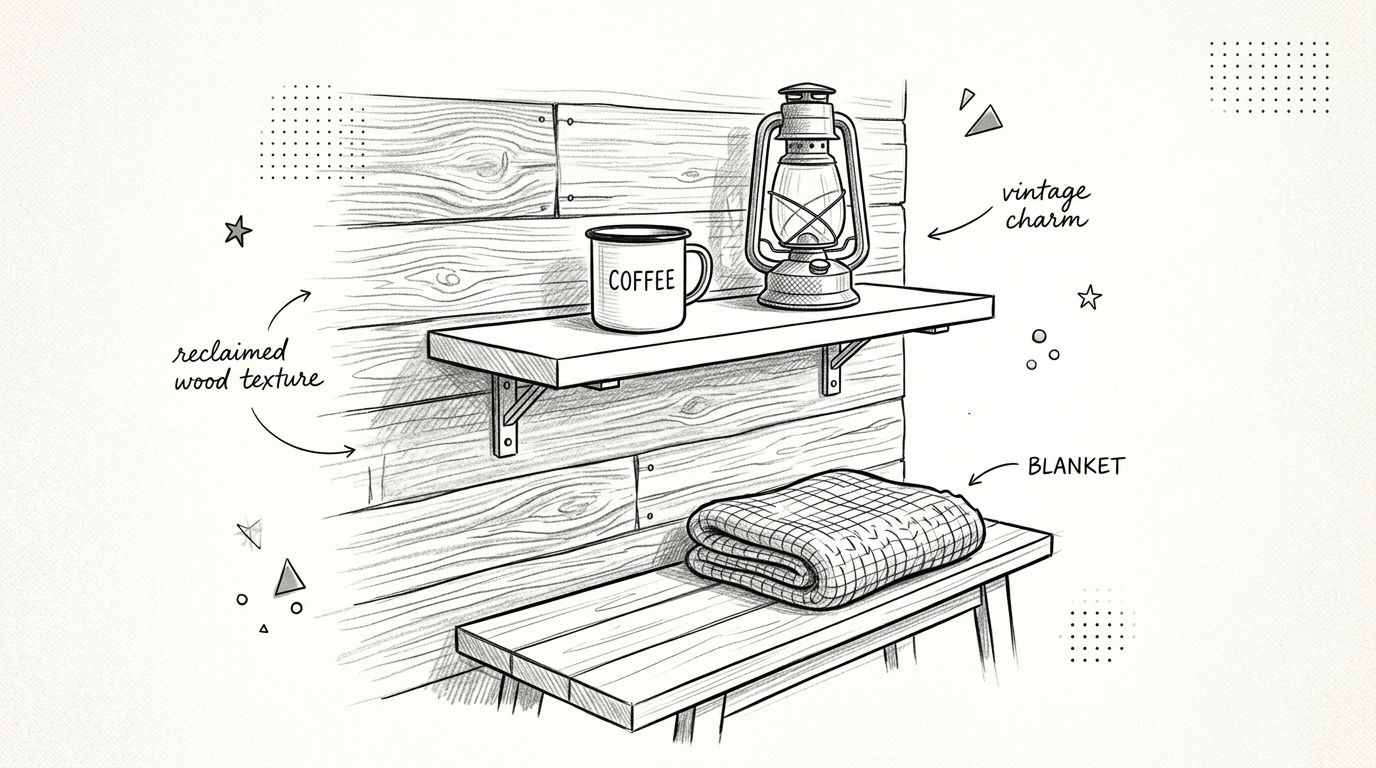
The fastest way to make a cabin feel authentic is to stop covering up wood and start using better wood. Reclaimed barn boards, old fence planks, and salvaged structural lumber bring age, saw marks, nail holes, and color variation that new material can't fake. In a hunting space, that wear reads as earned, not damaged.
Use reclaimed wood where your eye lands first. A fireplace surround, one accent wall behind bunks, floating shelves over a bench, or a mantel with visible checking all work better than trying to sheath every surface. Too much reclaimed wood can flatten a room and make it feel dark.
Choose Wood That Already Has a Story
The good pieces have character without being rotten, punky, or impossible to fasten. If you're sourcing locally, ask what structure the wood came from and whether it was kiln-dried after salvage. That second part matters if you don't want movement, bugs, or surprises after installation.
A few practical uses hold up better than others:
- Accent walls: Best for one focal plane behind a table, bed, or trophy wall.
- Shelving: Strong visual return for a small amount of material.
- Mantels: Ideal for larger beams with scars and edge wear.
- Bench backs and mudroom trim: Great place to show off wood that's visually strong but not furniture-grade.
Practical rule: Don't buy reclaimed lumber just for roughness. Buy it for grain, stability, and believable age.
If you want softer pieces elsewhere in the room so the wood doesn't dominate everything, a bedding layer such as the Rustic Coastal Cabin cotton bed set can keep the room from turning too heavy. That contrast matters. Hard surfaces set the tone, but fabric keeps the cabin livable.
For sourcing, start with local salvage yards, demolition contractors, and specialty reclaim mills before online marketplaces. Photos online often hide warp and checking. In person, you can inspect end grain, smell for mildew, and sort through color variation yourself.
2. Taxidermy and Wildlife Mounts Display
Taxidermy belongs in a hunting cabin when it's personal, well-mounted, and given room to breathe. A good mount tells a story. A bad arrangement looks like a sporting goods aisle with the lights turned low.
The first decision isn't what species to hang. It's where the mount will live in the room. Shoulder mounts, fish, turkey fans, and waterfowl pieces all need clean sight lines, enough wall around them, and lighting that doesn't turn every shadow harsh. Baird Brothers also notes that trophy display needs dedicated wall space from the start, not whatever surface is left over after furniture goes in.
Mount Less and Place Better
One quality mount over a mantel, at the end of a hallway, or above a sideboard will do more for the room than several crowded together. If you've got multiple pieces, spread them by zone. Put fish in a bunk room or hallway, waterfowl near maps and decoys, and a deer shoulder mount in the main gathering space.
What works well:
- Regional relevance: Display species that match the land and seasons you hunt.
- Height discipline: Keep the mount visible from a seated position, not jammed against the ceiling.
- Supporting pieces: Pair with old photos, a field journal, or a framed tag instead of novelty signs.
- Maintenance access: Leave enough room to dust and inspect around ears, antlers, and bases.
What doesn't work is stacking mount on mount until the room feels crowded.
Mounts should anchor a room, not compete with each other.
There's also a style question. One verified trend note tied to hunting cabin decor points out that many homeowners reject cheesy accents like plastic antlers and mass-print wildlife in favor of antique authenticity and better textiles, as described in Whitetail Properties' cabin decor roundup. That lines up with what seasoned cabin owners already know. If the mount is real, the rest of the room can stay quieter.
3. Vintage Hunting and Military Signage and Memorabilia
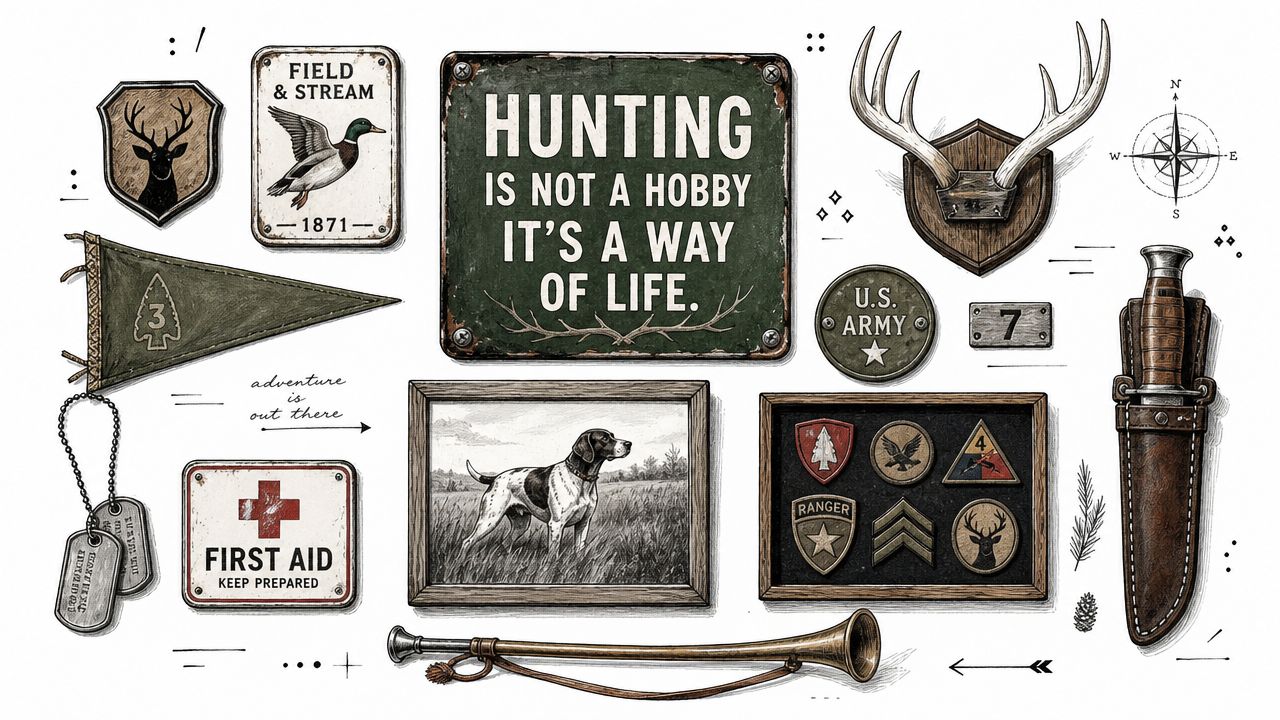
Vintage signage is one of the easiest ways to add depth without tearing into walls or spending the kind of money a custom build demands. Old ammunition tins, hunting club placards, camp signs, dog trial ribbons, tobacco crates, and military keepsakes can give a room backbone fast. But they need editing.
The mistake is treating every empty wall like it's supposed to become a collage. Real old pieces have enough personality on their own. A single weathered sign over a door or a small grouping above a desk feels collected. Ten unrelated pieces in one corner feel cluttered.
Buy Originals When the Wear Makes Sense
Originals beat reproductions when the wear looks honest. Look for edge wear, oxidation, old fastener marks, fading that follows exposure, and graphics that still read clearly. A sign that's too perfect often looks new because it is new. A sign that's too far gone won't carry the room either.
Good places to hunt:
- Estate sales: Better odds of finding regional pieces with real history.
- Antique barns: Strong for camp gear, enamel signs, and framed ephemera.
- Local auctions: Useful for mixed lots where one strong piece makes the trip worth it.
- Family storage: Often the best source of all, especially if service items or club keepsakes are involved.
A wall clock can tie this style together without feeling decorative for decoration's sake. The Southern Static vintage monogram wall clock fits best in a kitchen nook, game-cleaning side room, or mudroom where utility and heritage overlap.
One market signal supports leaning into personalized statement pieces rather than generic filler. In 2026, online retail holds 38% of home decor distribution channel share, furniture accounts for 42% of total market share, and personalized cushions, custom wall art, and engraved wooden pieces are among the fastest-growing trends, according to Printful's home decor market overview. For a hunting cabin, that means old signs work best when they're mixed with pieces tied to your own name, place, or history.
4. Leather and Hide Furnishings and Upholstery
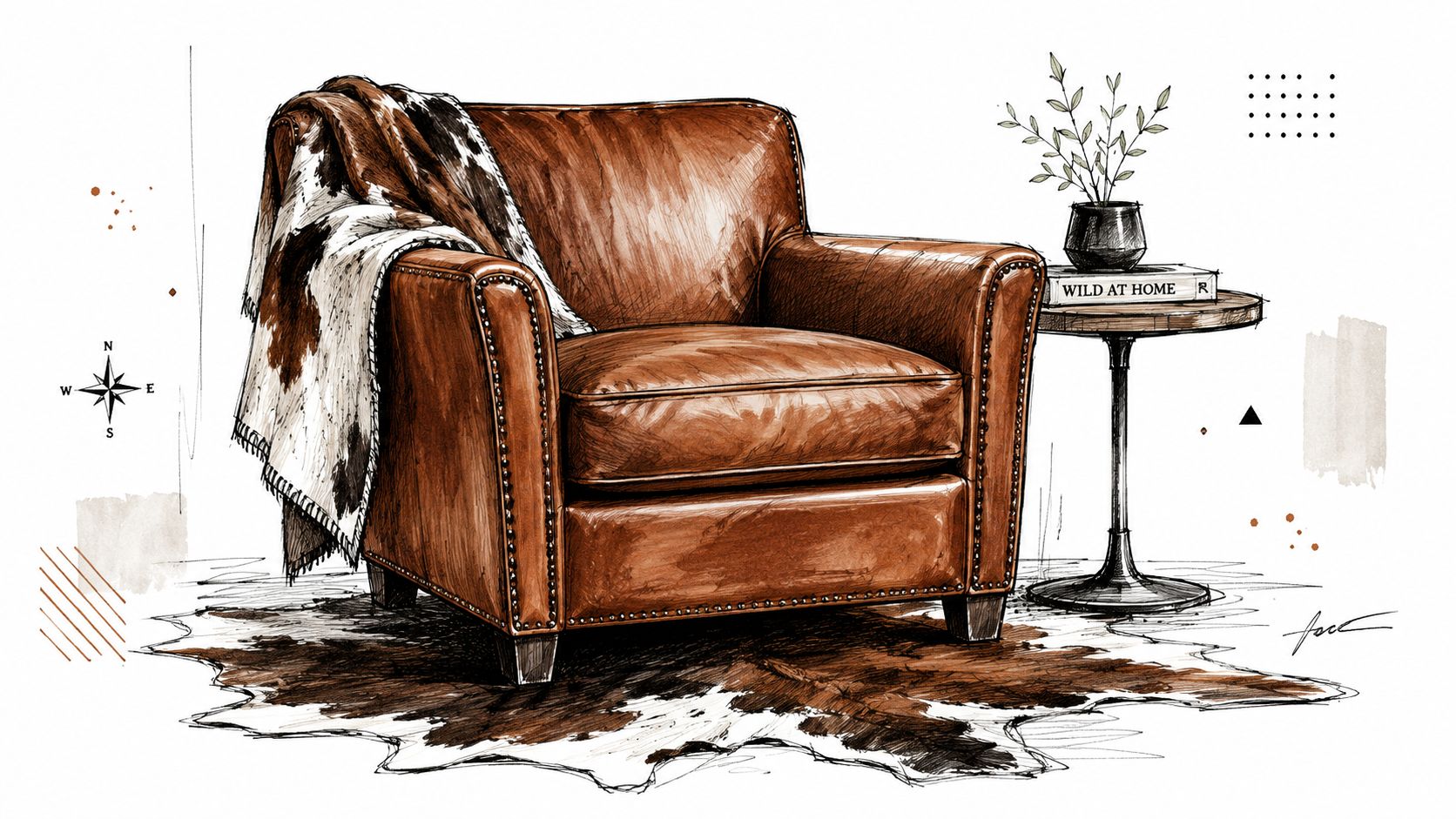
If wood is the frame of a hunting cabin, leather is the part that gets better every season. Good leather chairs, bench cushions, ottomans, and sling-style stools add weight and comfort without looking fragile. They also handle cabin life better than delicate upholstery if you choose the right finish.
Skip anything that looks slick, overly corrected, or showroom shiny. A hunting cabin wants leather with pull-up, grain variation, and enough texture that a little wear blends in. Full-grain and top-grain pieces usually age better visually than surfaces that are heavily processed to look uniform.
Where Leather Earns Its Keep
A leather club chair by the fire earns its place. So does a leather-topped bench in the entry, where boots go on and packs come off. What usually doesn't work is buying an entire matched suite. Too much leather in one room can feel heavy and predictable.
Better combinations tend to look like this:
- Leather plus wool: Softens the room and keeps it from reading too dark.
- Leather plus wood: Gives you classic camp character without trying too hard.
- Leather plus hide accents: Best used sparingly, such as one ottoman or one throw.
- Leather plus brass or bronze: Picks up the lodge side of the look in a more refined way.
MD Maison's lodge guidance is useful here because it favors wood, bronze, aged brass, leather, deep-toned fabrics, rich animal and bird motifs, and Harris Tweed over flashier finishes or bohemian clutter. That approach creates a cabin that feels aristocratic in the old sporting sense, not theatrical.
Field-tested advice: Condition leather on a schedule tied to the season. Dry winter heat and damp shoulder months both punish neglected upholstery.
If your cabin sits empty for stretches, climate swings matter. Leather can dry and crack in heated cabins or hold mildew if a place stays shut up and damp. That's why I'd rather see one or two serious leather pieces than a room full of bargain-grade seating that won't age well.
5. Stone Fireplace and Hearth Design with Metal Accents
A hunting cabin doesn't need a massive fireplace to feel right, but it does need a real center of gravity. In most cabins, that's the hearth. Stone, brick, and forged metal give the room permanence. They also make the gathering area obvious without needing much styling around it.
If you're building or renovating, start with the heat source before you think about the mantel decor. Baird Brothers specifically recommends a reliable wood-burning stove as a key part of hunting cabin decor because it supports both the rustic feel and the practical job of warming guests. In smaller cabins, a stove can do the work of a fireplace without eating up as much floor space.
Build Around Heat and Gathering
For full fireplaces, fieldstone, river rock, reclaimed brick, and regional stone all work when the scale fits the room. The best hearths don't feel imported from a ski chalet. They feel like they belong to the property. Metal accents should be equally honest. Forged screens, iron log carriers, and simple andirons beat ornate scrollwork every time.
A few choices pay off long term:
- Keep the stone local in feel: Even if sourced commercially, match the region and cabin scale.
- Use metal with age: Blackened iron, bronze, or aged brass look better than bright finishes.
- Respect clearance and code: Rustic style doesn't excuse bad installation.
- Plan seating around warmth: Chairs should face heat and conversation, not just the television.
The hearth also helps organize the rest of the room. Once it's set, rugs, chairs, blankets, and trophy placement all become easier decisions because the room has a natural center.
The broader market backs up the value of investing in durable residential decor. The global home decor market was valued at USD 680.6 billion in 2025 and is projected to grow at a CAGR of 3.4% from 2026 to 2035, while furniture generated USD 391.5 billion in revenue in 2025 and is projected to grow at a CAGR of 3.8% through 2035, according to GM Insights' home decor market analysis. In plain terms, permanent pieces and furniture-grade decisions still matter more than novelty add-ons.
6. Heritage Firearms Display and Gun Rack Storage
A firearm display can look sharp, respectful, and personal, or it can look careless in a hurry. The difference comes down to security, spacing, and whether the display belongs to the cabin's story. Family rifles, shotguns with history, or a few pieces tied to seasons and generations usually carry the room better than a wall full of random hardware.
The best-looking gun storage often doesn't start as display at all. It starts as good cabinetry. Walnut racks, cherry cabinets, reclaimed-wood backboards, leather-lined supports, and glass-front doors all help firearms read as heritage objects instead of garage overflow.
Display What You Can Secure Properly
If you can't secure it, don't display it. That's the line. Responsible storage matters more than aesthetics, especially in mixed-use cabins, shared properties, or places where guests and kids come through.
Many hunting cabin decor ideas still fall short in their approach to functional gear storage. One verified trend note says functional gear storage is often treated as a separate utility zone, even though outdoor homes are increasingly integrating storage into living spaces as intentional decor, with a reported 30% increase in “functional decor” in 2025 to 2026 according to Shed Squad's discussion of hunting cabin decor ideas. The smarter move is to make the storage itself look architectural.
Try these approaches:
- Glass-front gun cabinet: Better for heirloom pieces and cleaner sight lines.
- Wall rack in a study or office nook: Works if access control is solid.
- Mudroom transition cabinet: Useful for integrating cleaning supplies, cases, and related gear.
- Framed documents nearby: Hunting licenses, old photos, and field journals add context.
Security first. Style second. When both are handled well, the cabinet becomes part of the room instead of an apology in the corner.
A hunting cabin should celebrate the sporting life without being reckless about it. That balance is what gives the room maturity.
7. Layered Textile Accents, Wool Blankets, Canvas, and Heritage Patterns
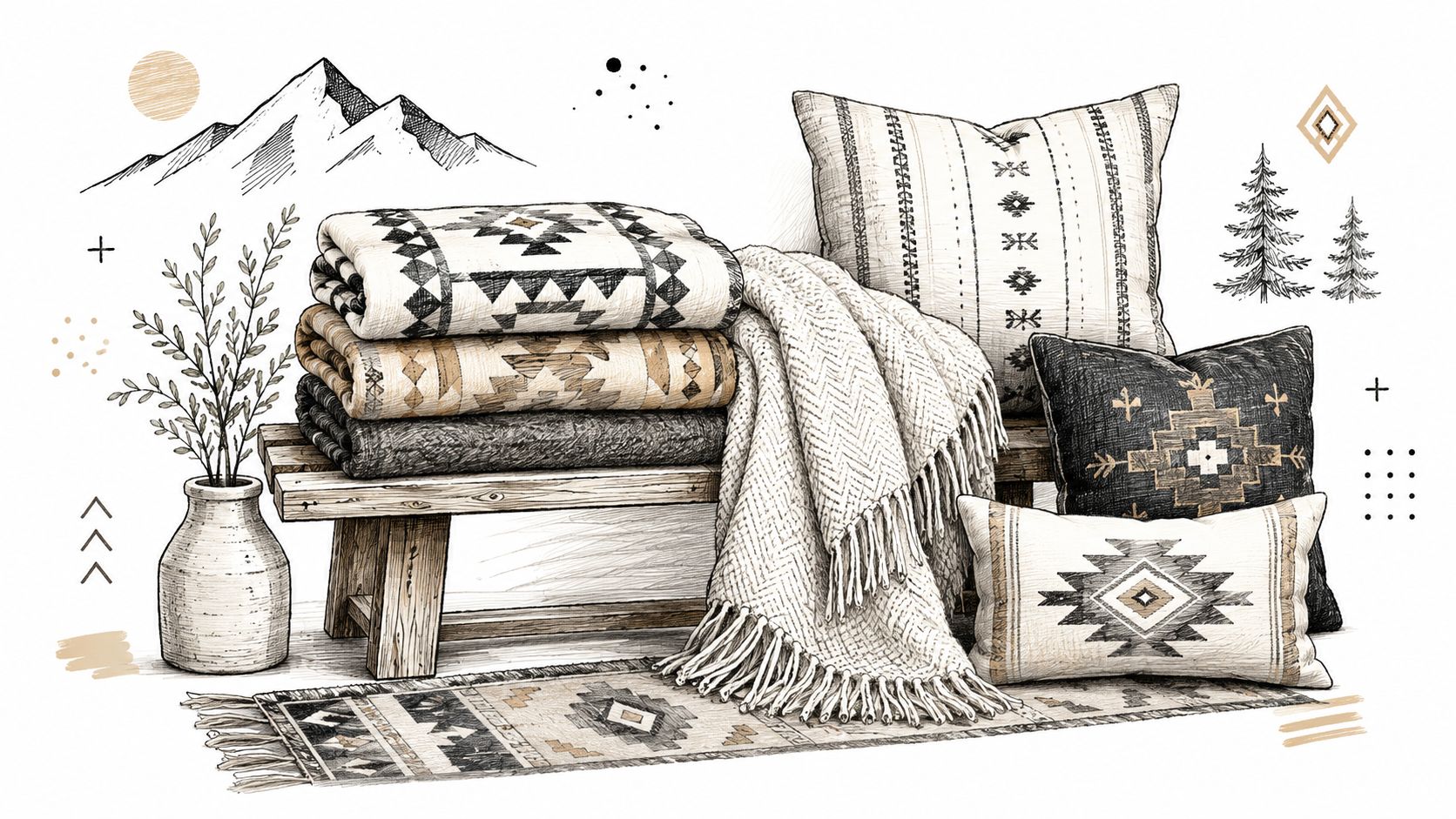
Cabins are full of hard surfaces. Wood floors, stone, metal, glass, and leather all look right, but too many of them together can make a room feel cold in both sound and comfort. Textiles fix that fast. They're also one of the easiest hunting cabin decor ideas to adjust over time.
The strongest cabin textiles stay close to natural fibers. Wool, canvas, cotton, linen, sisal, and jute all fit. MD Maison specifically points to handcrafted textiles and Harris Tweed as strong choices in hunting-lodge interiors, especially for plaid throws, textured cushions, and richly woven armchairs. That makes sense because these fabrics add texture without slipping into novelty.
Use Textiles to Soften Hard Surfaces
Start with rugs. Baird Brothers recommends thick area rugs in living rooms, bedrooms, and entryways because they increase warmth and offset the cooler natural materials common in cabins. In practical terms, rugs also soften noise, catch grit, and make early mornings on plank floors a lot kinder.
Then layer the room in order:
- Base layer: Rug in wool, jute, or another natural fiber.
- Middle layer: Blankets at the foot of beds and over chair arms.
- Top layer: Pillows and small cushions in plaid, herringbone, canvas, or tweed.
- Utility layer: Washable throws where dogs, boots, or damp gear are likely to land.
The Southern Static plush throw blanket makes sense as a practical top layer in seating areas or bunks where comfort matters as much as the look. That kind of piece works best when it supports the room, not when it tries to become the whole style.
What doesn't work is mixing too many patterns at equal strength. Pick one dominant pattern, usually plaid or stripe, then let the rest stay textural and quiet. That keeps the room grounded.
8. Handcrafted Art and Heritage Photography Display
Blank walls in a hunting cabin are missed opportunities, but not every wall needs “decor.” The best cabin walls carry memory. Old family hunt photos, camp snapshots, bird dog portraits, hand-drawn maps, framed licenses, regional scenes, and a few original pieces from regional artists do more than fill space. They tell visitors whose place this is.
Art works best when it's grouped by relationship, not by frame size alone. A grandfather's black-and-white duck blind photo belongs near an old call or a framed map of the same marsh. A painted turkey fan scene fits with field sketches, not necessarily beside military memorabilia from another branch of the family story.
Build a Wall That Actually Means Something
There's a reason custom and heritage-oriented wall pieces keep showing up in buying trends. Personalized decor has become a stronger choice for homeowners who want statement pieces with identity, and that suits cabins especially well. The point isn't to make the room look curated for social media. The point is to make it legible to the people who use it.
A meaningful wall often includes:
- Family photographs: Especially field photos with date and place noted on the back or frame card.
- Maps and plats: Good for land-based cabins with deep local roots.
- Original or commissioned art: Wildlife, dogs, camp scenes, or regional scenery.
- Documents worth preserving: Old licenses, handwritten recipes, letters, or camp rules.
Frame choices matter. A wall of black metal frames can feel too urban. Use wood, aged brass, or simple dark finishes instead. Let some mats breathe. Not everything needs to be tightly packed.
If your cabin also serves as a place to host, don't skip tableware and shelf pieces that support the same heritage mood. MD Maison calls out porcelain and stoneware such as Hutschenreuther's Maria Theresia Weiß and Hering Berlin Piqueur, along with decorative platters and wall plates with hunting scenes, as part of a refined lodge look. That's a useful reminder that art doesn't stop at the walls. It can live on the table, on a shelf, and in the objects you use.
Hunting Cabin Decor: 8-Point Comparison
| Item | Implementation Complexity 🔄 | Resource Requirements ⚡ | Expected Outcomes 📊 | Ideal Use Cases | Key Advantages ⭐ | Practical Tips 💡 |
|---|---|---|---|---|---|---|
| Rustic Wood and Reclaimed Barn Wood Accents | Moderate–High: sourcing and carpentry required | High upfront cost; specialized reclaimed suppliers and skilled installers | Strong rustic authenticity; increased perceived value and character | Accent walls, shelving, mantels, photography backdrops | Unique, sustainable character; durable and heritage-driven | Use as accents to manage cost; seal for pests; document provenance |
| Taxidermy and Wildlife Mounts Display | Moderate–High: professional mounting and placement planning | High cost per mount; licensed taxidermist and ongoing conservation care | Immediate hunting identity and conversational focal points | Trophy walls, dedicated trophy rooms, lodge focal displays | Authenticity and storytelling; credible hunting identity | Source licensed taxidermists; dedicate a focal wall; ensure ethical sourcing |
| Vintage Hunting and Military Signage and Memorabilia | Low–Moderate: curation and deliberate placement | Low–Moderate cost; antiques, flea markets, online sourcing effort | Affordable narrative depth and nostalgic layering | Entry-level decor, gallery walls, seasonal rotations | Cost-effective, easy to update, reinforces heritage | Verify authenticity, mix scales, group thematically |
| Leather and Hide Furnishings and Upholstery | Moderate: selecting finishes and climate considerations | High cost for quality pieces; specialized care and ethical sourcing | Premium tactile aesthetic; durable pieces that age well | Statement seating, lounge areas, high-touch photography backdrops | Timeless luxury; tactile comfort; complements wood and stone | Invest in one statement piece, condition regularly, source sustainable tanneries |
| Stone Fireplace and Hearth Design with Metal Accents | Very High: structural work, design and code compliance | Very high construction cost; stonemason, metalsmith, permits | Dramatic architectural anchor; high perceived value and permanence | Primary gathering rooms, heritage restorations, permanent cabins | Durable focal point; strong craftsmanship narrative | Engage professionals, source local stone, document the build |
| Heritage Firearms Display and Gun Rack Storage | High: secure installation and regulatory compliance | Moderate–High cost for custom cabinetry and security; provenance documentation | Authentic hunting narrative with organized, secure storage | Gun rooms, glass-fronted cabinets in private lodges, museum-style displays | Celebrates tradition; practical and secure storage; storytelling | Prioritize security and legal compliance; display provenance; use responsible messaging |
| Layered Textile Accents, Wool, Canvas, Heritage Patterns | Low: easy to layer and update | Low–Moderate cost; widely accessible sources | Added warmth, texture and seasonal flexibility | Sofas, beds, entryways, fireplace seating | Affordable, flexible, enhances comfort and depth | Layer textures/colors; source authentic patterns; rotate seasonally |
| Handcrafted Art and Heritage Photography Display | Low–Moderate: curation or commissioning required | Variable cost (prints to commissioned originals); lead time for commissions | Deeply personal narrative and unique identity; social media content | Gallery walls, entryways, family rooms, brand storytelling | Highly personal; supports local artists; flexible budget | Commission regional artists, frame professionally, create mixed-size gallery walls |
Your Cabin, Your Legacy Bringing It All Together
Good hunting cabin decor ideas don't start with shopping. They start with a question. What story is this place supposed to tell when someone walks in with cold hands, muddy boots, and a day in the field behind him?
If the answer is “everything I could fit in a room,” the cabin will always feel noisy. If the answer is “the land, the family, the hunt, and the craft,” the choices get easier. Reclaimed wood makes sense because it brings age and structure. Taxidermy makes sense when it marks a real memory. Leather belongs where it will be used hard and age naturally. Stone and iron belong around heat, not just as a backdrop. Textiles matter because a cabin should be warm, quiet, and comfortable, not just rugged from across the room.
The strongest cabins also respect function. Sleeping space, porch use, storage, and entry organization all affect the feel of a room as much as the decorative layers do. A bench in the right place, shelves or cubbies where gear naturally lands, and enough open wall for trophies or art often improve the room more than one more novelty piece ever will. Cabins are working spaces. The decor should support that fact, not fight it.
Restraint is part of authenticity. A lot of people trying to decorate a hunting retreat assume they need more antlers, more signage, more camouflage, more everything. Usually they need fewer things, chosen better. One old duck painting, one heirloom rifle cabinet, one serious leather chair, one proper wool throw, and one stretch of reclaimed wood can carry a room farther than a dozen impulse buys.
This style also has room for polish. Hunting-lodge interiors don't have to be crude to feel authentic. Bronze, aged brass, porcelain, crystal, and quality textiles all have a place when they're anchored by honest materials and personal history. That's what separates a cabin with heritage from a themed room.
Start with one element that will last. Maybe that's the hearth. Maybe it's a wood wall, a gun cabinet, or a family photo display. Get that right, then build around it slowly. A hunting cabin should gather meaning over time, the same way a good stock gains handling marks or a leather chair takes on wear at the arms. That slow accumulation is the point.
Done right, your cabin won't just look better. It'll feel settled. It'll feel like yours. And years from now, when someone younger walks in and starts asking about the map on the wall, the old sign above the door, or the buck over the mantel, the room will already be doing what the best cabins always do. It'll be keeping the story alive.
Southern Static Clothing Company brings that same heritage-minded approach to everyday living. If you want Southern-inspired apparel, hunting-themed accessories, and home goods that fit naturally into a cabin built on faith, freedom, family, and small-town values, browse the collection at Southern Static Clothing Company.