

Best Southern Clothing Brands: Authentic Style Guide 2026
You're probably doing one of two things right now. You're scrolling through shirt designs that all claim to be “Southern,” wondering why some feel authentic and others feel like a logo slapped on a blank tee. Or you're trying to buy for someone else, maybe a husband who lives in hunting shirts, a daughter who wants something coastal and easy, or a family member who wants clothes that reflect home without looking costume-like.
That's where most shoppers get stuck. Style is the easy part. Substance is harder. A shirt can have a mallard, a flag, a dog, a boat, a camo print, or a small-town slogan and still miss the mark if the fit is off, the fabric feels flimsy, or the message feels borrowed instead of lived-in.
Southern clothing brands operate within a much larger apparel market. The broader U.S. apparel industry is projected to reach about $399.77 billion by 2026, and North America captured 25.87% of global apparel revenue, or $466.78 billion, in 2025, according to Grips Intelligence on the Southern Lifestyle Apparel market. That matters because it shows this isn't a tiny novelty niche. It's a real buying category with a strong audience and a growing direct-to-consumer presence.
If you've ever felt that Southern style is about more than graphics and color palettes, you're right. Why Southern style is more than just fashion gets at that emotional side well. The best Southern clothing brands don't just sell a look. They reflect a way of life, how people gather, worship, work, hunt, celebrate, host, and remember where they came from.
Table of Contents
- The Search for Authentic Southern Style
- Navigating the Types of Southern Clothing Brands
- How to Spot Authentic Quality in Southern Apparel
- Your Guide to Smart Shopping and Perfect Sizing
- The Art of Gifting Southern Style
- Conclusion Weaving Your Story with Southern Threads
- Frequently Asked Questions About Southern Brands
The Search for Authentic Southern Style
Consumers don't start by saying, “I need to analyze the Southern apparel market.” They start with something much simpler. They want a shirt that feels like a Saturday in the South. Maybe that means a dove field, a church fish fry, a college town, a Fourth of July cookout, or a quiet stretch of marsh at daybreak.
The trouble is that “Southern” gets used loosely. One brand leans hard into polished, coastal prep. Another speaks to hunters and outdoorsmen. Another wraps itself in patriotic language. Another centers family, faith, and home. All of those can be Southern, but not all of them will feel like your kind of Southern.
That's why a good shopper learns to separate regional style from regional substance. You're not just asking whether a shirt looks right on a product page. You're asking whether the brand understands the culture it's borrowing from, whether the clothes are built for Southern weather and outdoor use, and whether the fit makes sense for real life instead of staged photos.
Southern style works best when it looks natural in the places you actually live, not just in brand photography.
The strongest Southern clothing brands usually have three things working together:
- A clear point of view that feels rooted in place, not copied from trends
- Useful product choices for the climate and lifestyle, from tees and hats to layering pieces and everyday accessories
- Consistency across the line so the graphics, fit, and materials all tell the same story
That last part gets overlooked. A brand may have beautiful artwork and weak blanks. Or quality fabric and generic messaging. The sweet spot is when the story and the garment support each other.
The values underneath the graphics
When people say a brand feels Southern, they usually mean more than geography. They're talking about a cluster of values and signals that show up again and again.
For some shoppers, it's heritage. They want colors, imagery, and language that connect to family land, regional memory, and time-tested routines. For others, it's faith and freedom, expressed in a straightforward way rather than a slick one. And for a lot of buyers, it's the outdoor life that ties it all together, hunting, fishing, tailgating, lake weekends, dog seasons, early mornings, and hard use.
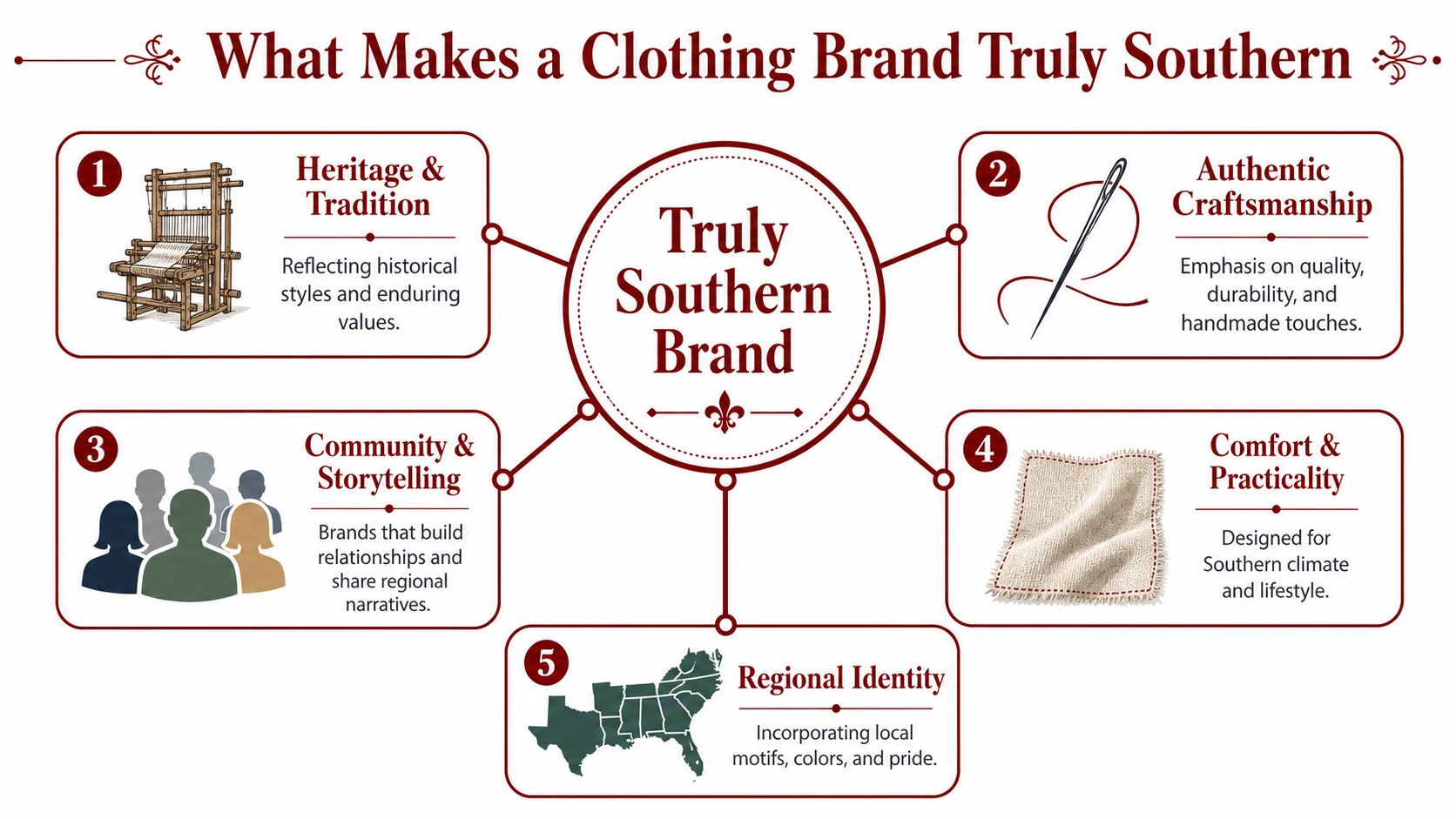
A useful way to judge Southern clothing brands is to look for five pillars:
-
Heritage and tradition
The brand draws from real regional patterns of life, not just clichés. -
Authentic craftsmanship
Product quality supports the storytelling instead of undermining it. -
Community and storytelling
The brand sounds like it knows the people it serves. -
Comfort and practicality
Pieces make sense for hot weather, travel, weekends, and outdoor wear. -
Regional identity
The colors, references, and motifs feel tied to the South in a recognizable way.
How the category took shape
This category didn't appear overnight. The commercialization of distinct Southern clothing brands accelerated in the late 2000s, and Joseph's Clothier notes that Southern Marsh launched in 2007. That launch helped establish the “preppy classic” template that blended traditional craftsmanship cues with contemporary graphics.
That history matters because it explains why today's market feels so broad. What started closer to niche collegiate and regional merchandise developed into a fuller lifestyle category. You can still see the original DNA in many brands: bright colors, approachable graphics, heritage references, and an emphasis on identity. But the category now stretches well beyond a basic tee rack.
Here's where readers often get confused. They assume “authentic Southern” always means old-school prep. It doesn't. A field-focused hunting brand can be just as Southern as a coastal brand with pastel shorts and embroidered motifs. What matters is whether the message, design language, and product purpose line up.
Practical rule: If a brand's words say “heritage” but the product feels generic, trust the garment more than the slogan.
Navigating the Types of Southern Clothing Brands
Not all Southern clothing brands are trying to dress the same person. That's the first thing to remember when you're shopping. If you compare every brand by the same standard, you'll end up disappointed for the wrong reasons.
Some brands are built for the field. Some are built for church, tailgates, and vacation towns. Some lean patriotic. Others center family life. A smart buyer figures out the lane before judging the details.
If you want a feel for how Southern men's wardrobes often blend casual polish with outdoors influence, this take on Southern men's style shows that overlap clearly.
A quick comparison by style lane
| Brand type | Common cues | Typical products | Best for |
|---|---|---|---|
| Outdoor and hunting | Camo, wildlife, field imagery, rugged tones | Graphic tees, hats, socks, gear-ready basics | Hunters, outdoorsmen, land and field use |
| Patriotic and freedom-focused | Flags, Americana, liberty themes, bolder statements | Tees, hats, seasonal drops, holiday wear | Cookouts, holidays, everyday statement pieces |
| Classic preppy Southern | Washed color, coastal motifs, polished casual feel | Pocket tees, polos, shorts, easy layering | College towns, beach trips, casual social wear |
| Family and faith-centered | Scripture references, home themes, family matching options | Tees, kids' wear, baby basics, giftable items | Family photos, church events, coordinated looks |
This isn't rigid. Many brands cross categories. A single label may sell hunting tees, patriotic graphics, kids' pieces, insulated tumblers, hats, and home goods under one roof. That's common in this market because Southern identity itself isn't one-dimensional.
How to choose the right lane for your closet
Start with your actual routine, not your fantasy routine.
If you spend weekends in blinds, on the water, or walking property, outdoor-focused Southern brands will probably serve you better than polished preppy labels. Their graphics, cuts, and accessories usually fit the lifestyle more naturally. You want pieces that still look right with boots, a ball cap, and a truck seat, not just loafers and vacation photos.
If your Southern style leans more social than field-ready, the classic preppy lane may fit better. These brands often favor a cleaner silhouette and easier crossover between brunch, family gatherings, and travel.
A patriotic brand works best when you want your values stated more directly. That can be great for holidays and everyday wear, but it helps to pay attention to tone. The strongest versions feel confident and rooted. The weaker ones can feel like they're shouting.
Family-centered Southern brands solve a different problem. They make it easier to coordinate adults, kids, and babies without making everyone look identical. That's useful for gift shopping, holiday weekends, and family photos when you want a shared theme without looking overstyled.
A few simple questions will narrow your choice fast:
-
Where will you wear it most often
In the field, around town, at school events, at church, or on trips? -
What do you want the design to say
Quiet regional pride, outdoors identity, faith, patriotism, or polished Southern ease? -
Do you need a single piece or a full lifestyle match
Some brands are strongest in apparel only. Others also cover drinkware, bags, candles, or home items. -
Are you buying for one person or a household
Family-wide sizing and coordinated categories matter more when you're shopping across generations.
What many shoppers miss is that Southern style works best when it's specific. Broad, all-purpose branding usually feels forgettable. Distinct Southern clothing brands know who they're for, and that clarity tends to show up in the product mix.
How to Spot Authentic Quality in Southern Apparel
A strong design gets your attention. Fabric, stitching, and finish determine whether you'll still want the piece after a season of wear.
Plenty of shoppers get burned. They buy a tee because the artwork speaks to them, then discover the shirt twists after washing, shrinks in the chest, or feels sticky in humid weather. Southern apparel has to do more than look good on a hanger. It has to hold up in heat, movement, and everyday use.
Start with the fabric
For outdoor and hunting use, fabric choice matters immediately. Fabriclore's guide to performance fabrics notes that Southern outdoor apparel often uses nylon-spandex or polyester knits, and that these blends help wick moisture in humid climates while offering a 20 to 30 percent stretch range for movement.
That tells you what to look for when a product claims “performance.” In plain terms:
- Nylon-spandex blends usually make sense when you want stretch and durability.
- Polyester performance knits are often chosen for sweat management and active wear.
- Basic cotton tees can still be great for casual use, but they won't always serve the same purpose in heat and motion.
The key is matching the material to the job. A graphic tee for a casual dinner can be soft and simple. A shirt meant for hunting, scouting, or long days outdoors needs better moisture handling and flexibility.
If a brand says a piece is made for outdoor use, the material description should explain why.
Then inspect construction and print quality
Once the fabric checks out, look closer.
A well-made Southern tee or hat usually shows care in the less glamorous details. You want seams that lie flat, stitching that looks even, and stress areas that don't seem rushed. If the shoulder seam waves, the hem twists, or loose threads show up in product photos, take that seriously.
Print quality matters just as much because Southern brands often rely on artwork to carry identity. A good graphic should feel integrated with the garment, not like a stiff sticker on top of it. Ask yourself:
- Does the print look clean-edged and intentional
- Does the scale fit the shirt size
- Does the artwork match the brand's voice
- Will this still look good after repeated washing
You can also learn a lot by checking product close-ups. If a brand avoids showing stitching, cuffs, collars, or print texture, it may be hiding weak execution.
Look for honesty about how it's made
Quality isn't only physical. It's also about how transparent the brand is.
Small-run and craft-focused production often appeals to Southern shoppers because it fits the values many buyers care about: intention, consistency, and pride in the finished piece. If you want a useful example of how this idea is discussed in a brand setting, this overview of small-batch production shows the language shoppers should watch for.
That doesn't mean every good brand must tell its whole supply story in minute detail. But you should expect some clarity. Materials, intended use, care instructions, and basic production philosophy shouldn't be mysteries.
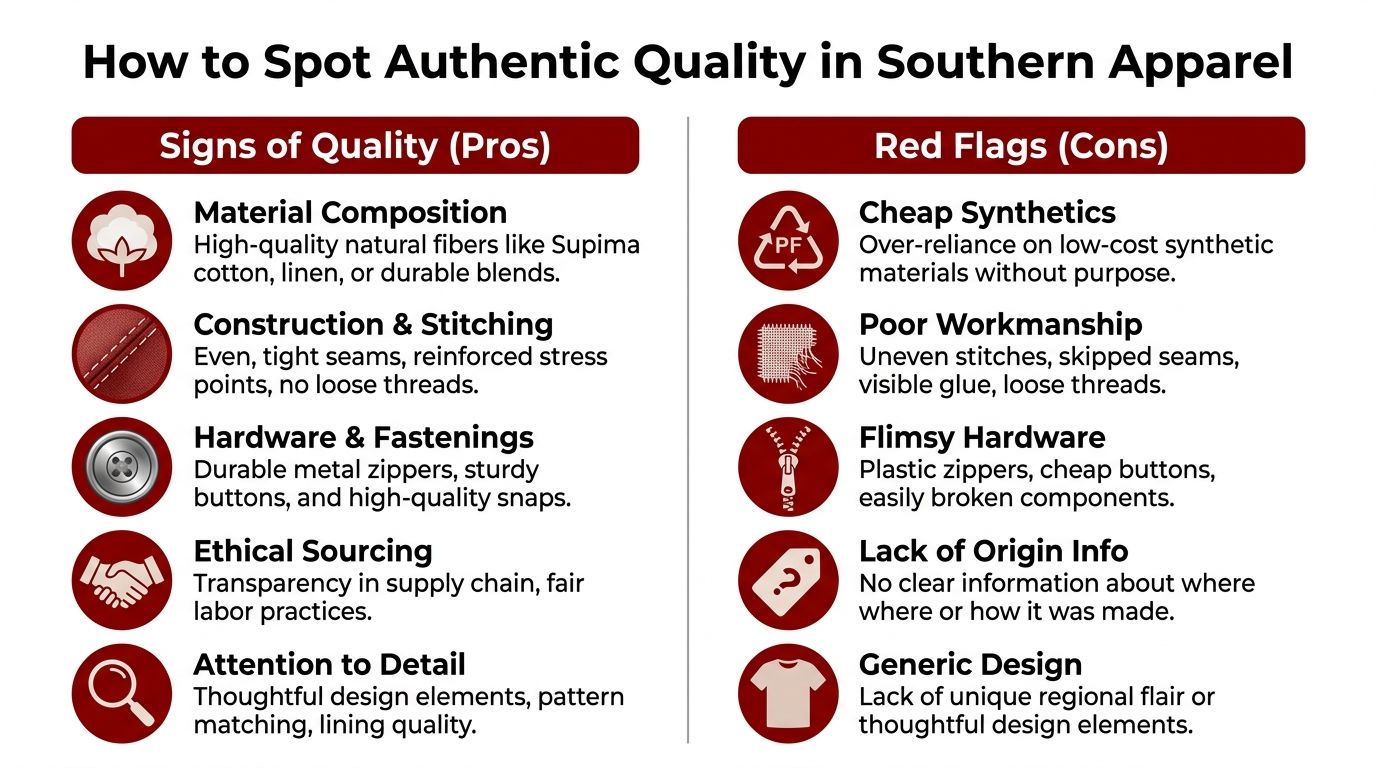
A practical quality checklist looks like this:
-
Material clarity
The brand tells you what the garment is made of and why that fabric was chosen. -
Construction signs
You can see neat stitching, stable seams, and a garment that holds its shape. -
Print and trim discipline
Graphics look well applied. Hats, cuffs, and fastenings don't feel like afterthoughts. -
Use-case honesty
The product description matches the product's real purpose. -
Brand transparency
The company shares enough information for you to buy with confidence.
Cheap Southern apparel usually reveals itself quickly. The words may sound proud and polished. The product itself feels generic. Good Southern clothing brands earn trust when the garment backs up the story.
Your Guide to Smart Shopping and Perfect Sizing
Fit is where online shopping can go sideways fast. A shirt may look perfect on the model and still fail you in the shoulders, sleeve length, waist, or chest. That problem gets sharper with Southern outdoor apparel because function matters. If you can't move comfortably, the piece won't earn its place in your closet.
Industry analysis points to a real gap here. Shanghai Garment's discussion of underserved market segments notes that many shoppers face poor representation and limited choices, especially niche groups like tall hunters or women who need articulated outdoor fits. That's why careful sizing isn't fussy. It's practical.
How to read a size chart like a careful buyer
Don't start by guessing your usual size. Start with a tape measure and one shirt you already love.
Measure the chest width, body length, and sleeve length of that shirt. Then compare those numbers to the brand's chart. If the brand doesn't provide enough sizing detail to make that comparison, that's useful information in itself.
Pay attention to the intended silhouette:
- Relaxed fit usually gives more room through the body.
- Athletic or fitted fit may narrow through the chest and waist.
- Performance fit can mean stretch helps mobility, but it doesn't always mean extra room.
If you're buying for layering, size with that in mind. A hunting tee worn alone may fit differently than one worn under a vest or overshirt.
What to look for in product descriptions
A strong product description answers the questions you'd ask in a store.
Look for clues such as fabric blend, stretch, whether the shirt is meant for active movement, and whether the item is better for casual wear or field use. Good descriptions also mention care instructions. That sounds minor, but it tells you the brand understands long-term wear.
Here's a quick shopping filter I use:
-
Read the fabric line first
That tells you whether the product matches your climate and activity. -
Check the fit language next
“Standard,” “relaxed,” and “performance” are not interchangeable. -
Scan the photos for proportion
Look at sleeve opening, torso length, and how the shirt hangs. -
Read reviews for body-type clues
Buyers often reveal whether a brand runs trim, boxy, short, or long.
Buy for your shoulders first in tops. Minor looseness through the body is easier to live with than a tight upper frame.
How to judge the brand behind the product
Website structure tells you a lot. If a direct-to-consumer Southern brand has clear category pages, straightforward policies, detailed product descriptions, and active customer support channels, that's a good sign. It suggests the company understands that online shoppers need clean information.
You should also look at whether the brand appears consistent across its site and social presence. Are the values coherent? Do the products all seem to come from the same world? Are family, faith, outdoors, or heritage themes presented with some depth, or are they just decorative labels?
Reliable brands usually make shopping easier in simple ways:
-
Clear size support
Charts, fit notes, and useful descriptions -
Visible policies
Returns, shipping, and contact information that aren't buried -
Consistent product language
The same tone and standards across categories - Real-life usefulness Items appear built for the way customers dress and live
The best purchase isn't always the loudest design. Often it's the one that fits right, washes well, and still feels like you six months later.
The Art of Gifting Southern Style
Southern gifts work best when they feel personal instead of generic. That's why Southern apparel and lifestyle goods can be such strong presents. They don't just fill a closet shelf. They signal that you know the recipient's habits, values, and sense of home.
A hunter may appreciate a field-ready graphic tee or outdoor hat more than a dressy item he won't wear. A patriotic family member may love a holiday-themed shirt for cookouts and long weekends. A homebody may light up over a Southern candle, insulated tumbler, or home fragrance piece that brings the same identity indoors.
Match the gift to the person's real life
The easiest gifting mistake is buying the version of Southern style you like instead of the one they live.
Try thinking in everyday scenes:
-
For the outdoorsman
Hunting tees, caps, performance socks, or a gear bag fit naturally into the routine. -
For the patriotic dresser
A flag-forward tee or holiday collection piece makes sense for seasonal wear and year-round pride. -
For the hostess or home-centered shopper
Candles, drinkware, and casual decor often feel thoughtful without the sizing risk of apparel. -
For young families
Coordinated kids' and baby pieces can turn a simple gift into something memorable for photos, weekends, and visits with grandparents.
This is also where modern Southern lifestyle brands stand apart from older expectations. Many now offer more than shirts. The catalog may extend into hats, bags, tumblers, candles, footwear, and home goods, which gives you more ways to match the gift to the person.
A good Southern gift feels like it belongs in the recipient's daily life. It shouldn't need an explanation.
A short visual can help spark ideas for gifts that match different Southern identities and occasions.
Why transparency makes a better gift
Conscientious gifting means looking beyond the logo. If you're buying for someone who cares about where products come from, transparency matters.
Credence Research on the sustainable outdoor clothing market notes 6.7% CAGR growth in that market, while also pointing out limited choices for eco-friendly Southern gear for about 38% of female and 45% of male outdoor end-users. That gap makes sourcing clarity more than a niche concern.
You don't need a perfect brand to give a thoughtful gift. But it helps to choose a company that tells buyers something meaningful about materials, production, or sourcing philosophy. That added layer of care turns a simple present into a better one.
Conclusion Weaving Your Story with Southern Threads
The best Southern clothing brands do more than print a familiar image on a shirt. They connect culture, usefulness, and identity in a way that feels lived-in. When you know how to read the signals, heritage, fit, fabric, construction, and honesty, you stop shopping by appearance alone.
That changes the whole experience. You buy fewer pieces that disappoint and more pieces that feel right from the first wear. You also get better at spotting whether a brand reflects the South as a real place and way of life, or just uses it as decoration.
Clothes tell stories. Southern ones often tell stories about land, family, freedom, faith, memory, and everyday life. Choose the pieces that sound like your story, and you'll wear them with a lot more confidence.
Frequently Asked Questions About Southern Brands
Are coastal Southern brands different from inland or hunting-focused brands
Yes. Coastal Southern brands often lean lighter, cleaner, and more polished. Inland or hunting-focused brands usually use earthier colors, wildlife references, camo influence, and more rugged styling. Neither is more authentic by default. They reflect different parts of Southern life.
Should I size up in Southern graphic tees
Not automatically. Read the fit notes and compare measurements to a shirt you already own. Some graphic tees are cut roomy for casual wear, while others run closer through the chest and shoulders. Performance shirts can feel different from standard cotton even in the same tagged size.
What should I expect from a direct-to-consumer Southern brand
Expect a clear size chart, visible return and shipping policies, and product descriptions that explain fabric and fit. If you can't find those basics, shop carefully. Good direct-to-consumer brands usually make online buying feel straightforward.
How do I keep graphic tees looking good longer
Wash inside out, use cool water when the care label allows it, and avoid overly harsh drying. High heat is rough on prints. Fold or hang the shirt neatly after drying so the graphic doesn't get creased and stressed.
What makes a Southern brand feel authentic instead of gimmicky
The brand's story, products, and presentation should agree with each other. If the message sounds rooted but the garments feel generic, shoppers notice. Authentic Southern clothing brands usually show consistency in design, quality, and cultural point of view.
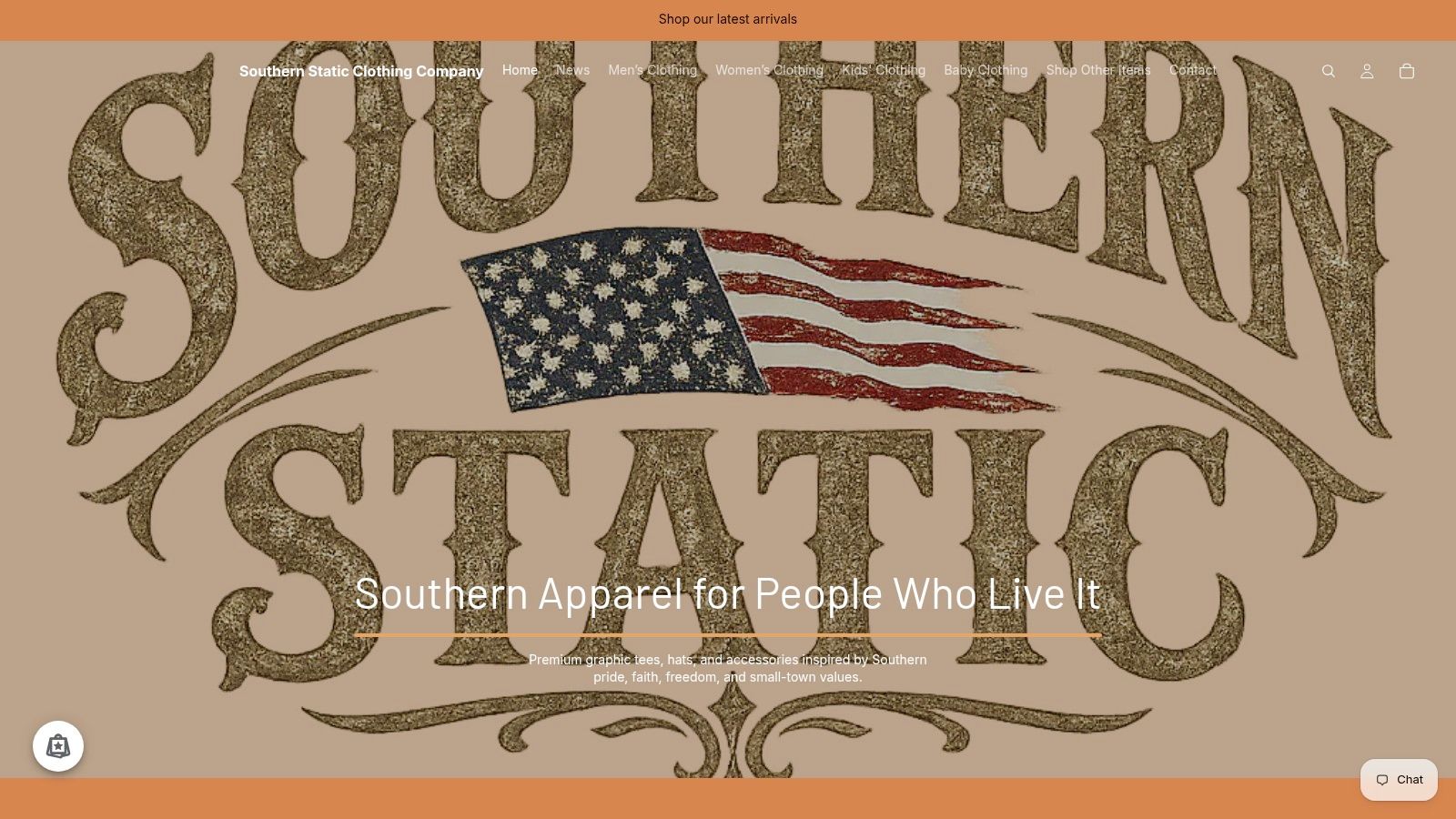
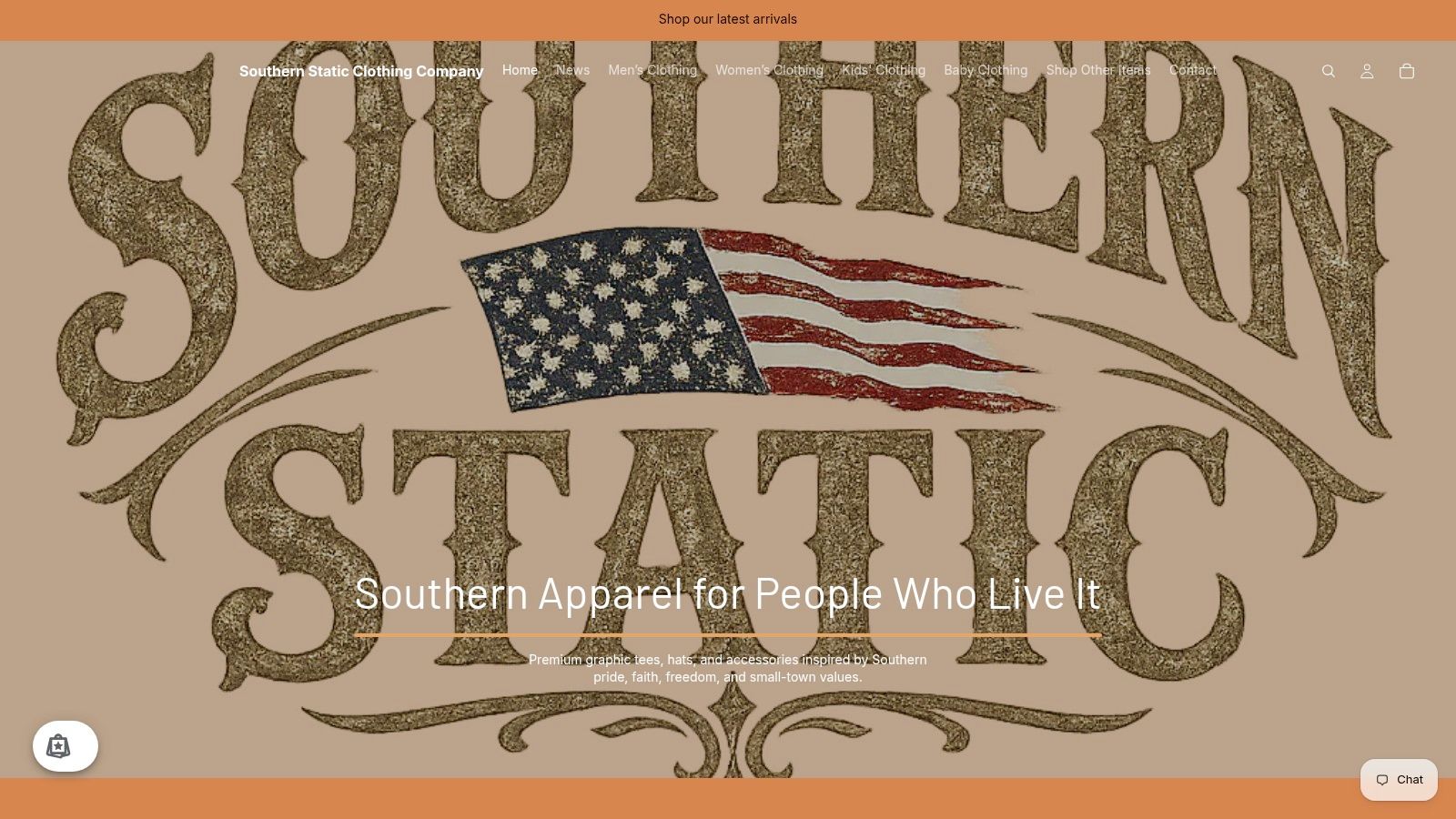
If you want to shop a brand that brings together Southern pride, outdoor living, family-wide apparel, and giftable lifestyle goods, take a look at Southern Static Clothing Company. Their catalog spans graphic tees, hats, drinkware, bags, candles, and coordinated pieces for men, women, kids, and babies, which makes them worth exploring when you want Southern style that feels connected to everyday life.