

Small Batch Production: A Guide for Brands and Shoppers
You've probably had this happen. You find a graphic tee that feels distinct from the usual algorithm-fed stuff. The colors look better, the message fits, the fit looks right, and then you see the two words shoppers both hate and secretly respect: Sold out.
For a lot of brands, that isn't a mistake. It's the result of small batch production, a way of making products in limited, intentional runs instead of flooding a warehouse and hoping demand shows up later. That matters to founders because it changes cash flow, risk, and creative freedom. It matters to shoppers because it changes what you buy, how fast it disappears, and why it may cost more.
In apparel and lifestyle goods, this model sits right in the middle of craft and commerce. It can produce graphic tees, hats, tumblers, candles, and home goods without forcing a brand into the all-or-nothing gamble of mass production. It also asks more from the customer. You have to pay attention, buy with more intention, and understand that limited release products don't behave like always-in-stock basics.
Table of Contents
- The Rise of the Limited Drop
- What Is Small Batch Production Exactly
- The Shoppers Guide to Small Batch Goods
- Why Apparel Brands Choose Quality Over Quantity
- How Southern Static Embodies the Small Batch Model
- A Practical Guide for Brands Adopting This Model
- Conclusion The Future Is Small and Intentional
The Rise of the Limited Drop
A shopper sees a new camo hat, a patriotic tee, or a candle that fits their taste better than anything at a big-box store. They click through a few hours later and one size is gone. By the next morning, the whole release is gone. That used to look like poor planning. Now it often signals a different retail philosophy.
Small batch production supports the limited drop. Instead of launching huge quantities, a brand releases a focused run, learns what customers respond to, and avoids sitting on piles of unsold inventory. In plain terms, the brand behaves more like a local craft brewery than a macro beer company. It makes a tighter selection, pays attention to response, and keeps room for the next idea.
That shift changes how people interpret scarcity. Sometimes a product sells out because demand was underestimated. Sometimes the run was intentionally small because the brand wanted tighter quality control, a cleaner test of the design, or less waste. The point isn't just to make products feel rare. The point is to make production decisions with more discipline.
Why limited runs feel different
When a brand works this way, each release carries a bit more personality. A hunting-themed shirt can speak directly to one part of the audience without forcing the brand to bet on thousands of units. A family collection can include men's, women's, kids', and baby items without requiring giant stock commitments across every size.
That's why limited drops often feel more curated than broad catalogs.
Small batch goods ask shoppers to think less like bargain hunters and more like collectors of products they'll actually use and keep.
The real trade-off
The trade-off is simple. You get more specificity, but less endless availability. You may find a shirt color you love, but if the batch is gone, it may not come back in the same form. That can frustrate shoppers who are used to reorder culture, yet it also protects brands from the problems that come with overproduction.
For shoppers and founders alike, that's the core idea behind small batch production. It's not just a manufacturing tactic. It's a different agreement between the brand and the buyer.
What Is Small Batch Production Exactly
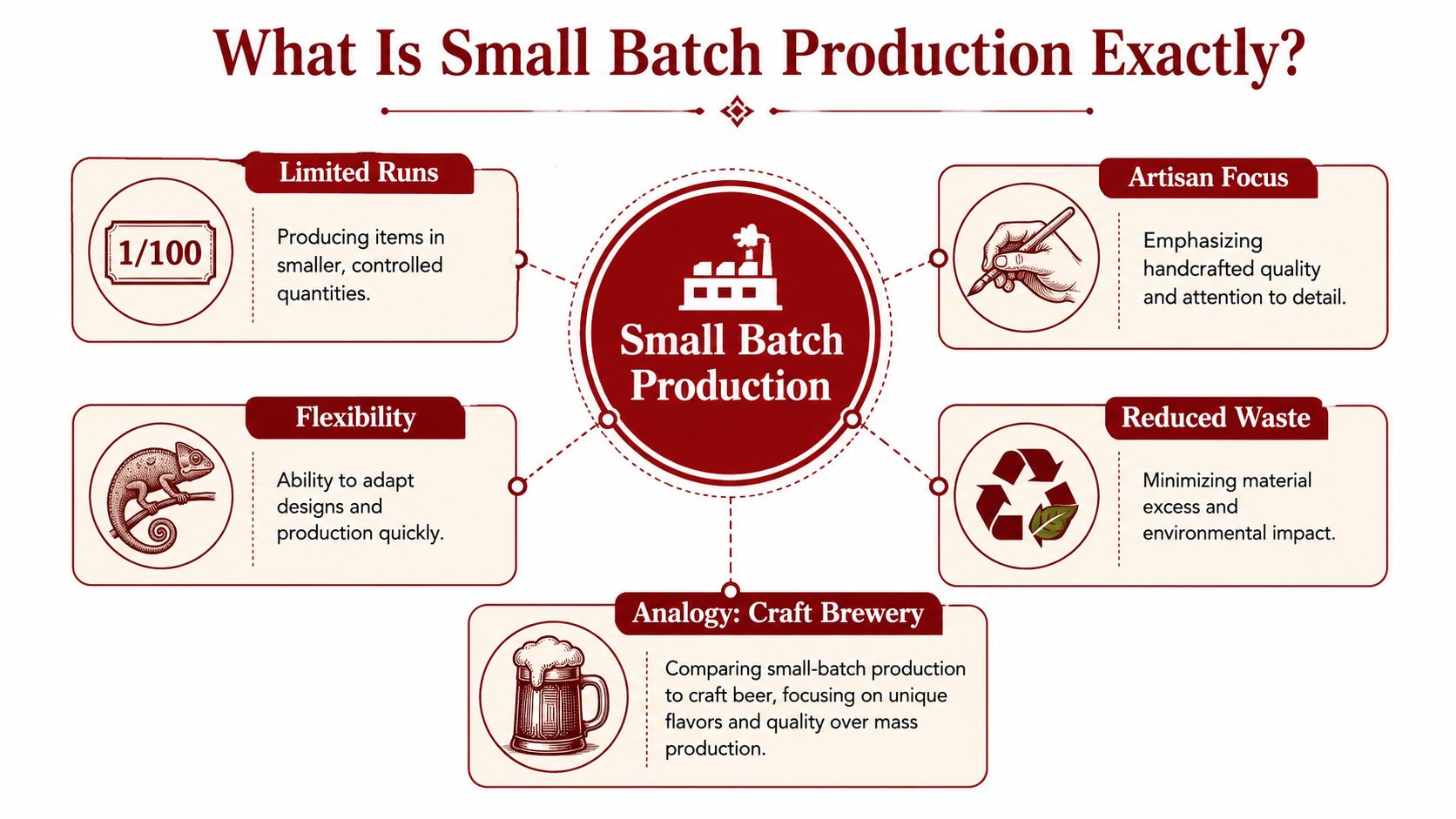
A simple way to understand small batch production is to picture a brand placing a measured bet, not pushing all its chips into one design. In apparel, that usually means making a run large enough to sell efficiently, photograph well, and ship at a reasonable cost, while still keeping room to adjust the next release. For a brand like Southern Static, that can mean testing a new graphic, color, or family collection without committing to warehouse-level volume.
A craft brewery is a good comparison. It can release a seasonal stout, see how customers respond, tweak the recipe, and brew the next round with more confidence. A macro brewery is built for scale and consistency across huge volumes. Small batch production works much more like the craft side of that equation.
Where it sits on the production spectrum
Small batch sits in the middle of the production spectrum. On one end, you have one-off custom work made for a single customer. On the other, you have mass production built to keep large quantities in stock across many channels. Small batch gives brands a middle option. They can produce enough units to run a healthy business without locking themselves into oversized inventory.
That middle position matters because it changes how decisions get made at the factory level. A mass-production setup often depends on long runs, higher automation, and fewer changes once the process starts. Small batch runs usually allow more flexibility in materials, timing, and finishing. That flexibility is part of the product, not just part of the operations plan.
In apparel, those choices show up in details shoppers can feel. Fabric weight, wash treatment, print method, and finishing all shape whether a shirt feels flat and generic or broken-in and distinctive. If you have ever compared a standard tee with a garment dyed shirt, you have seen how production choices affect the final character of the piece.
Why the model works for brands and makes sense to shoppers
For brands, the appeal is straightforward. Small batch production lowers the risk of guessing wrong. A founder does not need to order huge quantities of one design, hope demand shows up, and then spend months clearing excess inventory. The brand can release a tighter run, learn from sales and feedback, and place the next order with better information.
For shoppers, the experience changes too. A limited run often means the product was chosen with more care and produced with a clearer point of view. That does not guarantee perfection, and it does mean availability can be tighter, but it often leads to goods that feel more considered than items made for endless stock.
Here is the practical rule. Small batch production is disciplined production. The brand makes enough to test, sell, and learn, and the customer buys with the understanding that each release is more curated than permanent. That is why the model fits modern D2C apparel so well, especially for brands like Southern Static that want identity, quality, and measured growth to show up in the product itself.
The Shoppers Guide to Small Batch Goods
From the customer side, small batch production changes the buying experience in ways that are easy to miss if you're used to endless restocks. You aren't just buying a product. You're buying into a release rhythm.
That can be a good thing if you care about design, quality, and a brand's point of view. It can be annoying if you treat every store like a giant marketplace where everything should always be available in every size and color.
What you gain as a buyer
The first benefit is selection with personality. Small batch brands can make products for a narrower taste. That's why you'll often find stronger niche identity in Southern-themed apparel, outdoor graphics, heritage looks, or family-matched items than you will in broad retail chains.
The second benefit is usually better attention to the product itself. Smaller runs let teams inspect details more carefully, adjust after feedback, and avoid letting weak designs linger forever just because a warehouse is full.
Many shoppers also like what this model says about consumption. Buying smaller runs often means supporting production that's closer to actual demand, rather than overstuffed inventories built on guesswork. If you already value products that feel rooted in origin and identity, the same appeal often overlaps with American-made outdoor clothing.
What to watch before you check out
Small batch shopping works better when you change your habits a little.
- Follow release timing: If a brand runs drops instead of permanent stock, email and social updates matter. Waiting a week may mean missing your size.
- Read sizing carefully: Limited runs don't always get broad restocks, so guessing your size is riskier.
- Check return policies: Some brands can't absorb returns the same way giant retailers can.
- Expect price differences: Smaller runs usually cost more to make, and that often shows up in retail pricing.
Here's the mindset shift that helps most: don't ask, “Why isn't this always available?” Ask, “Is this something I want enough to buy while it's here?”
Limited release shopping rewards decisiveness, not endless comparison.
Once shoppers understand that, small batch goods stop feeling inconvenient and start feeling more transparent. The product exists because the brand chose to make it carefully, not because a forecasting spreadsheet demanded maximum volume.
Why Apparel Brands Choose Quality Over Quantity
A small apparel brand often faces a choice that looks simple on paper and risky in real life. Order 2,000 shirts to get the best unit price, or order 150 and keep your cash free in case the design misses. For independent brands, that decision usually starts with survival, not slogans about craftsmanship.
Apparel behaves more like a craft brewery than a macro brewery. A giant company can flood shelves with one proven formula. A smaller brand has to stay alert to changing taste, seasonality, sizing feedback, and what its audience wants to wear more than once. A graphic tee may move fast in spring and stall by fall. A hat might surprise you. A color that looked strong on a screen can sit untouched in a box.
What founders gain
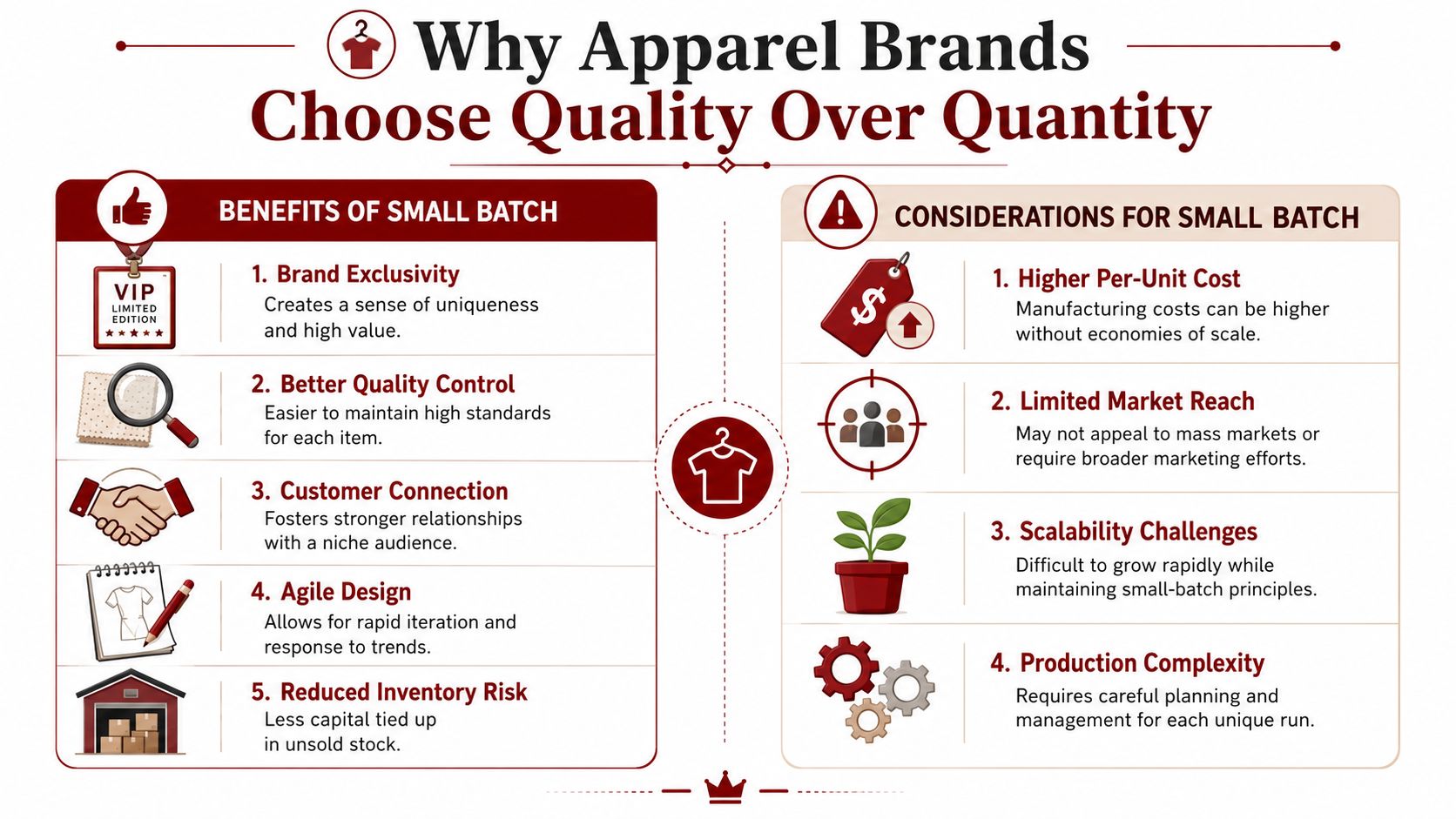
Small batch production gives founders room to learn before they overcommit. Instead of treating one purchase order like a final exam, they can treat it like a field test. That matters for fit, fabric, print quality, and messaging. It also matters for cash flow, which is often the main pressure point in apparel.
According to Plastic Moulds' analysis of small batch production, small batch production can drive a 40% average reduction in operational costs and reduce inventory needs by up to 67%. The same analysis notes that higher unit costs can still make sense because smaller runs reduce the financial risk of testing new products.
In practice, that usually means a brand can:
- test two design directions instead of committing to one large run
- reorder proven sellers after real customer response comes in
- keep less money tied up in storage, unsold sizes, and outdated styles
- put more budget into product development, photography, or customer acquisition
The consumer side matters too. Shoppers often read a limited run as a sign that the brand is paying attention. A product like a garment-dyed unisex T-shirt feels more credible when the brand is selective about what it makes, how much it orders, and whether it earns a reorder.
Where the model gets harder
Small batch is not the cheap or easy path. Per-unit costs tend to be higher. Production planning takes more involvement. Some factories prefer larger minimums, which can leave young brands with fewer supplier options.
There is also a timing problem.
If a brand orders too cautiously, a strong seller can disappear right when word of mouth starts working. If it orders too heavily, the brand ends up in the same trap small batch was supposed to avoid. Discount bins, crowded stockrooms, and cash tied up in the wrong sizes are expensive lessons.
A direct comparison makes the tradeoff clearer.
| Factor | Small Batch Production | Mass Production |
|---|---|---|
| Production volume | Limited runs tailored to demand | Large runs built for broad distribution |
| Upfront investment | Lower investment risk and less inventory exposure | Higher commitment to tooling, stock, and forecasting |
| Unit cost | Higher per-unit cost | Lower per-unit cost through scale |
| Speed to adjust | Easier to revise designs, colors, and assortment | Slower to change once production is underway |
| Brand positioning | Supports exclusivity, craft, and focused releases | Supports consistency, availability, and wide reach |
| Inventory risk | Lower because brands can produce more cautiously | Higher if demand misses forecast |
| Operational style | More hands-on and planning-intensive | More systemized and volume-driven |
Decision lens: Small batch usually makes more sense when a brand wants to protect cash, test demand, and refine its product. Mass production makes more sense when demand is proven and low unit cost matters more than flexibility.
That is why many independent apparel brands choose quality over quantity. They are not rejecting growth. They are choosing to earn scale step by step, with better information and fewer expensive guesses.
How Southern Static Embodies the Small Batch Model
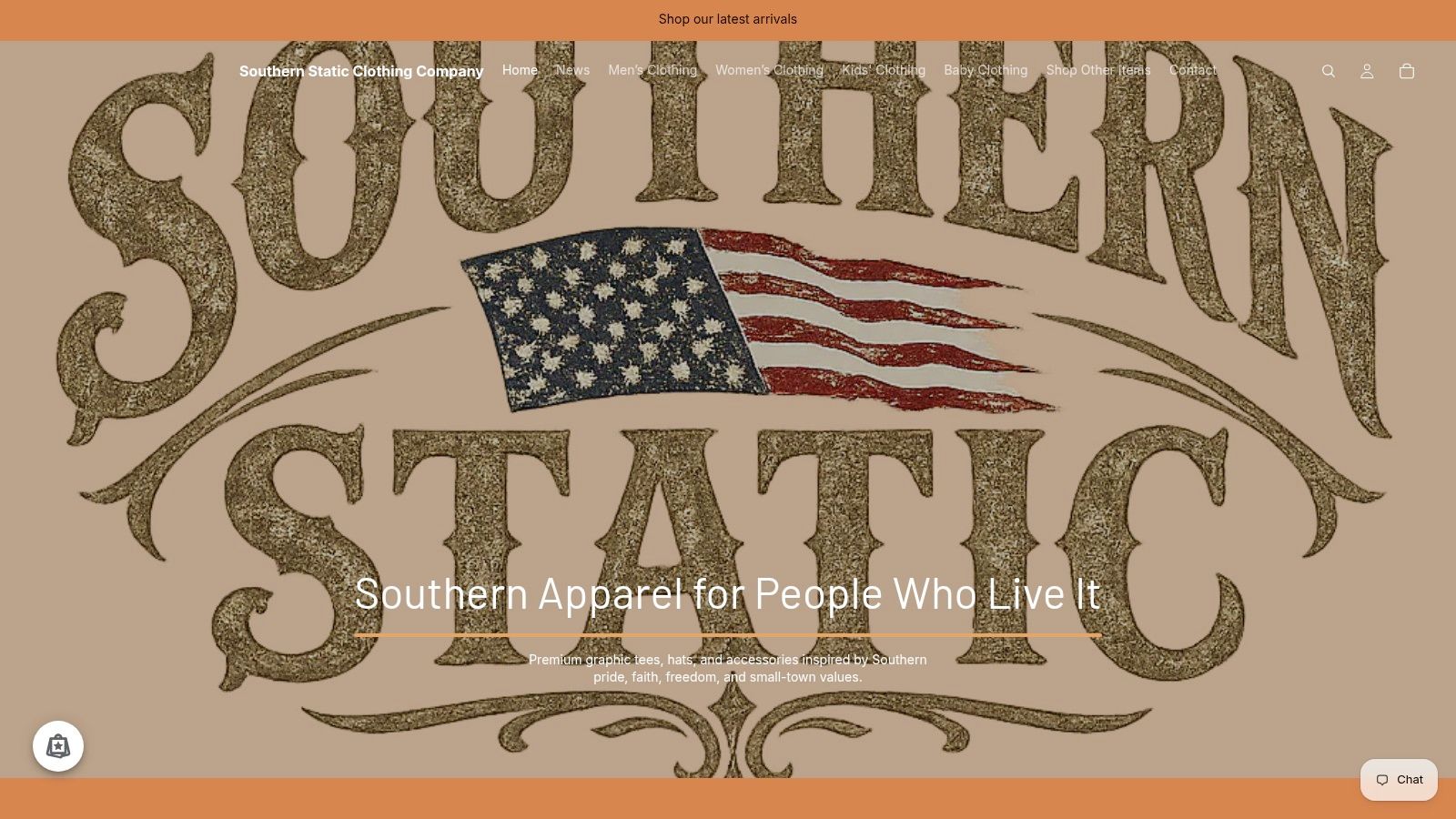
Southern Static works as a useful real-world example because its catalog spans more than one product type. It isn't just tees. It includes hats, drinkware, bags, candles, home goods, kidswear, and other lifestyle products tied together by Southern heritage, faith, freedom, and outdoor identity.
That kind of catalog is hard to sustain with a blunt mass-production mindset. A broad, themed assortment needs room for selective launches, seasonal experiments, and category-specific pacing. Small batch production gives a brand that room.
A brand built around themed releases
When a brand presents itself through words like handcrafted and artisan quality, production method matters. Those claims land differently when the brand can release focused runs, inspect results closely, and refine the next batch instead of pushing one huge order through a pipeline and living with every mistake.
That's where the operational side strengthens the brand story. By using flexible workflows, small batch production can cut time-to-market by 60 to 70%, and limited runs of 50 to 300 units often show a defect rate 15 to 25% lower than mass-produced equivalents, according to Polyspectra's explanation of small batch production. For a customer buying a unisex garment dyed T-shirt, that kind of process logic supports the promise of a more considered product.
Why the model fits more than apparel
The more interesting part is how this approach extends into lifestyle goods. A Southern-themed brand doesn't only sell what people wear. It often sells what they gift, carry, sip from, or use at home. That means the brand needs a production rhythm that works across soft goods and harder accessories without overcommitting in either category.
Small batch production helps because each category can move at its own natural pace. Tees can respond to seasonal graphics. Hats can follow core evergreen themes. Candles and drinkware can support gift moments or complement apparel drops without forcing giant inventory bets.
That creates a stronger relationship with the customer. The buyer doesn't just return for one shirt. They return for a recurring point of view, delivered through limited, themed releases that feel connected without feeling mass-produced.
A strong small-batch brand doesn't just sell products. It trains customers to pay attention.
A Practical Guide for Brands Adopting This Model
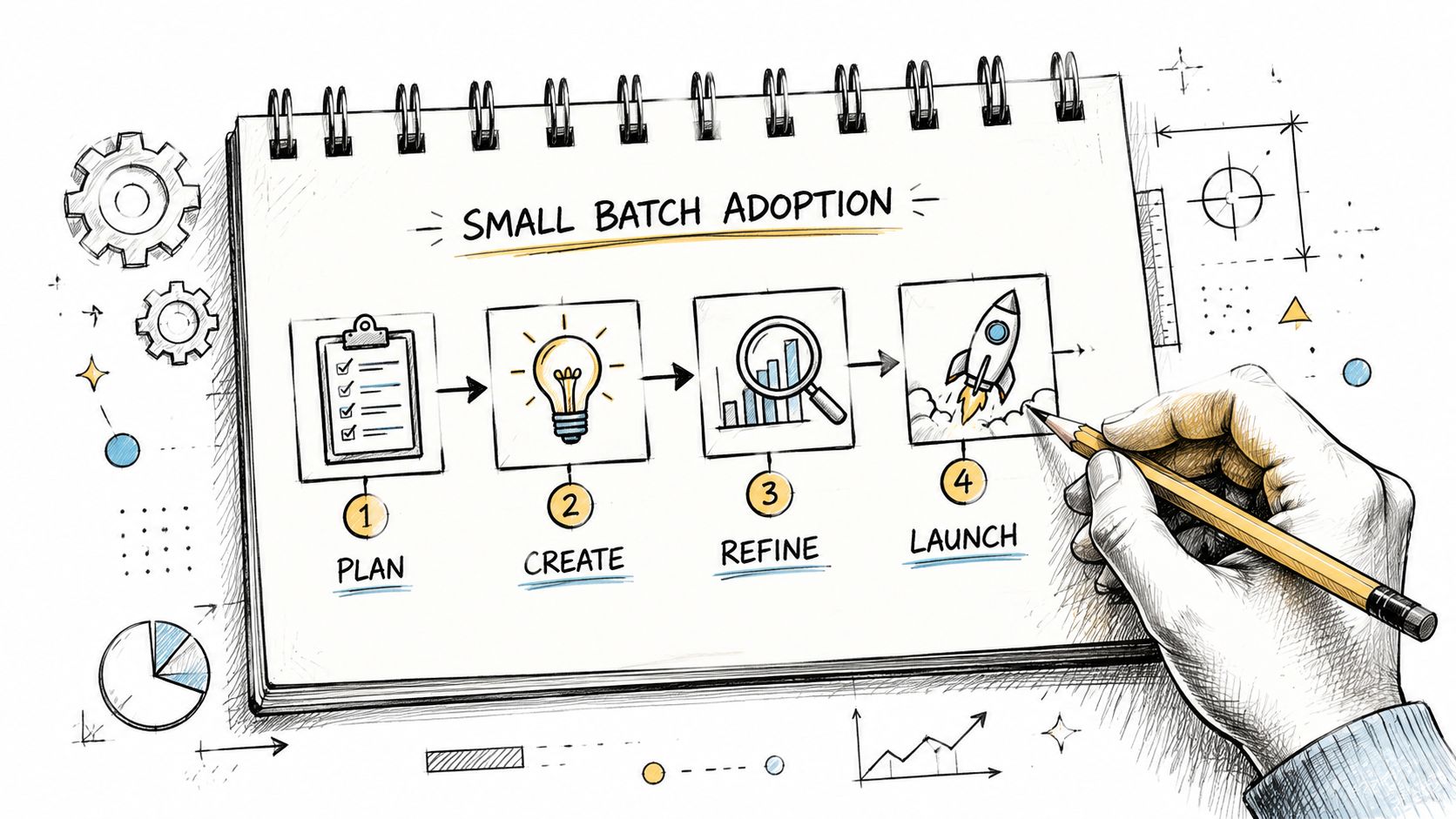
Small batch production sounds appealing until a founder has to execute it. That's where the romantic version usually breaks down. You still need suppliers, margins, timelines, and a system for deciding what gets reordered.
In apparel, small batch runs are often defined as fewer than 500 units, and that can raise per-unit costs by 20 to 40%. The trade-off is that startups can reduce inventory carrying costs and waste by 30 to 50% by matching production more closely to real demand, according to Startup Fashion's guide to small batch production.
Start with sourcing that matches your scale
The wrong factory can kill the model before it starts. Some manufacturers say they support small runs but still behave like volume-first partners. They push minimums too high, resist variation, or deprioritize your order.
A better approach is to vet for fit, not just capability.
- Ask about real minimums: You need the true floor for blanks, trims, printing, sewing, and packaging.
- Look for revision tolerance: Small batch production works best when a partner can handle change without chaos.
- Test communication early: If quoting and sampling are messy, production usually will be too.
Build pricing around reality not wishful thinking
Founders often underprice small-batch products because they compare themselves to mass brands. That's a mistake. Your cost structure is different, and your offer should be different too.
Use pricing that reflects the full picture: product cost, freight, packaging, creative work, and the margin you need to survive a slower-turning release model. If your product needs storytelling to justify its price, that storytelling should already be visible in the product page, imagery, and launch plan.
Price isn't just a math problem. In small batch production, it's also a signal of how intentionally the brand operates.
Coordinate apparel and lifestyle goods on one calendar
Many D2C brands encounter difficulties when a tee drop and a tumbler drop may belong to the same campaign, but they usually come from different suppliers with different lead times, packaging needs, and quality-control rhythms.
Treat them as one launch theme but not one production stream.
- Choose the anchor product first. In most cases, that's the apparel item driving the story.
- Set supporting goods second. Hats, drinkware, or candles should support the drop, not dictate the timeline.
- Build buffer into arrival windows. Don't assume every supplier will finish in sync.
- Launch in waves if needed. It's better to release a complete core offer on time than delay everything for one late accessory.
Brands that handle this well don't chase perfect simultaneity. They build a release system with enough flexibility to keep customers engaged while protecting cash and operational sanity.
Conclusion The Future Is Small and Intentional
Small batch production works because it respects uncertainty instead of pretending uncertainty doesn't exist. Brands don't always know which design will hit, which color will resonate, or which accessory will become a repeat favorite. Shoppers don't want endless sameness either. They want products that feel considered.
For brands, this model offers a practical path to agility. It lowers the risk of overcommitting, makes testing easier, and creates room for stronger creative decisions. For shoppers, it offers goods that often feel more distinctive, better curated, and more connected to the identity of the brand.
That doesn't mean small batch production is effortless. Prices can be higher. Sellouts happen faster. Planning gets tighter. But those aren't flaws in the model. They're the visible signs of a system built around intention instead of maximum output.
Retail is moving toward sharper assortments, more responsive production, and products that carry a clearer point of view. Small batch production fits that future because it gives both sides something they increasingly want. Brands get flexibility. Customers get meaning.
Limited runs aren't a limitation when the product is worth waiting for, watching for, and buying with purpose.
If you want to see how a Southern heritage brand brings apparel, accessories, and lifestyle goods together under a focused drop-driven approach, browse Southern Static Clothing Company and study how its product mix expresses a consistent point of view across categories.