

Outdoor Coffee Mugs: The Ultimate Southern Guide
The coffee matters more when the air bites back.
If you've ever climbed into a deer stand before first light, idled a truck at the boat ramp with frost on the hood, or sat on the back porch before the rest of the house woke up, you already know that a bad mug can ruin a good morning. Coffee that goes lukewarm too fast, a lid that seeps into your gear bag, a slick finish that slips in a gloved hand. Those things get old in a hurry.
That's why outdoor coffee mugs aren't just another kitchen item with a tougher paint job. They've become everyday gear. And in the American market, that tracks with how people live. The travel mug market is anchored in North America, which held over 36.0% of the global market in 2024, and the United States made up over 88.20% of North America's travel mug market that same year, according to IMARC Group's travel mug market analysis. That tells you something simple. Americans, especially people who spend real time on the move, use this gear hard.
For Southern outdoorsmen, a mug has to do more than hold coffee. It has to ride in a truck, sit steady on a tailgate, survive a drop in gravel, and still look right on the porch after supper. It ought to fit the life, not fight it.
Table of Contents
- More Than a Mug Your Field-Tested Companion
- What Makes a Coffee Mug Outdoor-Ready
- The Anatomy of a Great Outdoor Mug
- Picking the Right Mug for Your Southern Adventure
- Care and Cleaning to Keep Your Mug Field-Ready
- Beyond the Beverage Mugs as a Southern Style Statement
- Final Checks Before You Buy and Pack
More Than a Mug Your Field-Tested Companion
Daybreak in a deer stand gets honest fast. Your hands are cold, the woods are still, and that first pull of coffee needs to be hot, quiet, and easy to manage without a lot of fiddling.
That is where a good outdoor mug proves its worth. It is not just there to carry coffee. It has to ride in the truck before daylight, sit steady beside you in the blind, and still look right later that afternoon at the boat ramp or the tailgate. A cheap mug can hold a drink. A field-tested mug holds up to the way Southern outdoorsmen live.
I have found that the best ones disappear into the routine. You grab them half awake, trust the lid, set them down on a rough surface, and keep on with the morning. No rattly parts. No splash across the console. No finish that starts looking tired after a few weekends of hard use.
That matters because outdoor gear gets judged by repetition, not first impressions. A mug earns its place the same way a good thermos, a worn-in jacket, or a dependable pocketknife does. It keeps doing its job through hunting season, fishing trips, workdays outside, and slow porch mornings when the weather finally turns.
A field-ready mug should keep coffee dependable and stay out of your way.
That is the standard. The right mug fits your hand, your truck, and the kind of day you have ahead. It should serve the hunt in the morning, the drive home at noon, and a firepit talk that evening without feeling like gear made for one narrow job. Around here, that mix of performance and everyday carry is what makes a mug worth owning.
What Makes a Coffee Mug Outdoor-Ready
An outdoor mug has three jobs. Hold temperature. Take abuse. Travel well. If it fails one of those, it's just a regular mug wearing work clothes.
A ceramic mug from the kitchen does fine at the breakfast table. Take it to the deer camp, and its limits show up quick. It loses heat fast, doesn't like hard knocks, and usually rides poorly in a truck or pack. Outdoor coffee mugs solve those weak points with better construction, smarter lids, and shapes meant for movement.
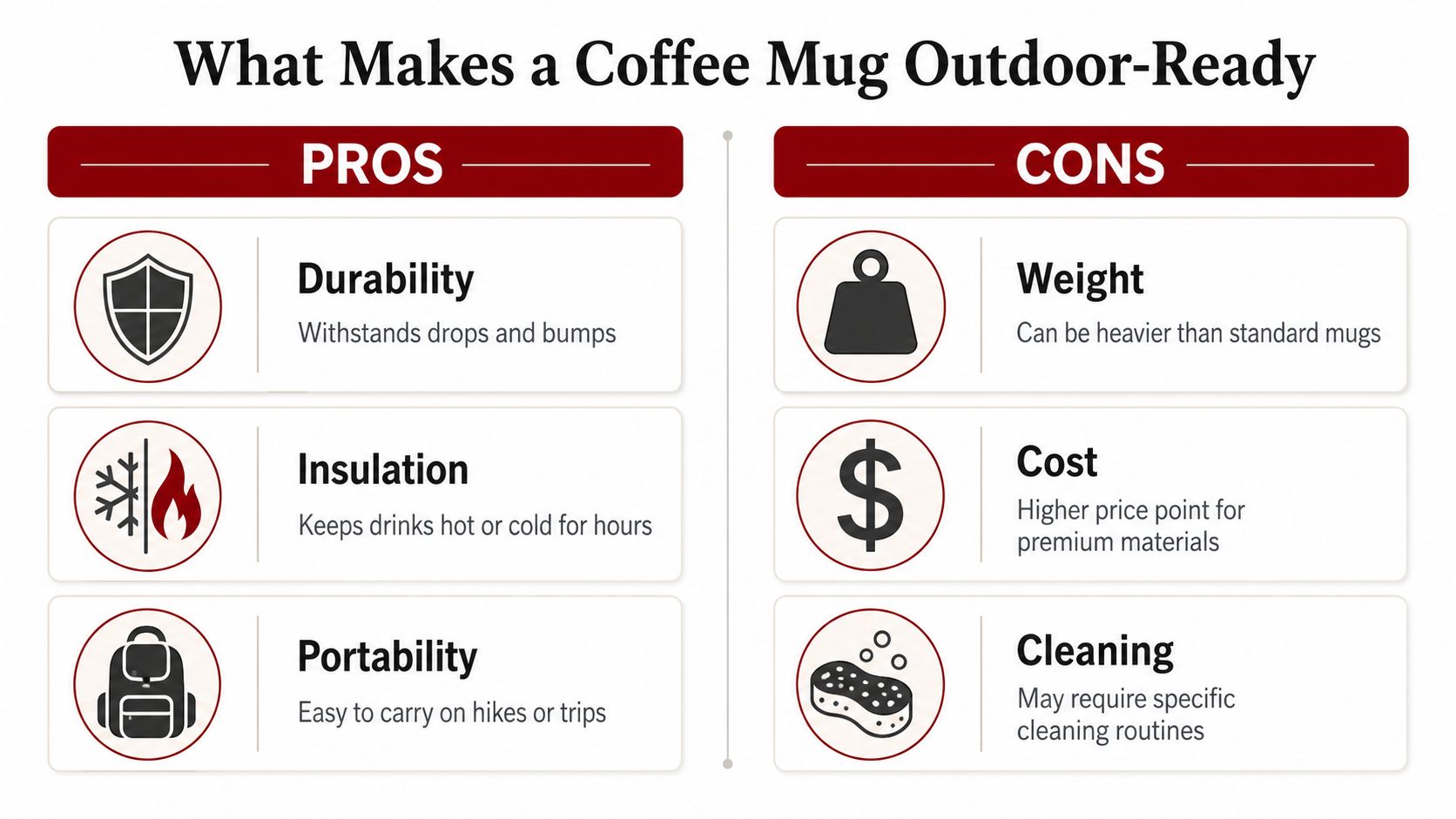
Insulation is the first test
If your coffee starts hot and turns disappointing before the morning is underway, nothing else matters. Outdoor mugs are built to slow heat loss in a way a plain single-wall cup can't.
Consider the function of a good cooler. It doesn't just hold your drink; it fights the conditions around it. A proper outdoor mug does the same on a smaller scale. That's why insulation is the first thing to care about, not the last.
Durability matters more outside than people admit
Most mugs look tough sitting on a product page. Real life tells the truth. They get dropped getting out of the truck, knocked off an armrest, slid across a tailgate, and bounced in cup holders on rough roads.
What works in the field usually comes down to a few practical points:
- Tough body construction: Stainless steel handles bumps and drops better than fragile materials.
- A secure lid design: Even a solid mug turns aggravating if the top works loose.
- A finish you can grip: Wet hands, cold hands, and gloves all change how a mug feels.
Practical rule: If you'd hesitate to toss it into your daily routine, it's probably not outdoor-ready.
Portability is where comfort meets common sense
Some mugs are built like tanks and carry like anchors. Others are light but awkward, top-heavy, or annoying to drink from. Portability isn't just about weight. It's about how the mug fits your hand, your truck, your bag, and your habits.
Here's the trade-off often encountered:
| Feature | What works | What can go wrong |
|---|---|---|
| Handle | Better comfort at camp or on the porch | Bulkier in tight packs |
| Narrow base | Easier fit in cup holders | Can feel less stable on uneven ground |
| Large capacity | Fewer refills on long days | Heavier carry |
| Complex lid | Better spill control in some cases | Harder to clean properly |
The right outdoor coffee mug feels like gear, not baggage. You should be able to grab it half-awake, use it in the dark, and trust it without babying it.
The Anatomy of a Great Outdoor Mug
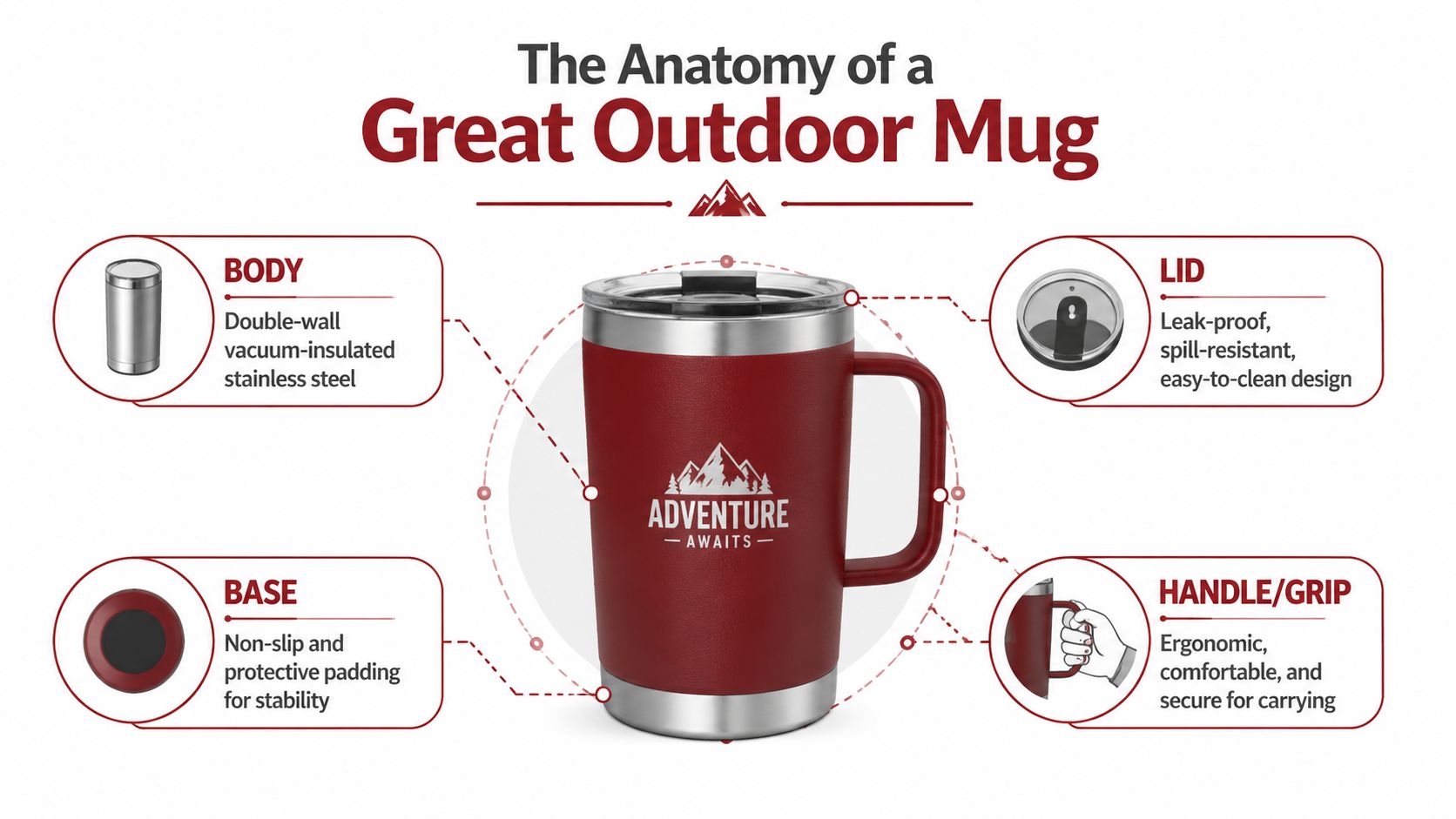
A strong outdoor mug is a sum of parts. When one part is weak, the whole thing feels cheap in use. The body affects temperature. The lid affects confidence. The shape affects whether you enjoy carrying it at all.
A lot of buyers focus on branding first. Better to work the other direction. Start with build, then move to the details that change daily use.
Here's a visual breakdown worth keeping in mind while you compare options:
Start with the body
The best bodies are made from 18/8 (304) stainless steel. That material matters because it gives you a dependable mix of corrosion resistance and strength. In premium outdoor mugs, that steel can carry a minimum yield strength of 205 MPa and corrosion resistance rated to ASTM A240. That's the kind of spec that shows up in real use, not just in a brochure.
The interior matters too. Some better mugs use a hydrophobic food-grade epoxy or ceramic-style lining that reduces surface adhesion of coffee oils by 60–70%. That helps with two things a daily coffee drinker notices fast. Less staining, and less old-flavor carryover from yesterday's brew.
Body construction is also where impact resistance shows itself. Independent benchmark testing on mugs that meet these specs shows they can withstand 50+ psi impact loads without deformation and keep seal integrity after 10,000+ lid rotations. That matters if your mug lives in a truck, blind bag, boat box, or backpack more than it lives on a countertop.
Lids decide how you actually use it
A mug body keeps the drink in shape. The lid decides whether the mug fits your life.
There are two broad camps. Easy-sip lids and secure-travel lids. Easy-sip lids are more pleasant when the mug stays upright near you. Secure-travel lids make more sense when the mug gets packed, carried, or knocked around. Neither is always better. The better one is the one that matches the way you move.
What I'd look for in a lid:
- Simple sealing surfaces: Fewer hidden grooves usually means easier cleaning.
- Predictable opening action: You want to know by feel whether it's open or shut.
- A drinking edge that feels natural: Thick, clumsy sip openings get old every day.
For broader thoughts on drinkware styles and carry options, it helps to compare formats beyond mugs alone in this guide to portable drinkware for everyday outdoor use.
Later in the day, lid design starts mattering even more than insulation. If a mug is awkward to sip from, hard to clean, or fussy with gloves on, you'll reach for something else, no matter how tough the body is.
A quick field note on real-world testing is worth keeping in mind before buying. This video gives a solid look at how mug features show up in use, not just on paper.
Capacity and carry change the whole feel
Capacity sounds simple until you live with the mug. A larger tumbler stretches time between refills, but it also adds bulk and changes balance in the hand. A smaller mug feels handier and often drinks better, but it may leave you dry before the morning is over.
For long sits and all-day use, large insulated stainless tumblers have a strong case. High-performance 40oz insulated stainless tumblers typically use double-wall vacuum insulation with thermal conductivity around 0.001–0.003 W/(m·K), which supports temperature retention of 12+ hours for hot drinks and 24+ hours for cold by eliminating the convective and conductive heat transfer that hurts single-wall or foam-insulated designs. That's not marketing fluff. It's the direct result of the vacuum layer doing its job.
In practical terms, that kind of insulation helps keep coffee in the 140°F–160°F (60°C–71°C) range through morning field hours, which is a useful drinking zone when you're trying to enjoy the cup instead of reheating it or gulping it too soon.
Don't pick capacity by ego. Pick it by how long you're away from a refill and where that mug has to ride.
Handles, sidewalls, and base shape all deserve a look too. A broad, stable base works well on a porch rail or tailgate. A tapered base usually rides better in a truck cup holder. A stout handle feels right around camp, but a handleless body often packs cleaner.
The best outdoor coffee mugs don't win because one feature is perfect. They win because the whole package makes sense in the field.
Picking the Right Mug for Your Southern Adventure
Before daylight in a deer stand, coffee has one job. Stay hot, stay quiet, and stay put when you shift for a better look through the timber. By noon at the boat ramp or under a tailgate tent, the same mug needs a different kind of sense. That is why the right pick depends less on brand talk and more on how you spend a Southern morning.
Weather changes expose weak mugs fast. Cold dawn air, a warm truck cab, wet hands at the dock, and a mug riding in a blind bag all test the lid, grip, and overall shape. Heat retention matters, but real-world use matters just as much. A mug that keeps coffee hot for hours on paper can still be a poor choice if it sweats, slips, rattles, or leaks when your day gets moving.
For the deer stand and duck blind
Quiet gear wins here.
A hunting mug should open with little noise, seal reliably, and stay manageable when you are layered up and half-awake. Slimmer bodies usually work better in pack pockets and blind bags, and they are less likely to catch on straps or knock against other gear on the way in.
Look for these traits:
- A secure lid with simple operation: Fewer moving parts usually means fewer surprises in the cold.
- A grippy exterior: Cold fingers and light gloves need texture, not a slick powder coat.
- Enough volume for a long sit: Bring enough coffee to last, but keep the mug narrow enough to carry without fighting it.
The wrong choice is usually easy to spot. Wide, top-heavy mugs with loose slider lids behave fine on a kitchen counter and poorly in a blind bag.
For fishing days and boat ramps
Water punishes clumsy gear. If a mug feels slick or tippy on land, it gets worse on a dock or in a boat.
For fishing, I put grip and one-handed control ahead of raw capacity. You may be carrying a tackle bag, handling a net, or stepping across wet boards before sunrise. A mug needs to set down clean, come back up without fumbling, and keep its footing if the surface is not perfectly flat.
Here is the trade-off in plain terms:
| Use case | Best choice | Trade-off |
|---|---|---|
| Bank fishing | Stable base and easy-sip top | Less secure if tossed in a pack |
| Boat use | Secure lid and grippy finish | Sometimes slower to drink from |
| Truck to dock routine | Tapered base for cup holders | May feel smaller in the hand |
If your morning includes driving, walking, and standing near water, pick the mug that is hardest to drop.
For tailgates campfires and porch mornings
These are the easy miles, but the mug still needs to fit the setting. Around a fire, at a tailgate, or on the back porch, comfort starts to matter more than maximum spill resistance. You are drinking slower, setting the mug down more often, and usually keeping it close by.
In those situations, a good mug feels natural in the hand and drinks clean without making you fight the lid. A handle makes more sense here than it does in the woods. A broader shape can also work well if it is staying on a tailgate, camp chair cup holder, or porch rail instead of riding in a pack.
I would favor:
- More comfortable hand feel over maximum packability
- A handle if the mug will stay nearby
- A sip-friendly lid if the mug is spending most of its time upright
The best choice is the one that matches your routine. A duck hunter, a bass fisherman, and a Saturday tailgater may all carry coffee, but they do not ask the same things from a mug. Around here, good gear earns its place by fitting the way you live, not by trying to do every job at once.
Care and Cleaning to Keep Your Mug Field-Ready
A mug can be built right and still taste wrong if you neglect it. Coffee oils, milk residue, sweetener, and trapped moisture all build up faster than most folks think. The result is stale smell, off flavor, sticky lid parts, and eventually a mug you stop trusting.
The fix isn't complicated. It just needs to be regular.
A simple daily routine
For everyday use, keep it plain and consistent:
- Rinse as soon as you can: Don't let leftover coffee sit all day if you can help it. Old coffee dries into film.
- Wash the lid separately: Most odor problems start in the lid, not the body.
- Dry with the lid off: Trapped moisture is what creates that sour cabinet smell.
If you use cream or sugar, be stricter with the rinse. Those additions turn a manageable cleanup into a sticky one fast.
Deep cleaning when coffee oils build up
Even a well-kept mug needs a reset now and then. If the inside smells stale after washing, or your coffee starts picking up yesterday's taste, give it a deeper clean.
Use this approach:
- Warm soapy soak: Let the lid parts sit long enough to loosen film in creases and seals.
- Soft brush work: A bottle brush handles the body. A smaller brush or cloth gets around threads and sip openings.
- Mild paste for stains: Baking soda and a little water work well for interior discoloration without getting aggressive.
Clean the lid like it's the weak link, because most of the time it is.
A few habits help preserve the mug too. Don't store it sealed up after washing. Don't leave it rolling in the truck with old coffee in it for days. And don't treat the finish with abrasive scrubbers unless you want it looking tired before its time.
The mug that stays field-ready is usually the one that gets a minute of care instead of a month of neglect.
Beyond the Beverage Mugs as a Southern Style Statement
Cold morning in a deer stand, gloves on, thermos packed, coffee finally poured. The mug in your hand is part of your kit, but it also says something about the kind of man carrying it. Around here, that matters.
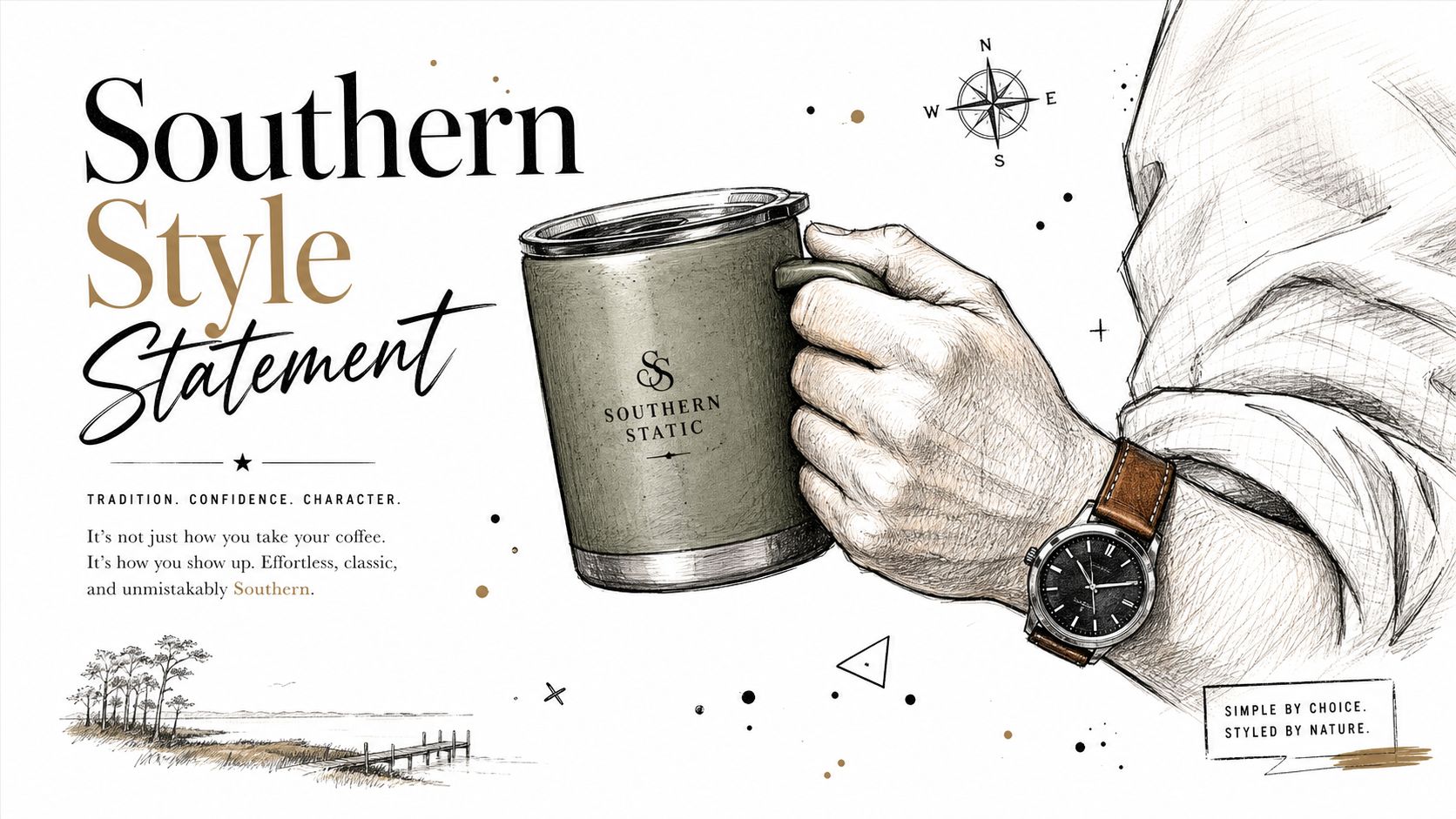
They ride in truck cup holders, sit on tailgates, and end up beside a camp chair long after sunrise. A good outdoor coffee mug should look right in those places. Clean design, honest materials, and graphics that still read after a season of use carry more weight than trendy branding that only looks good on a product page.
Why design placement matters in the real world
One detail plenty of brands miss is grip occlusion. That means your hand covers the logo, artwork, or key design elements during normal use. I pay attention to it because a mug gets judged in the hand, not laid flat under studio lights.
That matters outdoors. Gloves swallow more surface area. Wet hands shift where you grab. Taller tumblers often hide half the design the moment you pick them up, which makes a sharp-looking mug feel poorly thought out in actual use.
Design choices that hold up better:
- Artwork placed above or below the main grip zone
- Bold graphics that stay recognizable when partly covered
- Layouts that still read from a side glance instead of only straight-on
A mug says something about the person carrying it
A plain stainless tumbler works fine. Still, for plenty of Southern outdoorsmen, gear reflects place, habit, and values as much as function. The same reason a man cares about his cap, his cooler, or the sticker on his back glass shows up in the mug he carries before daylight.
That is why drinkware makes such a solid gift. It gets used at the boat ramp, in the duck blind, on the porch, and during the weekday drive. If you are shopping with that in mind, this guide to gift ideas for outdoor enthusiasts rounds up gear people will keep using instead of tossing in a drawer.
The best-looking mug is the one that still fits the part after scuffs, wet hands, and a season of hard use.
Style should never outrank performance. But if two mugs hold heat about the same and carry equally well, the one that feels more like your life in the South is usually the one that stays within reach.
Final Checks Before You Buy and Pack
Before you buy, strip the decision down to the basics. Ignore hype. Think about the next real morning you'll use it.
Ask yourself a few direct questions:
- Where will it ride most often: In a truck cup holder, a backpack, a blind bag, or your hand?
- How much spill protection do you need: Upright-on-the-porch protection is different from tossed-in-the-pack protection.
- How long do you need heat to last: A quick commute and an all-morning sit are not the same job.
- Will you realistically clean the lid well: If the answer is no, choose a simpler lid.
- Does the shape fit your habits: Handle comfort, base stability, and overall bulk matter more than people admit.
A strong pre-purchase check looks like this:
| Check | Why it matters |
|---|---|
| Body material | Affects durability and long-term taste |
| Lid style | Controls leakage, convenience, and cleaning |
| Grip and finish | Changes security with wet hands or gloves |
| Capacity | Decides weight, balance, and refill frequency |
| Base shape | Affects stability and cup-holder fit |
When it's time to pack it, preheat the mug with hot water if you want the best start on a cold morning. Keep the lid seated properly. Don't bury a half-closed mug under gear and blame the mug later.
If you want to round out the rest of your setup, this guide to men's outdoor gear for everyday use is a useful next stop.
Buy the mug that fits your actual life. The one that can go from deer stand to porch without feeling out of place. That's the one you'll keep using for years.
If you want outdoor coffee mugs and Southern-inspired gear that fit the same hardworking, heritage-minded lifestyle, take a look at Southern Static Clothing Company. Their lineup brings together outdoor drinkware, apparel, and accessories built for folks who value durability, faith, freedom, and small-town Southern roots.