

Your Guide to Portable Drinkware for the Southern Outdoors
By the time the second quarter of sweet tea turns from crisp and icy to flat and lukewarm, most folks realize the same thing. A cheap cup can ruin a good day faster than bad bait or wet socks. The same goes for coffee before sunrise. If it's cold before the truck leaves the driveway, that mug isn't gear. It's clutter.
That's why portable drinkware deserves more thought than it usually gets. This category isn't small anymore. The global thermos drinkware market was valued at USD 3,158.0 million in 2025 and is projected to reach USD 5,445.6 million by 2035, according to Future Market Insights' thermos drinkware market report. That kind of growth says something simple. People aren't treating insulated bottles and tumblers like impulse buys anymore. They're buying them like everyday equipment.
For Southern outdoor life, that shift makes perfect sense. The right cup or bottle needs to handle heat, long drives, rough gear bags, muddy boat floors, and a truck cup holder that doesn't forgive bad sizing. Specs matter, but fit matters too. A vessel can have great insulation and still be wrong for a deer stand, a boat console, or a tailgate.
Table of Contents
- Why Your Drinkware Choice Matters More Than You Think
- Finding Your Perfect Match Tumblers Bottles and Mugs
- The Science of Temperature Control Materials and Insulation
- Key Features That Define Great Portable Drinkware
- Drinkware for the Southern Way of Life
- Keep It For Life Simple Care and Maintenance Tips
- Choosing Your Ultimate Drinkware Companion
Why Your Drinkware Choice Matters More Than You Think
A lot of people buy portable drinkware by color, logo, or whatever's sitting near the register. That works fine until real life gets involved. Heat exposes bad insulation. Wash cycles expose flimsy lids. A bumpy back road exposes which cups were designed for a desk and which ones were built to travel.
The wrong choice usually fails in ordinary moments. Ice disappears too fast. Coffee leaks at the seam. A tall tumbler tips on uneven ground. A bottle mouth is too narrow to clean well, so yesterday's lemon water becomes tomorrow's weird smell. None of those problems sound dramatic, but they're the difference between something you use every day and something that gets shoved to the back of a cabinet.
Gear that matches the day
Portable drinkware sits in an unusual category. It has to perform like equipment but live with you like a personal item. It rides in your truck, goes on the boat, sits in a blind bag, and follows you to work on Monday morning.
Practical rule: Buy for the setting that's hardest on your drinkware, not the easiest one.
If your longest day is spent outdoors, choose around that. A cup that's perfect for a quiet office might be useless on a gravel road. A bottle that's great for the gym might be frustrating when you want quick access to iced tea at a cookout.
Small differences show up fast
Shape, lid style, handle placement, and steel quality all matter because they affect daily use. The best portable drinkware disappears into your routine. It keeps your drink where you want it and doesn't make you think about it.
That's the point. This isn't about collecting another accessory. It's about choosing one piece of gear that does its job from dawn coffee to afternoon water to evening sweet tea.
Finding Your Perfect Match Tumblers Bottles and Mugs
Some folks need one all-purpose vessel. A better approach is often to choose by use case. Tumblers, bottles, and travel mugs overlap, but they aren't interchangeable.
A good way to think about it is access versus security. The easier a drink is to sip, refill, and add ice to, the more likely it is to be less secure when it tips over. The more leak-resistant it is, the more steps it usually takes to open and clean.
Right up front, here's a quick visual comparison.
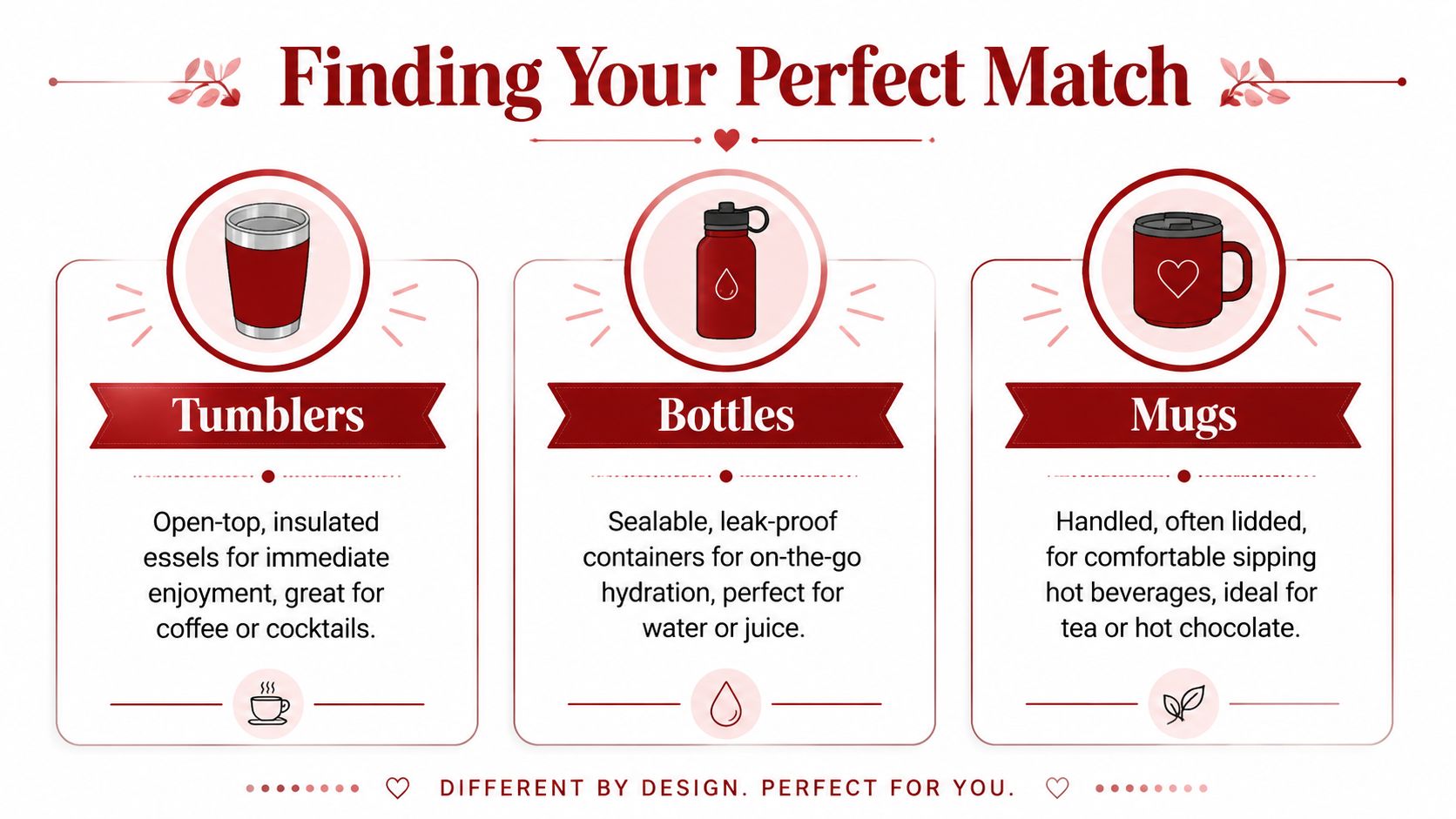
Tumblers for easy sipping and big cold drinks
Tumblers shine when you want convenience. They're usually the easiest to fill with ice, the easiest to sip from while driving, and the most comfortable for long casual use. That makes them strong choices for tailgates, road trips, tractor seats, bleachers, and any day built around cold drinks.
Their weakness is simple. Many tumbler lids resist splashes better than they resist actual tipping. If you toss one sideways into a bag, you're taking a chance.
For folks who want to browse examples of this style, outdoor coffee mugs and drinkware collections show the kind of handled and tumbler-style options that fit outdoor use.
Bottles for rough travel and leak resistance
Bottles are for movement. If your drinkware rides in a backpack, blind bag, kayak crate, or passenger seat floorboard, a screw-top bottle is usually the safest pick. You give up some quick-sip comfort, but you gain peace of mind.
They're also better for pure hydration than for relaxed sipping. Water bottles encourage carrying more water and worrying less about spills. If you mix electrolytes, fruit, or citrus, wide-mouth bottles are easier to rinse and scrub.
Here's the trade-off in plain terms:
| Type | Best at | Weak point | Good fit |
|---|---|---|---|
| Tumbler | Fast sipping, ice-heavy drinks, cup holder use | Usually not fully leak-proof | Commutes, tailgates, ball fields |
| Bottle | Sealed transport, gear bag carry, hydration | Slower access while driving | Hikes, hunting, boat bags |
| Mug | Hot drinks, grip comfort, one-handed use | Less ideal for large cold drinks | Early mornings, porch coffee, cold-weather trips |
A lot of people force a bottle to do a tumbler's job or a tumbler to do a bottle's job. That's usually where disappointment starts.
A short video can help if you want to see common drinkware styles in action before deciding.
Mugs for hot drinks and one-handed comfort
Handled mugs are still the best answer for coffee-first people. The handle matters more than many buyers expect. On a cold morning, with gloves or stiff fingers, a solid handle beats wrapping your hand around a wide tumbler body.
A good travel mug should let you drink without babying it.
That said, mugs can be awkward in packed bags and sometimes take up more room than their capacity justifies. They work best when the drink is hot, the route is short to medium, and comfort matters more than maximum ounces.
If you want one winner for all situations, you'll probably compromise. If you match the form to the job, you'll use it a lot more.
The Science of Temperature Control Materials and Insulation
Most product pages throw around terms like double-wall, vacuum-insulated, food-grade steel, and premium construction. Some of that matters a lot. Some of it is just polished wording around ordinary design.
The practical question is straightforward. What keeps cold drinks cold, hot drinks hot, and weird flavors from creeping in after months of use?
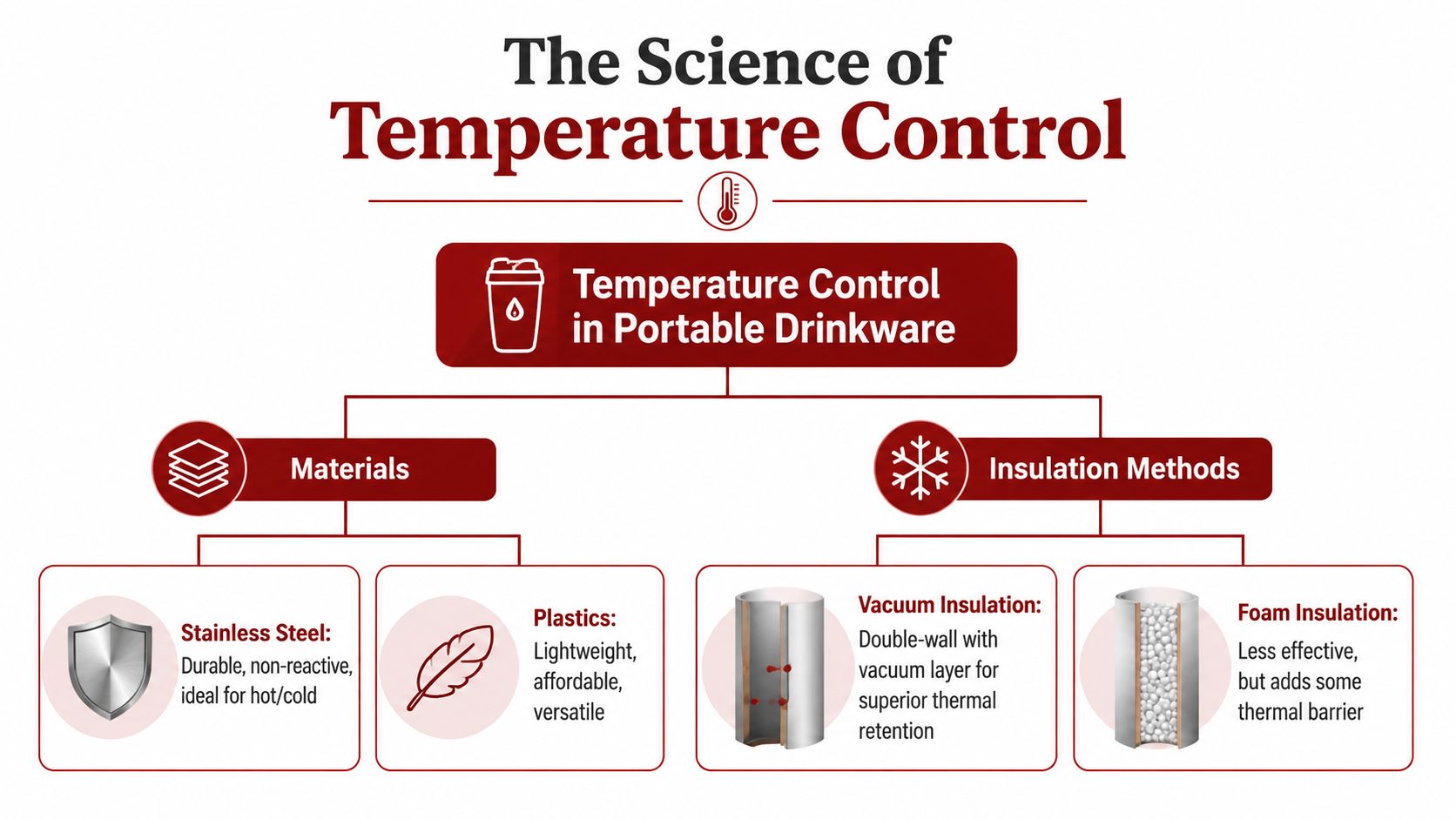
What vacuum insulation actually does
Vacuum insulation works because the inner wall holding your drink and the outer wall you touch are separated by a gap with almost no material in between. That gap slows heat transfer hard enough that the temperature inside changes much more slowly than it would in a single-wall cup.
Industry standards for vacuum-insulated drinkware use a specific test setup. At 20°C±5°C ambient temperature, the vessel is filled with 95°C±1°C water and sealed immediately, and quality products are expected to hold required temperature thresholds after 6 hours for hot retention or 24 hours for cold retention, according to this summary of vacuum-insulated stainless steel water bottle industry standards.
In real life, that means the vacuum seal does the heavy lifting. Lid quality still matters, but if the vacuum build is poor, no fancy cap will save it.
Why steel grade matters more than most labels
Generally, 18/8 stainless steel, also called 304 stainless steel, is the standard for a reason. It's durable, corrosion-resistant, and usually the most economical choice for insulated drinkware.
But there's one detail worth knowing if you drink coffee every day, use citrus mixes, or keep acidic drinks sitting for long stretches. 316 stainless steel handles acidic beverages better because its added molybdenum improves resistance to pitting and corrosion. That difference is spelled out in this material guide for insulated water bottles.
That doesn't mean 304 is bad. It means 316 is better for harsher beverage conditions.
For quick reference:
- Choose 304 stainless steel if you want a dependable everyday option for water, tea, and general use.
- Choose 316 stainless steel if your routine leans hard on coffee, citrus drinks, or other acidic mixes.
- Be cautious with vague labels if a product says only “stainless” and skips the grade entirely.
For a real-world example of the kind of stainless vessel outdoor buyers often look for, a 40oz insulated travel mug in stainless steel reflects the large-capacity format many people prefer for long days away from a sink or refill station.
How plastic and glass fit into the picture
Plastic still has a place. It's light, affordable, and easy to carry. For kids, quick errands, or situations where dents matter more than heat retention, plastic can make sense. The downside is that it usually doesn't insulate as well, can hold odor over time, and often feels less solid in the hand.
Glass keeps flavors clean and doesn't hold smells the way some materials can. It's nice for tea, fruit water, and desk use. It's also a poor match for rough field conditions.
If your drinkware is going into a blind bag, a center console, or a jon boat, stainless steel usually wins before the first sip.
Material choice isn't abstract. It changes taste, durability, cleaning effort, and how much trust you place in that cup when the day gets long.
Key Features That Define Great Portable Drinkware
Once the body and insulation are right, the smaller design choices decide whether you'll keep using the piece. Two products can hold temperature similarly and still feel completely different to live with.
Lids decide whether a cup is useful or annoying
The lid is where convenience and frustration meet. A slider lid is easy to use and easy to rinse, which makes it a solid option for coffee on commutes or sweet tea around the house and truck. It usually won't protect you from a full tip-over.
Flip-top lids offer better spill control and cleaner one-handed use, especially when you're moving. They do, however, add hinges and seals that need more attention during cleaning.
Straw lids are excellent for cold drinks and frequent sipping. They're less appealing for rough outdoor carry, and they can be a pain if you don't clean the straw and seal thoroughly.
Screw-on lids with a covered spout are the safest choice when the bottle is getting tossed in gear. They aren't the fastest to drink from, but they earn their keep when the terrain gets rough.
A quick way to judge lid quality is to ask three questions:
- Can you clean every part easily without needing a special brush for hidden corners?
- Can you open it with one hand when the other hand is busy with a wheel, rod, decoy bag, or gate?
- Will it stay contained if it rolls onto the seat or floorboard?
Handles bases and shape matter every day
A comfortable handle sounds minor until the vessel is full. Then it matters a lot. Big cups get heavy fast, and a poor handle shape makes them awkward on long walks from truck to field or from house to ballpark.
Base width matters too. Plenty of otherwise good tumblers fail the truck test because they don't fit standard cup holders or they wobble enough to become irritating on every turn.
Buy with your truck in mind. If it won't ride securely there, you'll notice that flaw every single day.
Shape also changes cleaning. Narrow interiors trap residue. Deep cups with hard shoulder angles are tougher to scrub. Wide mouths are better for ice and hand cleaning, but they can be a little less graceful to drink from without a good lid design.
Here's what tends to work best:
- For driving every day choose a tapered base and a lid you can operate by feel.
- For all-day cold drinks choose a large opening that takes ice easily and a handle if capacity is high.
- For hunting or boat bags choose a body shape that packs tightly and won't snag on everything else.
The best feature list isn't the longest one. It's the one that matches how you use the cup.
Drinkware for the Southern Way of Life
Day starts before sunrise. Coffee rides to the stand, water takes over by late morning, and by supper you want sweet tea that still has ice in it on the porch or at the ball field. Drinkware in the South has to cover all of that without becoming one more piece of gear that annoys you.
That helps explain why insulated drinkware stays popular here. Analysts at Market Research Future, in its insulated drinkware market report, describe strong demand in North America, which tracks with real use across hunting camps, fishing boats, job sites, long drives, and weekends outside.

Before daylight in the stand
A cold morning shows you right away whether a cup was built for real use. Coffee needs to stay hot past the drive in, but the container also needs to permit a noiseless sip, open easily with cold fingers, and sit steady when the truck hits a rut.
For that kind of use, a handled mug or a narrower insulated tumbler usually beats a huge wide-mouth bottle. Wide bottles hold heat well, but they can feel clumsy for coffee, especially with gloves on or when you are trying to drink without taking your eyes off the woods. A simpler lid is often the better call. Fewer moving parts usually means less noise and less trouble in the dark.
Small details matter here. Metal-on-metal handle noise, stiff sliders, and lids that whistle air when you sip all get old fast.
On the water, at the field, and on the road
Summer use is different. Capacity matters more. So does ice retention. Long hours on the lake or a full day at a tournament call for a tumbler or bottle that can take a lot of ice in the morning and still give you a cold drink by midafternoon.
The practical question is not whether a cup keeps liquid cold in a lab. It is whether it keeps sweet tea, water, or sports drink cold enough that you want another sip after an hour in the heat. In my experience, people drink more often when the drink stays cold and the cup stays within reach. That matters more than a spec sheet when the sun is beating down off aluminum bleachers or boat decks.
For canned drinks around a tailgate, camp chair, or backyard cookout, a Southern-themed American flag can holder makes more sense than a big tumbler. It keeps the can cold, cuts down on sweat, and feels right for the setting.
Matching the cup to the way you actually live
Southern outdoor gear usually ends up doing double duty. The same tumbler may ride in a truck cup holder at daylight, sit in a side-by-side by noon, and land on a porch rail that evening. That is why style and finish are not just cosmetic. They affect how well a piece fits the rest of your routine.
A glossy cup with bright hardware can feel out of place in a blind or duck boat. A dark powder-coated bottle hides scuffs better and usually gives you a surer grip with wet hands. Stainless looks clean at the office or on the road, but it can show fingerprints and glare more outdoors. Handle shape matters too if you carry it from truck to dock or from concession stand to bleachers.
A few pairings tend to work well:
- For hunting and low-visibility setups, pick subdued colors and quiet lid designs.
- For fishing, coaching, and road trips, pick larger insulated tumblers that hold plenty of ice and ride well in the truck.
- For porches, cookouts, and tailgates, pick can holders and easy-sipping tumblers that keep your hands dry and your drink cold.
- For all-around use, pick a finish that can take scratches without looking rough after one season.
Good drinkware should fit Southern life the same way good boots do. It needs to work hard, ride easy, and still feel right wherever the day ends.
Keep It For Life Simple Care and Maintenance Tips
Good drinkware can last a long time if you don't abuse the finish, the lid seals, or the interior. Most failures come from neglect, not dramatic accidents. Let residue sit long enough, and smells build up. Jam a lid into the dishwasher too often without checking its parts, and seals wear out or warp.
Daily habits that prevent stink and stains
Rinse the cup the same day you use it. That one habit prevents most odor issues. Coffee oils, sweet tea residue, and drink mixes all cling more than plain water, especially around the threads and the underside of lids.
Use warm water, mild soap, and a soft bottle brush or sponge. Pay attention to the lid slider, straw opening, gasket groove, and any flip mechanism.
A simple routine works best:
- Empty it fully so old liquid doesn't sit overnight.
- Remove every detachable part from the lid before washing.
- Air-dry with the lid off so trapped moisture doesn't create smells.
Leave the lid off while drying. A clean cup can still smell bad if you trap moisture inside it.
Deep cleaning without damaging the cup
For coffee stains or lingering odors, use a gentle deep clean instead of aggressive scrubbing. A soak with warm soapy water helps loosen residue around seams and lid channels. A bottle brush reaches the bottom without scratching the interior finish.
If the vessel has a printed exterior or specialty coating, hand washing is usually the safer move. High heat and harsh cycles can be rough on finishes, and repeated dishwasher exposure can be harder on complex lids than people expect.
A few care mistakes are common:
- Don't store it sealed while damp because stale moisture is what creates that swampy smell.
- Don't use abrasive pads on stainless interiors or custom exteriors.
- Don't ignore the gasket since that tiny ring often holds the worst residue.
If a lid smells clean but still tastes off in use, pull it apart again. The problem is often hidden in the seal channel or under a flip tab, not in the cup body itself.
Choosing Your Ultimate Drinkware Companion
Daybreak in the deer stand asks for one kind of cup. A July boat ride with sweet tea asks for another. If your drinkware can't handle both your routine and your gear, it usually ends up rattling in the truck, leaking in a blind bag, or sitting in the cabinet after two uses.
A good pick comes from matching the vessel to your hardest, most common day. Office use is easy. A proper test is a bumpy lease road, a long stretch in the driver's seat, or an afternoon at the ball field when ice matters more than branding.
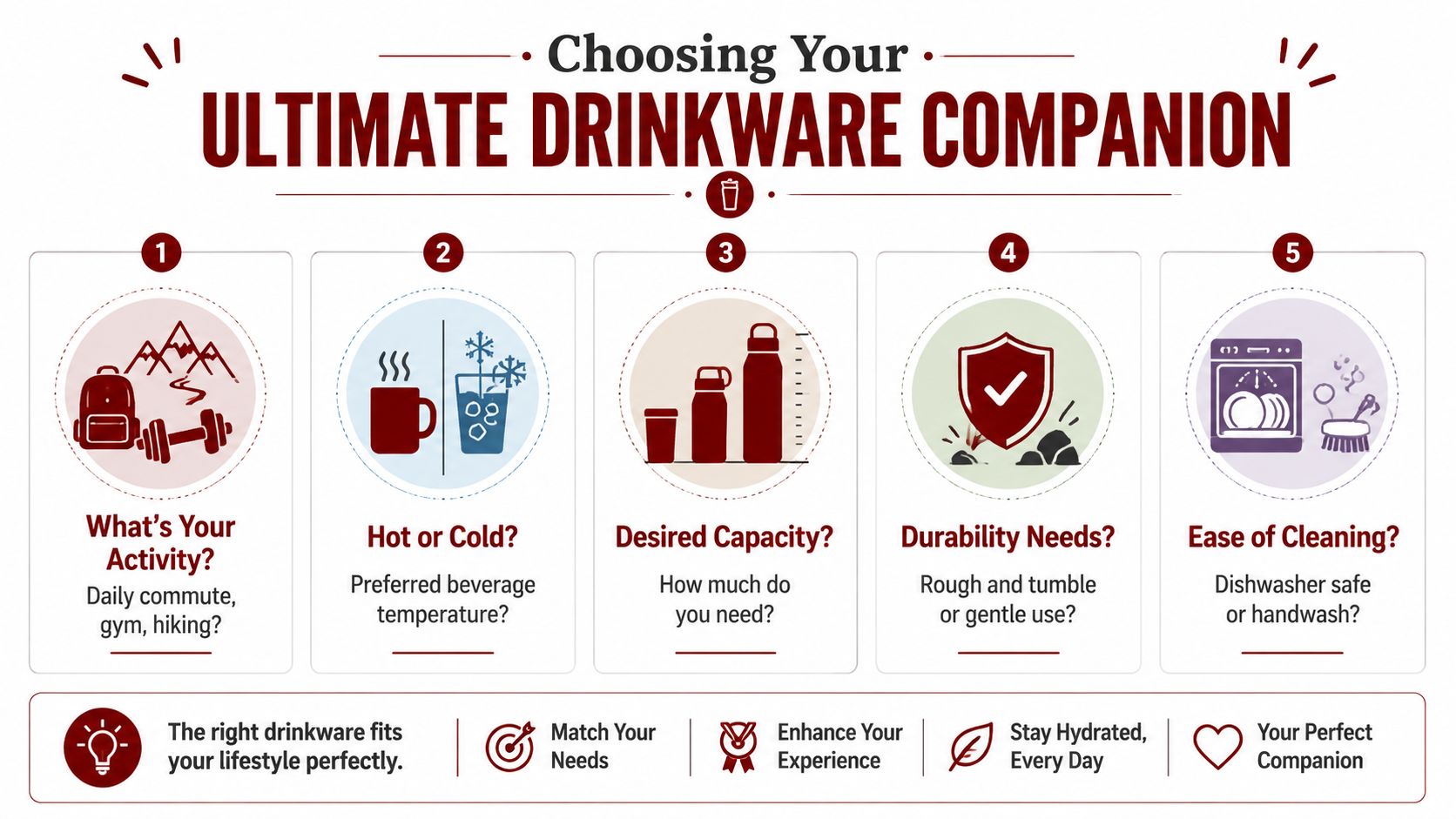
The five questions worth asking
Run through these before you buy:
- Where will it ride most of the time? A truck cup holder, boat seat, backpack pocket, and office desk all favor different shapes.
- What do you drink most? Coffee, water, sweet tea, and sports drinks each expose different weak spots in lids, insulation, and cleaning.
- How rough is your routine? Washboard roads and crowded bags call for a sealed bottle. Porch sitting and short commutes leave more room for a tumbler.
- How much cleanup will it need? Sugary drinks, creamer, and citrus leave more behind than plain water.
- Will you want to carry it? An oversized cup with a bad handle or awkward base gets old fast, even if it looks good online.
Those questions usually matter more than color options or the biggest capacity on the shelf.
What usually works best outdoors
For Southern outdoor use, insulated stainless steel still covers the most ground. It holds temperature well, takes a beating, and doesn't mind spending all day in the truck or boat. The details decide whether it stays useful. A narrow base helps with cup holders. A secure lid matters on rough roads. A wide mouth is easier to clean after tea, coffee, or hydration mixes.
Material and design also affect what you drink. Coffee folks tend to appreciate a mug that opens easily with one hand. Sweet tea drinkers usually care more about ice retention, straw comfort, and a body that won't sweat all over a console or folding chair.
Here's the practical breakdown:
| If your day looks like this | Best fit |
|---|---|
| Long drives, tailgates, porch time, all-day iced drinks | Large insulated tumbler |
| Hiking, hunting bags, boat storage, spill concerns | Screw-top insulated bottle |
| Cold mornings, coffee-first routines, one-handed comfort | Handled travel mug |
Buy for the use case that shows up every week, not the one that happens twice a year. That choice usually leads to a cup you keep using instead of one that becomes garage clutter.
If you want drinkware and outdoor gear that fit a Southern lifestyle instead of fighting it, take a look at Southern Static Clothing Company. They carry Southern-inspired apparel, hats, gear, and drinkware built around hunting, heritage, faith, freedom, and everyday small-town life.