

Hunting Clothing Brands: A Buyer's Guide to Choosing Right
You're standing at the truck before daylight, boots on the tailgate, breath hanging in the cold, and the forecast just changed from “clear” to “maybe wet.” That's when most hunters make the same mistake, they shop for a logo instead of a system. hunting clothing brands don't all solve the same problem, and the right pick depends on whether you're dressing for a frosty October sit, January sleet, or a hot tailgate before first light.
Table of Contents
- Why Hunting Clothing Brands Are Not All the Same
- The Four Brand Archetypes You Will Actually Shop
- Specs That Actually Matter and the Numbers Behind Them
- Building Your Layering System by Climate
- Matching Brands and Gear to Your Hunt Type
- How to Read Brand Claims Without Getting Sold
- Price, Durability, and Where Lifestyle Brands Fit
- Care, Sizing, and FAQ for First-Time Buyers
Why Hunting Clothing Brands Are Not All the Same
Walk into any hunting shop and you can tell, fast, that the camo wall is not one big competition. Some brands are built to keep you dry, quiet, and alive to the weather. Others sell heritage, workwear toughness, or a look that belongs at camp as much as in the field. That split is real, and it is why brand choice has to start with your hunt, not with the logo.
The global hunting apparel market has been measured at US$1.321 billion in 2024 and is forecast to reach US$1.984 billion by 2031, with a 6.1% CAGR over that period. The same market study says the top five players hold about 58% of share. That concentration tells you the premium end is controlled by a small group of technical labels, while a much wider field competes on heritage, regional identity, and price.
What that means at the counter
I do not ask a hunter which brand is “best.” I ask what the clothing has to survive. A January whitetail sit needs something very different from opening-week dove gear, and neither should be chosen like a tailgate shirt. The market reflects that split, with hunting pants and bibs taking over 34% share and men's hunting clothing accounting for over 85% of demand in the cited market study.
That is why the category feels crowded and still narrow. The technical tier is dominated by a few brands with real layering systems, while the rest of the rack includes workwear-inspired camo, heritage wool, and lifestyle pieces built for identity as much as performance. If you are shopping for weather resistance, concealment, durability, and quiet fabric, you are buying for field use. If you are shopping for a shirt that looks right at camp, on a porch, or at a family event, you are buying for appearance and fit first.
Practical rule: If the hunt keeps you still and exposed to bad weather, buy for performance first. If the garment spends more time off the mountain than on it, buy for identity second.
The Four Brand Archetypes You Will Actually Shop
Technical brands
Names like Sitka Gear, First Lite, and KUIU exemplify this approach. They sell a system, not a single jacket. Their value comes from stacking base, mid, and shell layers that work together, with fabrics built for moisture management, concealment, and low noise. These brands usually cost more because they're paying for engineering, not just print.
Heritage brands
Filson, Woolrich, and Orvis sit in a different lane. They lean on wool, waxed cotton, hardwearing patterns, and field credibility that stretches back decades. You give up some of the slickest technical performance, but you gain durability, a quieter presence in the brush, and garments that don't look like they were designed inside a lab.
Budget brands
This bucket includes value lines and basic camo from names like Ridge, Legend, and Muddy basics. They get the job done for occasional hunters and warm-weather use. The trade-off shows up fast in hard rain, cold static sits, and repeated abuse at the knees, cuffs, and seat. That doesn't make them bad. It makes them honest about where they belong.
Boutique and Southern-focused brands
Then there's the lifestyle end, smaller direct-to-consumer labels and regional brands that lean into graphic tees, hats, and field-casual pieces. These brands often speak to Southern pride, faith, freedom, and small-town identity. That's fine, as long as you know what you're buying. A shirt that says who you are is not the same thing as a shell that keeps you dry.
Hunting Clothing Brand Archetypes at a Glance
| Archetype | What it optimizes for | Typical price band | Best-fit hunter |
|---|---|---|---|
| Technical | Layering, weather protection, quiet fabrics, mobility | High | Serious hunters in changing weather |
| Heritage | Durability, comfort, timeless field style | Mid to high | Hunters who value classics and quieter fabrics |
| Budget | Low entry cost, basic camouflage, simple use | Low | Occasional hunters and warm-climate buyers |
| Boutique/Southern | Identity, graphics, casual wear, gifting | Low to mid | Lifestyle buyers and camp wear shoppers |
The cleanest way to think about the market is this. Technical brands sell field performance. Heritage brands sell character and durability. Budget brands sell access. Boutique and Southern brands sell identity. Buy the archetype that matches how you hunt, not the one with the loudest marketing.
Specs That Actually Matter and the Numbers Behind Them
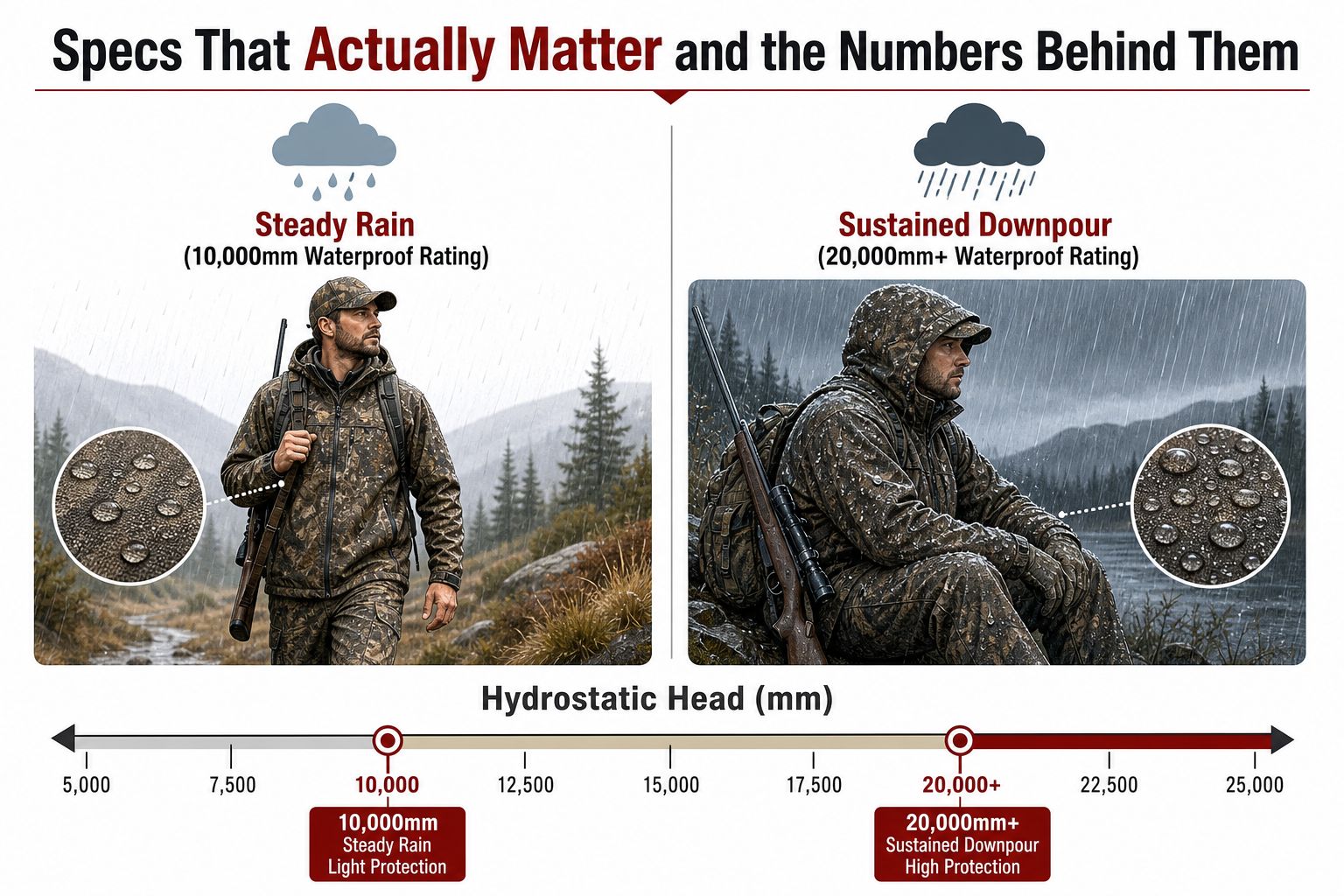
A jacket can cost real money and still miss the mark in the field. The spec sheet matters because it tells you how the garment behaves when the weather turns ugly and your body stops making heat.
Read the numbers like a hunter
Waterproofing uses hydrostatic head, measured in millimeters. A practical buying guide points hunters toward around 15,000 mm waterproofing for wet regions, while another review places waterproof-breathable laminates in the 10,000 to 28,000 mm hydrostatic head range (spec guide, climate guide). In plain English, lower numbers can handle drizzle and wet brush. Higher numbers make sense when you sit through steady rain or a long downpour.
Breathability appears as MVTR, measured in g/m²/24h. Current benchmarks put useful hunting apparel in the 10,000 to 25,000 g/m²/24h range, and the same practical guidance says hunters in warm climates should prioritize 10,000 g/m²/24h breathability (same spec guide). That matters most when you hike with a pack, climb a ridge, or force a bow through brush and build heat fast. If the fabric traps sweat, every other feature starts working against you.
Camo and quietness are about detection, not decoration. Benchmarks in the brief put terrain-optimized camouflage around 15 to 40 yards and low-noise face fabrics below 60 dB rustle. The pattern has to match the cover and distance you hunt, and the fabric has to stay quiet enough for still-hunting and close-cover work.
Field rule: If you move hard, breathability matters more than you think. If you sit still, waterproofing and silence pay the bills.
Abrasion resistance is what keeps knees, seat panels, cuffs, and pack-contact points from wearing out too fast. Independent reviews in the brief point to abrasion resistance around 1,200 N per ISO 12947 and waterproofing in the 10,000 to 20,000 mm range for serious hunting outerwear (brand review). Scent control helps, but it does not make you invisible. Wash with scent-free detergent, rotate layers, and treat odor control as a bonus, not a shield. For hunters who want a better sense of how these specs show up in real field wear, the outdoor gear guide from Southern Static is a useful companion read.
| Category | Minimum spec | Good spec | Overbuilt spec |
|---|---|---|---|
| Waterproofing | Light rain protection | Around 15,000 mm | 20,000 mm+ |
| Breathability | Casual use | Around 10,000 g/m²/24h | 20,000 g/m²/24h or more |
| Quietness | Acceptable | Below 60 dB rustle | Soft brushed outer fabric |
| Abrasion resistance | Basic field use | Reinforced wear zones | Heavy-duty panels at stress points |
Building Your Layering System by Climate
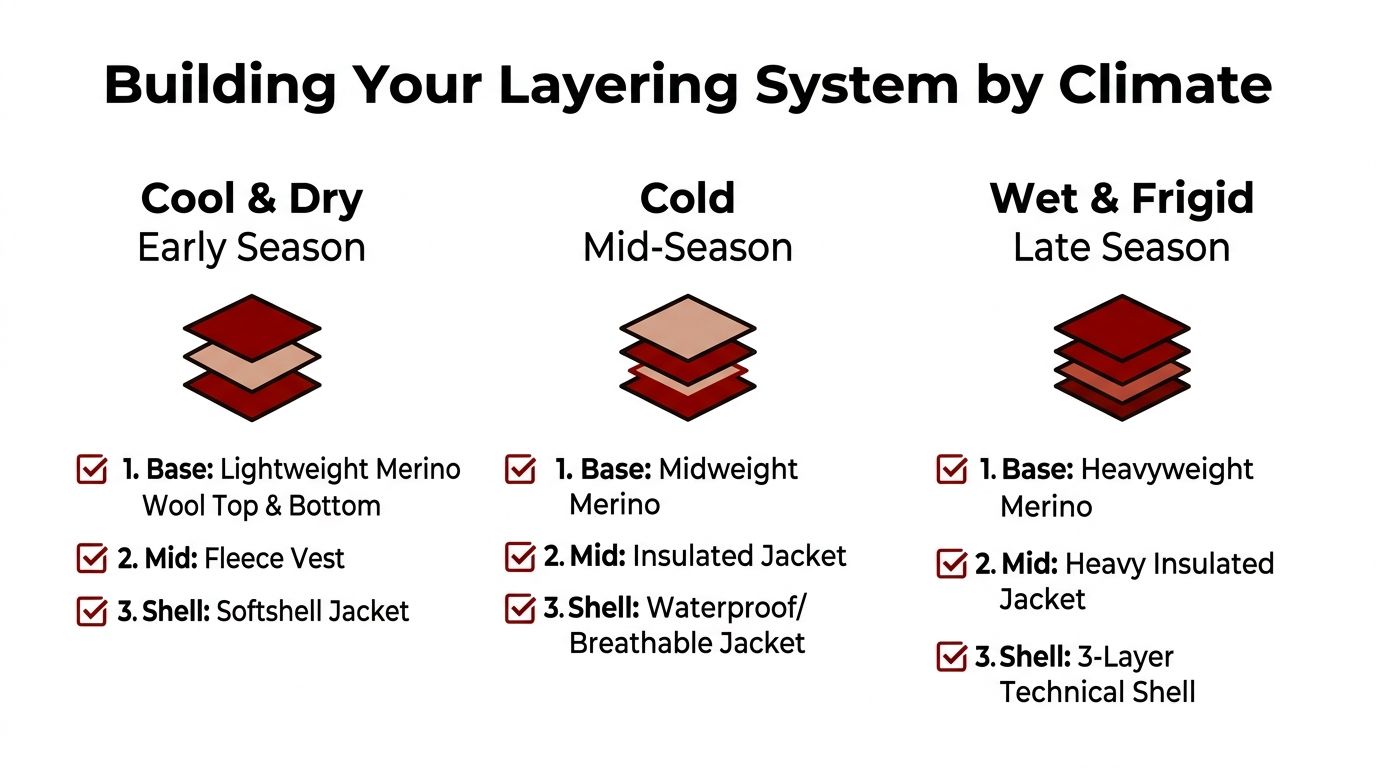
A good layering system does one thing well, it keeps you in the hunt when the weather shifts. The stack is simple, a base layer to move moisture, a mid layer to hold heat, and a shell to block wind and water.
Cool and dry early season
Start with lightweight merino or synthetic next to skin. Add a light fleece or grid mid layer if the morning is sharp, then top it with a vented softshell. This is the right setup for September and October mornings when you're hiking in the dark but sweating by mid-morning.
Cold mid-season
Move to midweight merino, then add an insulated jacket or a heavier fleece. Your shell should still breathe, but it needs real weather resistance. If the forecast is changing by the hour, one shell with the right cut is smarter than buying a matched set that only works in one temperature band.
Wet and frigid late season
Cheap mistakes show. Use heavyweight merino, a heavy insulated mid layer, and a 3-layer technical shell with taped seams. The objective isn't style. It's staying dry enough to remain still without turning miserable.
The best brands now sell pieces you can mix across systems, which means you don't have to buy everything from one label. I'd rather see a hunter buy one excellent shell and rotate the base and mid layers around it than buy three okay outfits that each solve only half the problem. That's especially true for family-focused sizing, where kids and baby pieces often need a warmer bias because small bodies cool faster.
Here's the short checklist I'd take to the store:
- Base layer: Does it wick, fit close, and stay comfortable under movement?
- Mid layer: Does it trap heat without turning bulky?
- Shell: Does it match the rain, wind, and sit time you face?
- Mobility: Can you draw, shoulder, kneel, and climb without fighting the fabric?
- Noise: Does the outer face stay quiet when you brush against limbs or a tree stand?
For a deeper brand perspective, the right fit often comes from matching the layer to the climate, not the label. This outdoor gear guide is a useful reminder that the same layering logic shows up outside hunting too.
Matching Brands and Gear to Your Hunt Type
A hunter in Texas and a hunter in Wisconsin may both buy camo, but they're not buying the same solution. The right brand is the one that matches your conditions most often, not the one with the best reputation in a different climate.
Four real-world matches
Texas deer lease in November. Early-season heat can flip fast when a front moves through. I'd rather see vented bottoms, a light insulated jacket, and a packable rain shell than one heavy parka that stays in the truck. The brand matters less than the system, because you need airflow at noon and enough warmth after sunset.
Late-season Wisconsin whitetail sit. This is a quiet, cold, still game. Full camouflage, a merino base, a quiet outer layer, and a shell in the 15,000 mm+ range make more sense than fashion or hype. Here, technical brands earn their price because the clothing has to do real work while you're motionless.
Wet Pacific Northwest elk hunt. This is premium territory for a reason. Waterproof-breathable outerwear, gaiters, and reinforced knees and seat panels aren't nice extras. They're the difference between staying in the hunt and getting ground down by weather and brush.
Southern dove field or quail walk. Mobility and heat tolerance matter more than hardcore insulation. Lifestyle brands, hats, and graphic tees fit naturally here, because the day has a social side as well as a field side. You still want performance where it counts, but you don't need to dress like you're climbing a ridge in sleet.
Simple truth: Buy for the hunt you do most, not the dream hunt you only take once every few years.
The same brand can be excellent in one scenario and a waste of money in another. That's why I push buyers to think in terms of use case first. A technical shell is worth it if your weather is nasty. A heritage wool layer is worth it if silence and durability outrank weight. A Southern graphic tee is worth it if the main job is showing up sharp and feeling like yourself around camp.
How to Read Brand Claims Without Getting Sold
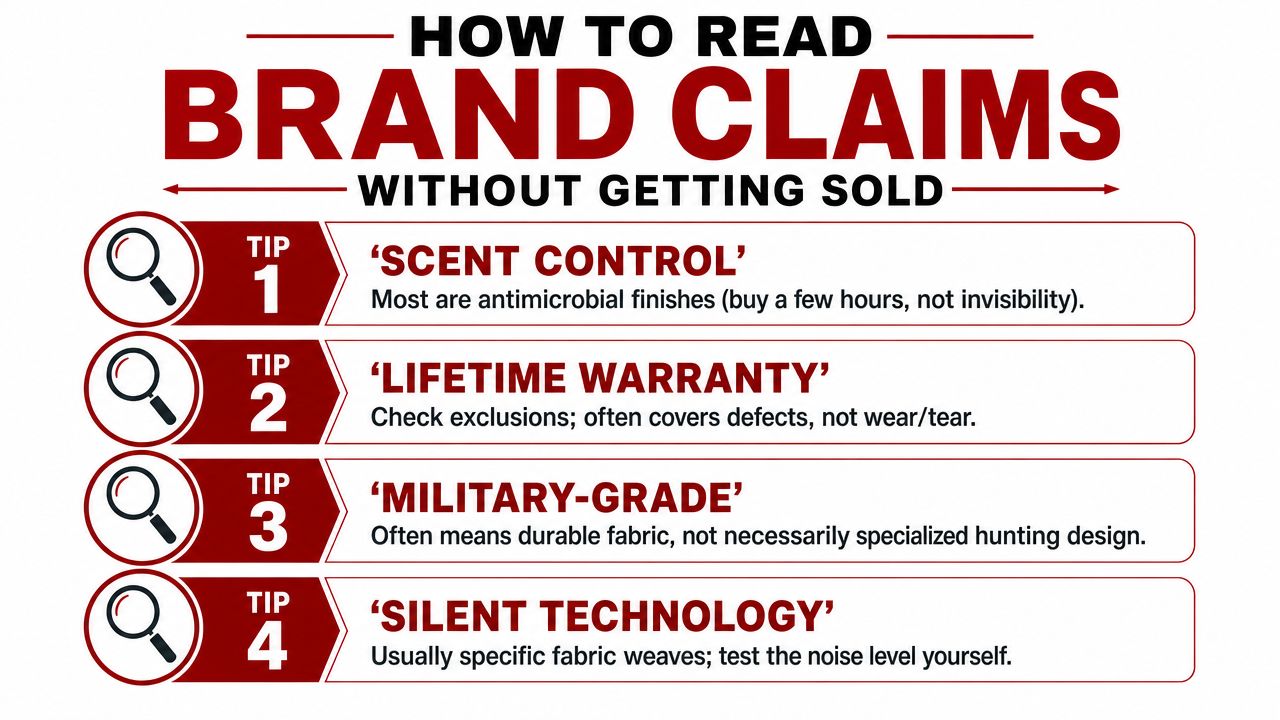
Brands love words like “scent control,” “silent,” “military-grade,” and “lifetime warranty.” Most of those claims have a useful core, but they're rarely as big as the tag line suggests.
Read the claim, then read the fine print
Scent control usually means an antimicrobial finish, not magical invisibility. It buys you time, not immunity. If you sweat hard, then hunt hard again without washing, no label will cover sloppy field hygiene.
Silent fabric is often just a softer weave or brushed face. That helps, but the key test is simple. Rub the fabric together, brush it against a zipper, and bend at the elbow and knee. If it sounds noisy in the aisle, it'll sound noisy in the stand.
Lifetime warranty sounds strong until you read exclusions. Many cover defects and leave wear, abrasion, and accidental damage out of the deal. Some brands also require registration. If you're paying premium money, ask exactly what gets repaired and what doesn't.
Military-grade is marketing shorthand, not a guarantee of hunting design. A tough fabric can still be the wrong cut for a draw, a stalk, or a long sit.
A $400 jacket is not four times better than a $200 jacket. In most categories, the jump from budget to mid-tier gives you more real-world value than the jump from mid-tier to premium. Ask these questions before you buy:
- What problem does this piece solve in my climate?
- Is the shell quiet enough for my style of hunting?
- What's covered under warranty, and what's excluded?
- Do I need performance, or do I mostly need identity and comfort?
Price, Durability, and Where Lifestyle Brands Fit
The price curve in hunting clothing is simple once you stop believing every price jump buys equal improvement. Entry-level pieces are fine for occasional hunters and warm-climate use, especially when the garment doesn't live under constant abuse. Mid-tier is where most serious hunters should land, because that's where better fabrics, taped seams, and stronger construction usually show up.
Spend where weather hits you first
Premium gear makes sense when you're out a lot, in bad conditions, or both. The gains are real, but they get smaller after the second-best option on the rack. You're paying for refinement, not magic. If the garment touches wind, rain, and mud, spend more there. If it's mostly a social layer, don't overpay.
Lifestyle brands belong in the conversation, but not as substitutes for technical kit. They're great for graphic tees, hats, socks, gifts, and coordinated family wear. They also make sense for buyers who want their clothing to say something about Southern pride, faith, freedom, or small-town culture.
If you want a fuller look at how outdoor identity brands frame that side of the market, this note on American-made outdoor clothing shows why some buyers value the story as much as the spec sheet.
My rule is blunt. Put your biggest dollars into the layer that faces weather, especially the shell and footwear. Put the rest where comfort, identity, and repeat wear matter most.
Care, Sizing, and FAQ for First-Time Buyers
A good hunting kit fails fast if you care for it wrong. Wash shells only when they need it, use a cleaner made for technical fabrics, and refresh the DWR after roughly 10 to 15 wash cycles. Hang bibs and pants instead of stuffing them into a drawer, because hard folds and crushed storage beat up the areas that already take the most stress.
Fit matters just as much. Technical hunting brands usually run slimmer than people expect, while lifestyle brands tend to track closer to street sizing. If you plan to layer, go up at least one size from your usual size so you still have room through the shoulders and elbows. Before you take anything into the field, wear it on a short walk and then on the range. That is how you catch hot spots, noisy seams, and weak zippers while fixing them is still easy.
Sock care and fit get overlooked, and that is a mistake. For sock-specific care and fit guidance, see our hunting socks guide. Socks that bunch, slide, or trap sweat will ruin a good boot fit faster than bad camo ever will.
Quick FAQ
Do lifetime warranties transfer between owners? Usually no. A lot of brands also want registration within a short window, so check the warranty terms before you count on resale value.
What order do layers go in? Base wicks, mid insulates, shell blocks wind and water. Put camo on whichever outer layer faces the game.
Does camo pattern matter in a treestand? Less than movement and silhouette, but matching the background still helps when you glass or still-hunt.
If you want a more casual layer for camp, gifting, or family outfitting, coordinated tees, hats, and sizing across adults and kids make sense beside a technical kit. That is the right lane for identity-first clothing. It should say something about your people and your place, not try to replace a real shell system.
If hunting clothing brands fit your style, the smart move is simple. Buy technical pieces for weather and movement, buy lifestyle pieces for camp and daily wear, and keep your sizing consistent enough that you can wear both without guessing.