

Best Hunting Gear Bags: Ultimate Guide for 2026
You're probably closer to needing a better hunting bag than you think.
Maybe your truck is already half-loaded for Saturday. Shotgun case in the back. Shells somewhere under the seat. Headlamp rolling around in the console. Gloves from last season shoved into a side pocket with two loose choke tubes, an old granola bar, and a tag you forgot to turn in. Then opening light comes, and the one thing you need right then is the one thing buried at the bottom.
That's how a hunt gets harder than it needs to be. Not because you picked the wrong stand tree or the birds changed lines, but because your gear was scattered, noisy, wet, or missing when it mattered. Good hunting gear bags solve that problem before you ever leave the driveway. They don't just carry stuff. They keep your hunt moving the way it should, from a dove field at noon to a muddy duck blind at daybreak to a cold deer sit before sunrise.
Table of Contents
- Why Your Hunting Bag Is Your Most Critical Ally
- The Five Essential Types of Hunting Gear Bags
- Decoding Materials and Construction
- Choosing Your Pack Capacity and Organization
- Essential Features for Field Use
- Packing and Maintaining Your Hunting Bag
- Your Quick-Scan Buying Checklist
- Frequently Asked Questions About Hunting Bags
Why Your Hunting Bag Is Your Most Critical Ally
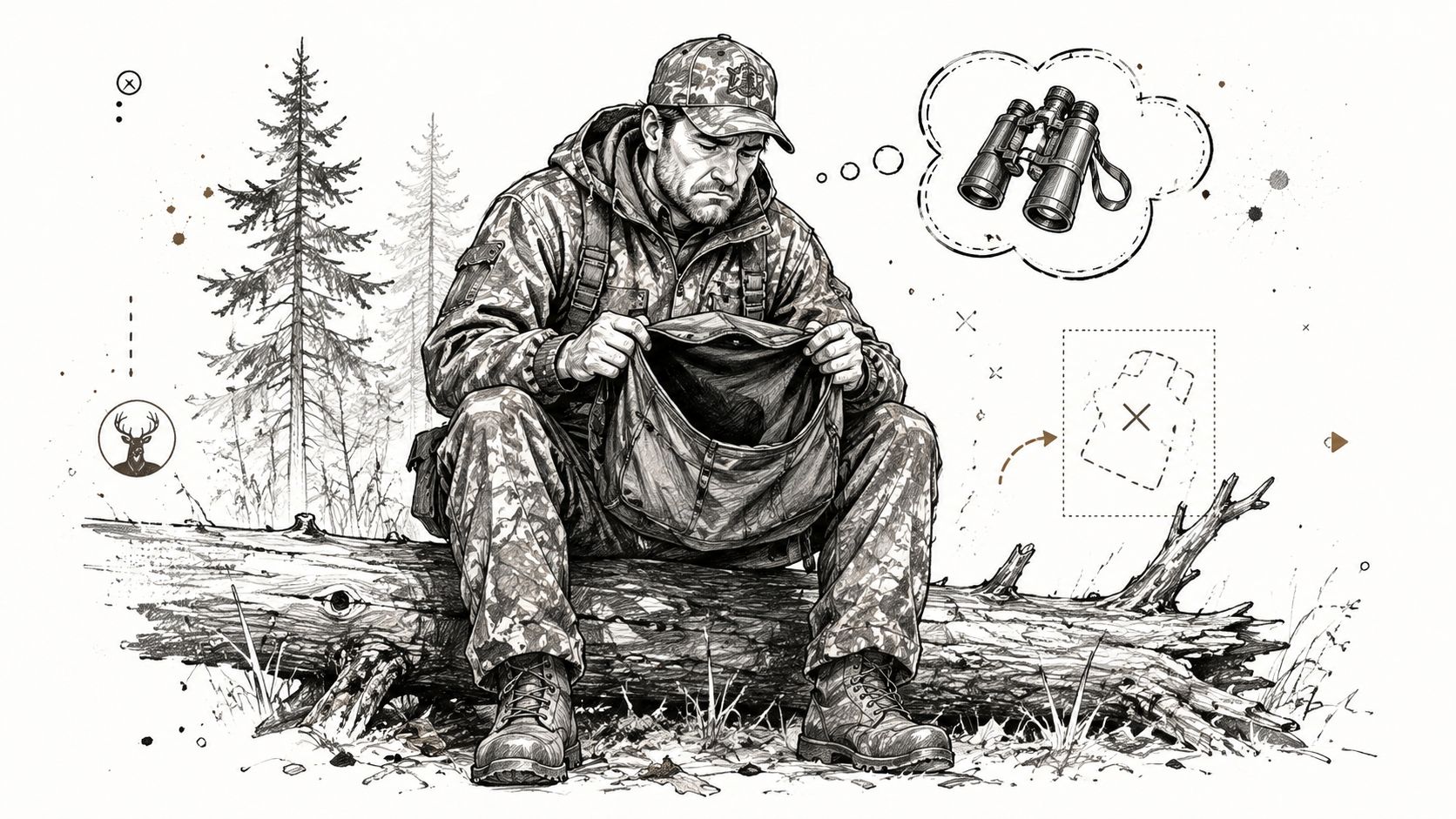
A bad bag usually reveals itself at the worst time. You climb into a deer stand in the dark, settle in, and then realize your rangefinder is in the truck because there wasn't a dedicated pocket for it. Or you hit a duck hole before daylight, reach for dry gloves, and find out everything inside your bag picked up marsh water on the walk in.
That's why experienced hunters quit thinking of a bag as an afterthought. A hunting bag is part of your system, same as boots, optics, or a dependable sling. If it fails, your whole setup gets clumsy.
What goes wrong when the bag is wrong
Southern hunts expose weaknesses fast. A dove field punishes poor organization because you need shells, water, bird strap, and eye protection without digging around. A deer stand hunt punishes noisy closures and badly placed pockets. A duck blind punishes anything that soaks through, hangs open, or leaves calls and gloves tangled together.
Most hunters learn this the expensive way. They buy one generic bag, try to make it do every job, and spend two seasons frustrated before admitting that the problem isn't the hunt. It's the carry setup.
Practical rule: If you can't reach your most-used item by feel, your bag isn't working for the hunt you're on.
There's a reason this category keeps growing. The global hunting accessories market was valued at $20.3 billion in 2022 and is projected to reach $43.1 billion by 2032, with a 7.9% CAGR according to Allied Market Research's hunting accessories market outlook. Hunters are spending money here because bags aren't a side purchase anymore. They're core field equipment.
A bag should reduce decisions, not create them
The best hunting gear bags do three things well:
- They protect gear: Optics, tags, gloves, calls, and lights stay where they belong.
- They save motion: You don't have to unload half your pack to get one item.
- They keep you quiet: Less fumbling means less noise, less movement, and fewer blown chances.
That's the difference between carrying gear and managing it. One feels like work. The other makes a hunt smoother from first light to cleanup.
The Five Essential Types of Hunting Gear Bags
Not every hunt calls for the same bag. That's where folks waste money. They buy based on shelf appeal instead of the actual job the bag needs to do.
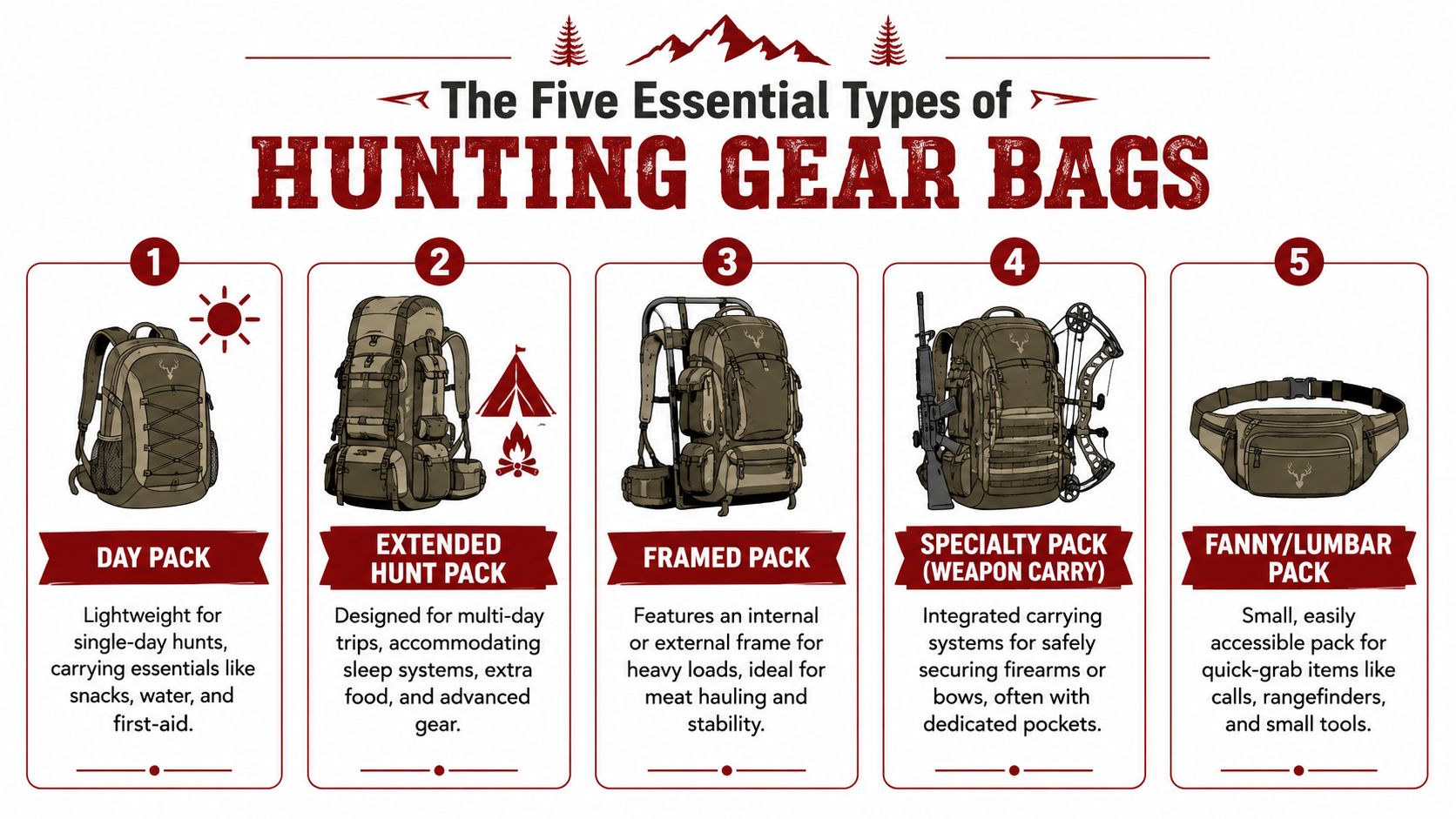
Backpack-style carry keeps showing up for a reason. The professional and outdoor gear bag market is forecast to reach USD 33.0 billion by 2036, and backpack-style configurations hold about 52% of the total share, according to Future Market Insights on professional gear bags. That lines up with what hunters already know in the field. When the load gets heavier and the walk gets longer, a backpack works.
If you want to browse examples of field-ready carry styles, look through Southern Static's outdoor backpacks and gear bags collection.
Day packs
This is your deer stand, turkey woods, and quick scouting bag. A day pack should carry water, snacks, gloves, headlamp, knife, tags, and a few extras without feeling like camp is strapped to your back.
For a morning sit in piney woods or a still-hunt along a creek bottom, this is usually the right answer. It rides close, stays out of the way, and doesn't catch every limb between the truck and the stand.
Extended hunt packs
When the trip includes a camp setup, extra layers, more food, and gear you may not touch until night, you move into extended-hunt territory. These packs make sense for longer deer camp runs, public-land overnighters, or any hunt where you're covering enough ground that heading back to the truck isn't practical.
They're bigger by design. That's useful only if the trip demands it.
Framed packs
A framed pack earns its keep when the load gets serious. This is the bag for carrying awkward weight with more stability, especially when you may haul meat, heavy layers, or camp equipment.
A regular backpack can carry a lot. A framed pack carries weight better. That's not the same thing.
A heavy load always feels lighter when the frame and belt are doing the work instead of your shoulders.
Specialty packs with weapon carry
These bags are built around a rifle or bow carry system, or they include dedicated sleeves and lash points that keep a weapon secure while leaving your hands free. They're useful when you're climbing, slipping through brush, or walking farther than you want to with a firearm in your hands.
For some hunters, this style is a luxury. For others, especially on rough access routes, it's a real upgrade.
Fanny and lumbar packs
These shine on dove shoots, short walks to a box blind, and any hunt where you need a few items close without a full backpack. A good lumbar pack carries calls, rangefinder, gloves, a small water bottle, and odds and ends you reach for often.
Here's where they work best and worst:
| Bag type | Best use | Where it falls short |
|---|---|---|
| Day pack | Deer stand, turkey, scouting | Not ideal for hauling bulky loads |
| Extended hunt pack | Multi-day camp or public-land trips | Too much bag for short hunts |
| Framed pack | Heavy carry, meat hauling | Overkill for light outings |
| Specialty weapon pack | Longer walks with rifle or bow | Added features can add bulk |
| Lumbar pack | Dove, blind hunts, quick access | Limited space and poor heavy-load comfort |
The trick isn't finding the “best” bag. It's matching the bag to the hunt you do most.
Decoding Materials and Construction
A bag usually proves itself before sunrise, not in the store. Walk into a wet duck blind with cold hands, drag it across a deer stand ladder, or drop it in a dove field full of dust and hulls, and the weak spots show up fast.
Fabric matters, but fabric by itself does not tell you much. Cordura, ripstop nylon, and tightly woven polyester all have a place in hunting bags. The primary question is where each material makes sense for the kind of Southern hunt you do.
For briars, cutovers, and rough truck-bed abuse, heavier nylon fabrics hold up well because they resist abrasion and snagging. Ripstop is useful on lighter day bags where you want to keep weight down but still avoid a small puncture turning into a torn panel. Polyester can serve just fine on lighter-duty bags for dove shoots, box blinds, and camp use, especially if the high-wear areas are reinforced.
That trade-off matters.
A duck hunter dealing with mud, wet decoys, and blind floors may care more about water resistance and easy cleanup than shaving a few ounces. A deer hunter climbing into hardwoods or crossing cutover ground needs a bag that will not get chewed up by bark, vines, and thorns. For a simple grab-and-go setup, a compact daypack in the Enduro 22L backpack for short hunts and everyday carry size range makes sense if the stitching and zipper quality are there.
Construction decides whether a good fabric will last. I look at the strap attachment points first, then the haul handle, then the bottom panel. If those areas look skimpy, I keep walking. Southern hunters are hard on bags. They get slung into the back of a side-by-side, set down on wet ground, and jerked around by one shoulder strap more often than any gear company wants to admit.
Check these spots before buying:
- Shoulder strap anchors: They should have extra stitching and no loose threads.
- Grab handle: It needs to be anchored into the body of the bag, not just sewn onto the top flap.
- Bottom panel: A reinforced base lasts longer on gravel, concrete, boat decks, and blind floors.
- Pocket seams and corners: These tend to split early on cheaper bags.
- Zippers: They should run cleanly without catching, even when the bag is stuffed.
Noise matters too. Metal zipper pulls that clink, stiff buckles, and loose hardware are aggravating in a duck blind and worse in a deer stand at gray light. Quiet materials, corded pulls, and buckles you can work with gloves on are worth more than flashy trim.
Shape is another thing buyers miss. A bag with a little structure is easier to live with because it stays open while you reach for calls, shells, gloves, or a headlamp. A floppy bag that caves in on itself turns every pocket into a junk pile, especially on fast hunts when you are trying to grab one item without dumping the rest.
Buy for abuse, not shelf appeal. The plain, overbuilt bag usually serves longer than the sleek one loaded with gimmicks and extra panels you do not need.
Choosing Your Pack Capacity and Organization
Capacity mistakes usually show up at the truck. A bag that is too big turns a few items into a rattling mess. A bag that is too small has gear hanging off the outside, zippers under strain, and no good place for the stuff you need fast.
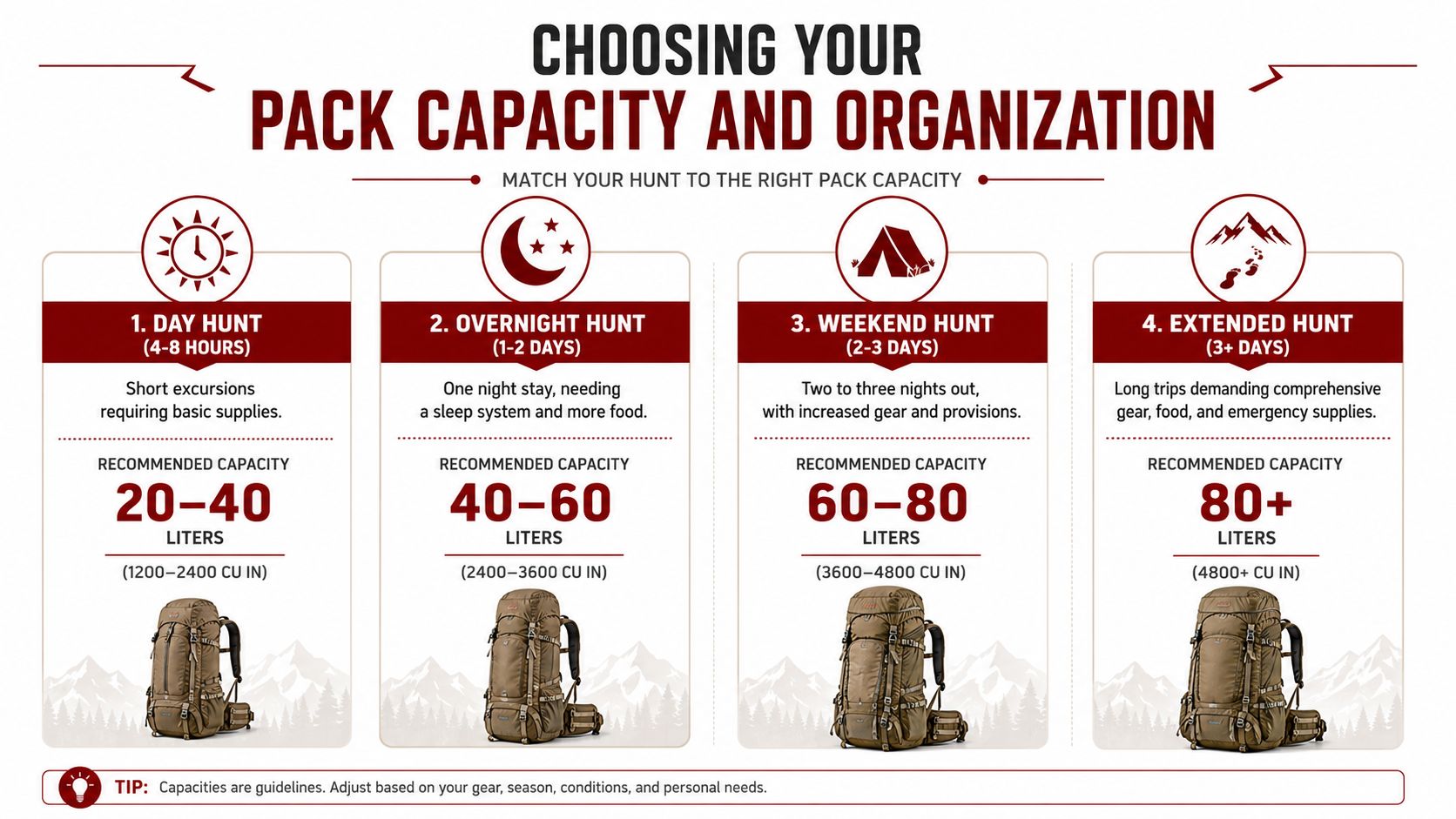
For most Southern day hunts, smaller carries better. A morning in the dove field, an afternoon in a ladder stand, or a short walk into a duck hole usually calls for a compact pack that holds water, shells or calls, tags, gloves, a light layer, and lunch without leaving a pile of dead space. Once you add cold-weather bulk, all-day sits, camera gear, or camp equipment, you need more room and better load control.
That is why bag size should follow the hunt, not the catalog label.
A simple daypack like the Enduro 22L backpack for short hunts and everyday carry is a good reference point for lighter setups. It fits the kind of load many hunters carry to a dove field or a deer stand without encouraging them to pack junk they will never touch.
Match the bag to the hunt you run most
A dove hunt favors speed and simplicity. You are grabbing shells, water, a bird strap, eye protection, and maybe a seat or light jacket. Too much bag gets in the way when you are setting down, moving spots, and loading often.
A deer stand pack needs a different layout. Quiet matters more than raw volume. There should be room for layers, a rangefinder, headlamp, haul rope, gloves, snacks, and the small items that always seem to disappear to the bottom unless they have a set pocket.
Duck gear changes the equation again. Even on a short hunt, the bag may carry gloves, extra shells, calls, face cover, dry socks, a thermos, and rain gear. Wet conditions also make organization more important, because digging for one item with cold hands gets old fast.
Multi-day deer camp is where larger packs earn their keep. Food, spare clothes, kill kit, optics, chargers, and camp basics fill space in a hurry. If you only make one or two trips from truck to bunkhouse, that extra volume is useful. If you are climbing into a stand before daylight, too much bulk becomes something else to fight.
Organization matters more than a few extra liters
A smart pocket layout saves more frustration than a bigger main compartment. Watch this breakdown if you want a visual on how pack sizing and load management come together in practice.
Keep the gear you touch often where your hand lands without digging.
- Top or outer pocket: Headlamp, tags, license, wind checker, and gloves.
- Main compartment: Layers, lunch, rain gear, extra shells, and bulkier items.
- Internal zip pockets: Keys, wallet, choke tubes, batteries, and other small gear that gets lost loose.
- Side pockets: Water bottle, thermos, or a compact tripod.
- External lash points: Useful for a stool, jacket, or decoy strap, but keep it controlled so the bag does not snag every branch on the way in.
Load order matters too. Heavy items ride better close to your back. Soft gear can fill the dead spots. The items you need at first light should not be buried under lunch and rain gear.
Good organization also changes with the setting. In a duck blind, wet and dry gear need some separation. In a deer stand, the quiet items need their own place so you are not opening three pockets to find one grunt tube. In a dove field, simple wins. A few easy-access zones beat ten little compartments every time.
Essential Features for Field Use
The features worth paying for are the ones that solve a field problem you have. The rest is catalog language.
For duck hunters, weather protection matters. For deer hunters, quiet entry and quiet access matter. For somebody walking a long way with extra gear, comfort and weapon carry matter. You don't need every feature on every bag, but you do need the ones that fit your real hunts.
Features that pull their weight
Start with these if you're sorting useful from useless:
- Hydration compatibility: Good for long, hot walks where stopping to dig for a bottle gets old.
- Quiet-access pockets: Better than noisy flaps and rattling hardware when you're in a stand or blind.
- Compression straps: They make one bag work across light and moderate loads.
- Rain cover or weather-resistant shell: Worth it when the bag may sit on wet ground or ride in the bottom of a boat.
- Weapon carry options: Helpful when you need both hands free on uneven ground.
A built-in rifle or bow carry setup isn't necessary for everyone. But if your access route includes climbing, crossing, dragging decoys, or carrying a stool and gun at once, it starts making a lot more sense.
Where newer features deserve a harder look
One area hunters still don't get much straight talk on is scent control paired with newer materials. Existing content rarely deals with scent-control and eco-material integration in hunting gear bags, and it often skips the practical question of whether sustainable materials hold up in wet, muddy conditions without letting scent escape, as noted in this market discussion on hunting equipment accessories.
That doesn't mean eco-minded materials are bad. It means you should inspect them harder. If a brand talks a big game about sustainability but doesn't tell you how the fabric handles moisture, mud, odor, and abrasion, keep asking questions.
The best feature on any hunting bag is still trust. If you don't trust the zipper, the fabric, or the pocket layout, you'll fight that bag all season.
Another feature that gets oversold is “modularity.” Modular is useful when attachment points are secure and the add-ons don't flap, shine, or make noise. It's useless when it turns your pack into a snag magnet.
For travel, camp use, or keeping non-field gear together before and after the hunt, a simple duffel like the Southern Static logo duffel bag makes more sense than trying to force your woods pack to serve as luggage too.
Packing and Maintaining Your Hunting Bag
Even a good bag turns aggravating when it's packed poorly. Hunters blame the pack all the time for problems caused by clutter, bad weight placement, or habits that make gear hard to reach.
Pack the bag based on when you'll need the item, not just where it fits. Stuff you won't touch until later can ride deeper. Items you may need fast should live in the same place every trip. That consistency matters when your hands are cold and the woods are dark.
How to pack it so it works in the field
Think in layers of access.
- Closest access: Headlamp, license, tags, rangefinder, gloves, calls.
- Middle layer: Water, snacks, shell box, small first-aid kit, extra beanie.
- Deep storage: Rain gear, heavier layers, game bags, kill kit, or camp items.
Weight should stay close to your back and centered. If the heavy items hang far away from your spine, the bag feels worse with every step. If one side carries more than the other, you'll notice it before you hit the first fence crossing.
Keep noise under control
A loud bag is often a poorly packed bag. Loose metal rattles. Hard gear knocks against optics. Plastic cases slide around and telegraph every step.
Try these habits:
- Use soft pouches: Keep calls, batteries, or small tools from clacking together.
- Dedicate one pocket per category: Don't mix sharp items with delicate gear.
- Tighten down extra room: Compression keeps movement down inside the bag.
- Check it before the hunt: Pick it up and shake it. If it rattles in the garage, it'll rattle in the woods.
If your bag sounds busy when you carry it, your setup isn't finished.
Clean it before grime becomes damage
After the hunt, don't just toss the bag in the corner and hope for the best. Mud, blood, marsh muck, and seed heads all shorten the life of fabric and hardware if they sit too long.
A solid routine looks like this:
- Empty every pocket: Old shells, wrappers, tags, and damp gloves trap odor and moisture.
- Brush off dirt first: Dry debris is easier to remove before you introduce water.
- Spot-clean problem areas: Bottom panel, shoulder straps, and handles usually need it most.
- Dry it fully: Never store a damp bag in a closed tote or truck box.
- Inspect the weak points: Check stitching, zippers, pulls, and buckles before the next trip.
Store it clean, dry, and lightly packed so straps and panels don't stay crushed for months. That small bit of discipline saves money and frustration later.
Your Quick-Scan Buying Checklist
A bag can look great on a product page and still be a bad fit for the way you hunt South of the Mason-Dixon. The right choice gets simpler once you tie it to a real use case. A dove field bag should ride light and give fast access to shells, water, and a few odds and ends. A deer stand pack needs to carry layers, safety gear, and the items you reach for in the dark without a lot of fumbling. A duck blind bag has to handle wet ground, dirty hands, and constant in-and-out use.
For most day hunts, a smaller bag usually works better than a big one. It carries closer, stays out of the way in a stand or blind, and keeps you from packing junk you never touch. For deer camp, public-land walks, or any trip where food, extra clothes, and field gear all have to ride together, step up in size only after you lay out what goes with you.
Ask these questions before you buy
Use this in the store, at camp, or with a product page open while you sort out what fits your season.
- Hunt type: Is this built for the places I hunt, such as a dove field, a ladder stand, a cypress brake, or a weekend deer camp?
- Carry style: Do I need a backpack for walking, or would a blind bag, duffel, or waist pack fit the job better?
- Capacity: Does it fit my usual load with a little room left, or will it stay half-empty and sloppy?
- Access: Can I grab shells, gloves, rangefinder, calls, or headlamp without digging through everything else?
- Layout: Do the pockets make sense for how I already organize gear, or will I fight this bag every trip?
- Fabric: Will it hold up to briars, damp grass, muddy truck mats, and rough plywood blind floors?
- Bottom panel: Is the base stiff or reinforced where the bag takes the most abuse?
- Fit: If it is a pack, do the straps sit right once weight is in it, or does it sag and pull wrong?
- Weather use: Will it shed light moisture and mud well enough for the conditions I hunt most?
- Honesty check: Am I buying for my normal season, or for one out-of-state trip I might take every few years?
A quick pass and a hard pass
A good bag usually shows its worth fast. Handle it. Set it down. Open the pockets with one hand. Picture where it will sit on the truck seat, on the blind shelf, or at the base of a tree.
| Green flag | Red flag |
|---|---|
| Pocket layout matches a specific hunt style | Generic layout that does a little of everything and none of it well |
| Comfortable with the load you actually carry | Feels awkward before you even add real weight |
| Durable fabric where brush, mud, and floors wear it out | Thin material at stress points and on the base |
| Easy access to the few items you use all morning | Deep compartments that force you to dig |
| Simple design you can pack the same way every trip | Extra features that add bulk without solving a field problem |
The best pick usually feels plain in the hand and smart in the field. That is a compliment. Buy the bag that suits your hunts, your ground, and the way you move through a Southern season.
Frequently Asked Questions About Hunting Bags
Can I use a regular hiking backpack for hunting
Yes, you can. Sometimes it works just fine for scouting, simple walks, or low-pressure hunts. But hunting bags usually do a better job with quiet access, field-ready pocket layouts, darker finishes, and carry options that make more sense around optics, shells, calls, gloves, and weapon support.
A hiking pack is built for miles. A hunting pack is built for miles plus moments.
What's the difference between a bow pack and a rifle pack
The main difference is how the bag secures and stabilizes the weapon. A rifle setup usually focuses on barrel orientation, stock support, and a carry position that works with longer rigid shape. A bow setup has to protect cams, keep strings from snagging, and manage a wider profile.
If your bag claims it handles both, inspect how that system attaches. “Compatible” isn't always the same as “good.”
How important is camo on a bag
Less than many hunters think. Shape, movement, shine, and noise matter more than whether the bag matches every leaf in the county. A muted, non-reflective bag with a practical layout usually beats a loud, shiny camo print with bad hardware and poor access.
For dove hunting especially, organization and convenience tend to matter more than pattern. For deer and duck hunting, low-profile colors and reduced shine are usually enough if the rest of your setup is smart.
Are waterproof bags worth the extra cost
Sometimes. If you hunt duck blinds, marsh edges, river bottoms, or anywhere your bag regularly sits in wet conditions, extra weather protection is worth considering. For many deer and field hunts, strong water resistance and smart packing do the job without requiring a fully waterproof design.
The key question is how wet your bag gets in real use, not how wet it could get in theory.
Should one hunting bag do everything
Usually not. One bag can cover a lot if your hunting style stays narrow. But most Southern hunters do enough variety that one do-it-all bag becomes a compromise. A compact field bag for quick trips and a larger camp or carry bag for bigger outings is often a cleaner setup.
What's the first feature I should prioritize if I'm on a budget
Prioritize layout and durability. If the pocket placement is sensible, the fabric is stout, and the stitching looks reinforced, you can live without fancy extras. If the bag is frustrating to use or starts wearing out early, no premium feature will make up for that.
If you want gear that fits a Southern outdoor lifestyle on and off the hunt, Southern Static Clothing Company is worth a look. They carry Southern-inspired apparel, outdoor accessories, and practical gear bag options that line up well with the hunting, camp, and everyday routines a lot of us know well.